Unraveling the Complex Water Systems of Early Mars: The Jezero Crater Chronicles
The Perseverance rover, currently exploring the desolate yet fascinating Martian landscape, has delivered a groundbreaking discovery that is fundamentally rewriting our understanding of the Red Planet’s geological history.
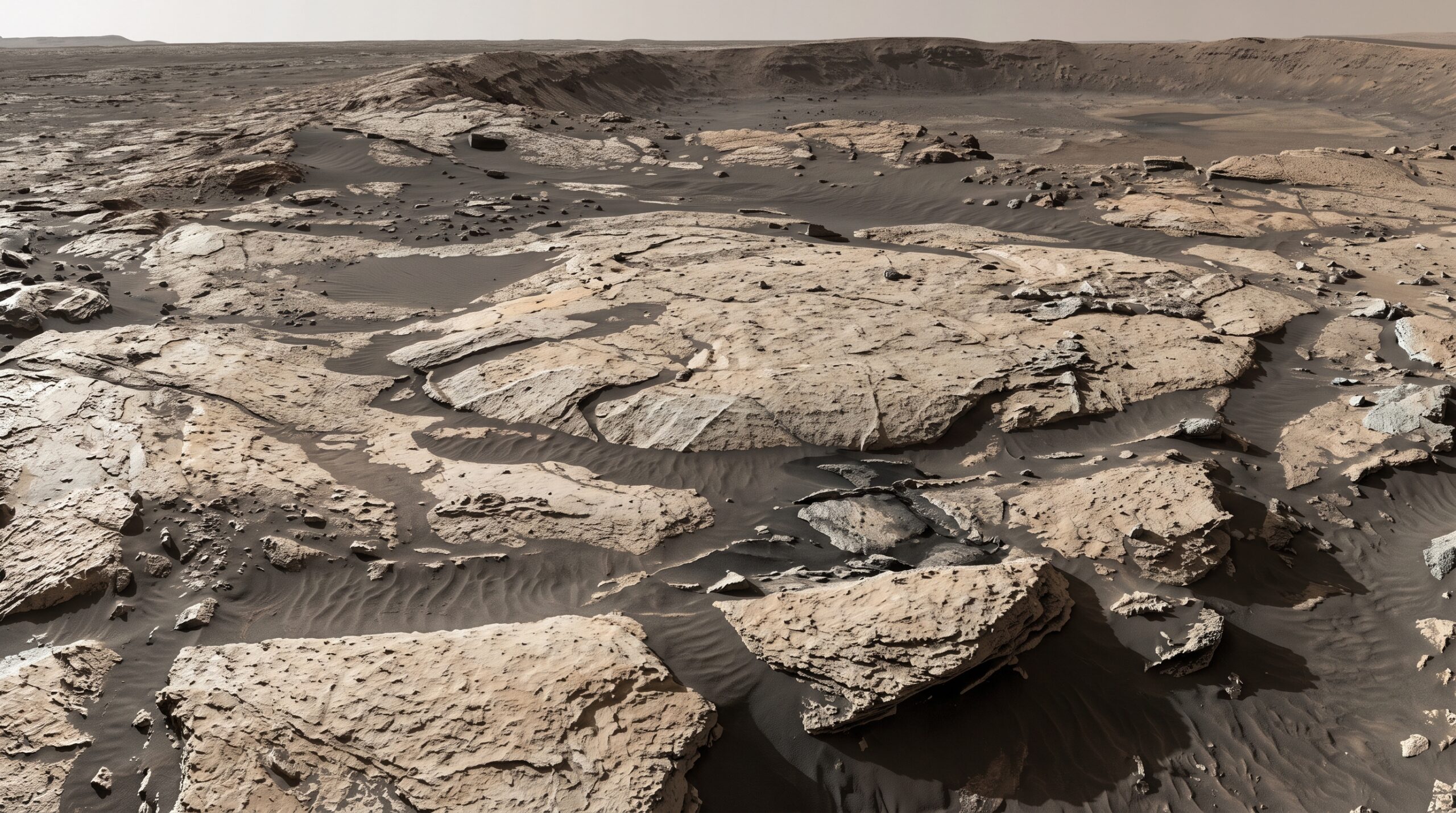
Focusing its advanced instruments on a region known as the “Margin Unit” at the edge of Jezero Crater, Perseverance has uncovered a story far more intricate than we ever imagined.
Utilizing its state-of-the-art SuperCam instrument, the rover meticulously analyzed over 185 bedrock targets, revealing that this region hosted incredibly complex water systems billions of years ago.
Instead of a simple narrative where water appeared once and then vanished, the data paints a picture of a highly dynamic environment where water and rock interacted multiple times across distinct geological eras.
In the quest to decipher the history of Mars, ancient rocks serve as pristine time capsules, faithfully recording the environmental conditions of their formation.
The rocks within the Margin Unit have preserved an astonishingly complex record of water activity, indicating that this area was subjected to multiple phases of aqueous alteration.
For instance, evidence suggests that water first percolated through slowly cooling subterranean magma, altering the bedrock deep underground long before the massive crater lake even existed.
This was followed by a completely separate era of water activity, likely corresponding to the time when Jezero Crater was filled with a sprawling, standing body of water.
The realization that early Mars maintained such an active, long-lasting, and multifaceted hydrological cycle dramatically increases the likelihood that the planet could have supported habitable environments for extended periods.
The Promise of Carbonates and Olivine: Chemical Engines for Ancient Life
One of the most thrilling aspects of this recent discovery is the detection of specific minerals, including carbonates, silica, and fluorite, embedded within the Martian bedrock.
Jezero Crater happens to be located within one of the largest known carbonate exposures on the entire planet, and understanding the origin of these minerals is an absolute game-changer for astrobiology.
To grasp the significance, we can look at similar geological processes here on Earth, where the interaction between water and olivine-rich rocks initiates a powerful chemical reaction.
This process not only leaves behind carbonate deposits but also releases hydrogen gas, which serves as a crucial energy source for various types of chemosynthetic microbes living in dark, subterranean ecosystems.
When we apply this terrestrial blueprint to early Mars, a truly breathtaking astrobiological scenario begins to emerge.
If the rocks in the Margin Unit were continuously interacting with water and undergoing these chemical transformations, they could have generated the exact type of chemical energy required to sustain primitive microbial life.
The bedrock that Perseverance has been rolling over and analyzing is practically screaming with the chemical signatures of these ancient water-rock interactions, making these samples incredibly valuable for our ongoing search for extraterrestrial biosignatures.
If the second major wave of water activity coincided with the ancient lake era, the bottom of Jezero Crater might have been a thriving, energy-rich oasis.
Knowing that early Mars possessed the right chemical ingredients, persistent water, and the geological engines necessary to fuel life makes this discovery a monumental leap forward in our quest to understand humanity’s place in the universe.
Summary
The revelation that early Mars possessed complex, multi-phased water systems capable of providing chemical energy for life makes the ongoing search for ancient extraterrestrial microbes more exciting than ever.