Reaching New Milestones: Starliner’s Future Missions and the Rocket Transition Plan
The ongoing competition and collaboration to secure stable access to the International Space Station is entering an exciting new phase.
Recently, a crucial developmental update regarding the commercial crew spacecraft, Starliner, was announced by Boeing and aerospace authorities leading America’s commercial space endeavors.
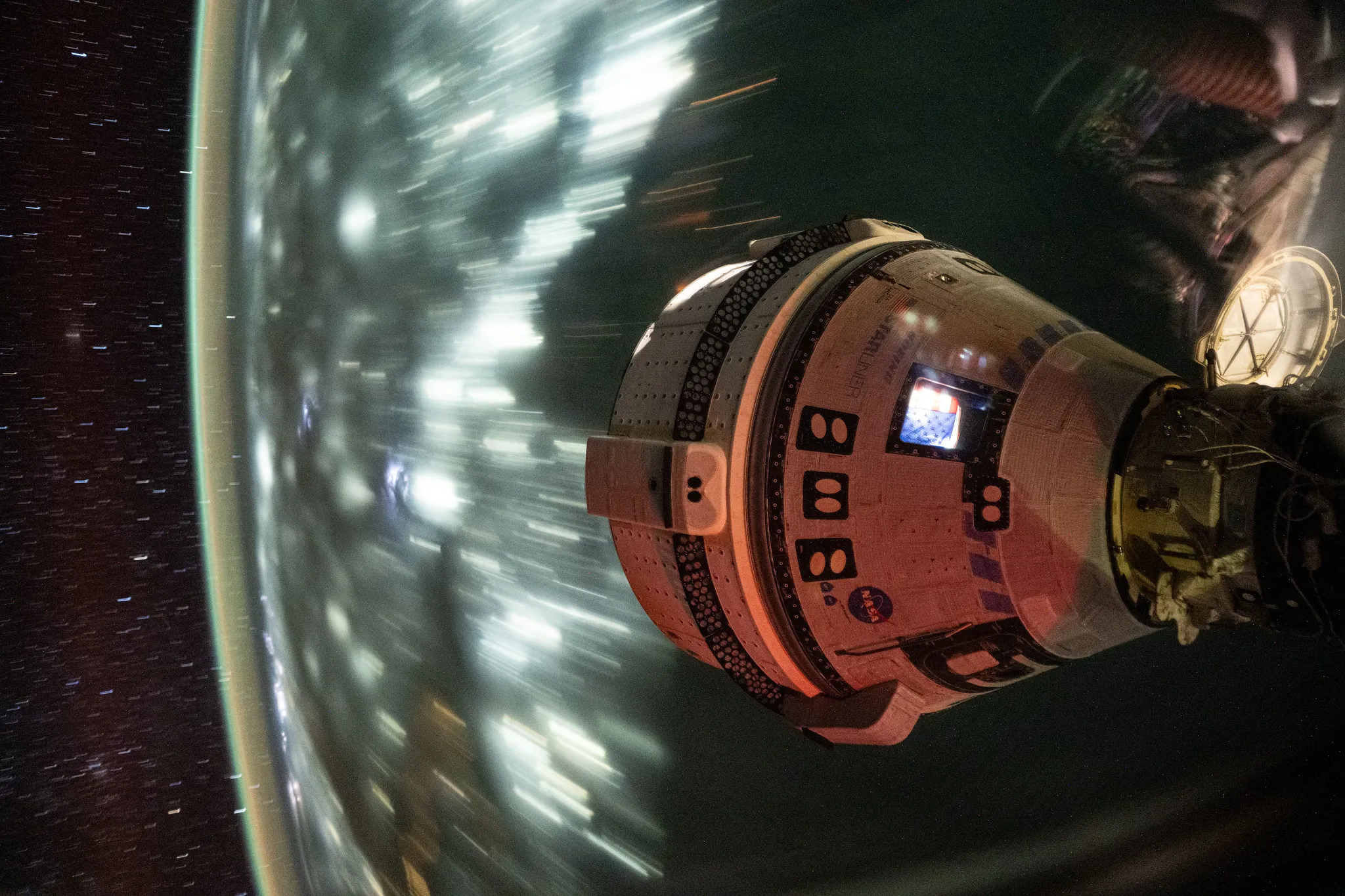
The most notable highlight in this latest update is the addition of fifth and sixth crewed missions to the International Space Station for the Starliner program.
This is not simply an increase in flight numbers, but a clear indication of the solid expectations placed on the spacecraft to serve as a robust infrastructure supporting humanity’s long-term presence in space.
Furthermore, a highly strategic transition plan has been revealed regarding the launch vehicles that will support these future missions.
Starliner is currently propelled into orbit by the highly reliable and proven Atlas V rocket, but the schedule for this rocket’s final flight is already approaching.
Consequently, the rigorous process of officially certifying the Vulcan rocket—a powerful next-generation launch vehicle—to meet the stringent safety standards required for human spaceflight has earnestly begun.
Transitioning to a new rocket involves incredibly complex adaptation work for spacecraft operations, but succeeding in this transition is an absolutely essential step to ensuring permanent, independent access to space for the foreseeable future.
Securing multiple, self-reliant transportation methods, rather than depending on a single company or a single rocket, represents the true resilience that modern commercial crew programs aim to achieve.
A Deliberate Path Forward: From the 2026 Uncrewed Flight to the 2028 Crewed Mission
In the history of commercial spaceflight, the process of maturing a new spacecraft into a fully operational vehicle capable of safely carrying human lives is never an entirely smooth journey.
Regarding Starliner’s specific future flight schedule, it has become clear that a highly cautious and phased approach, prioritizing absolute safety, is being implemented.
Under the current plan, an uncrewed test flight mission to the International Space Station is targeted for no earlier than December 2026.
This uncrewed flight serves as a critical proving ground to demonstrate that the modifications made in response to various technical challenges encountered during the development process function exactly as designed in the unforgiving environment of space.
After meticulously analyzing the vast amounts of telemetry data and system behaviors collected during this uncrewed flight, the program will finally advance to its next giant leap.
The crewed flight mission, designated as Starliner-2, is currently scheduled for 2028, and all engineering efforts are being carefully reverse-engineered from that target date.
This multi-year interval is the necessary time required to establish absolute reliability in the spacecraft’s propulsion and life support systems, ensuring unquestionable confidence in launching astronauts safely into space and returning them securely to Earth.
The road to sustaining human activity in low Earth orbit is long and arduous, but the unwavering passion of the engineers who continuously conquer challenges and refine the spacecraft for the next flight remains the greatest driving force propelling human space exploration forward.
Reference Link:
https://www.nasa.gov/news-release/nasa-boeing-share-update-on-commercial-starliner-development-plans/