A New Cosmic Scar: LRO Captures a Once-in-a-Century Lunar Impact
While the Moon may appear as a silent, unchanging silver orb in our night sky, its surface tells a far more violent and dynamic story.
Lacking a protective atmosphere, our celestial neighbor is constantly bombarded by cosmic debris, a reality dramatically underscored by a recent, extraordinary discovery.
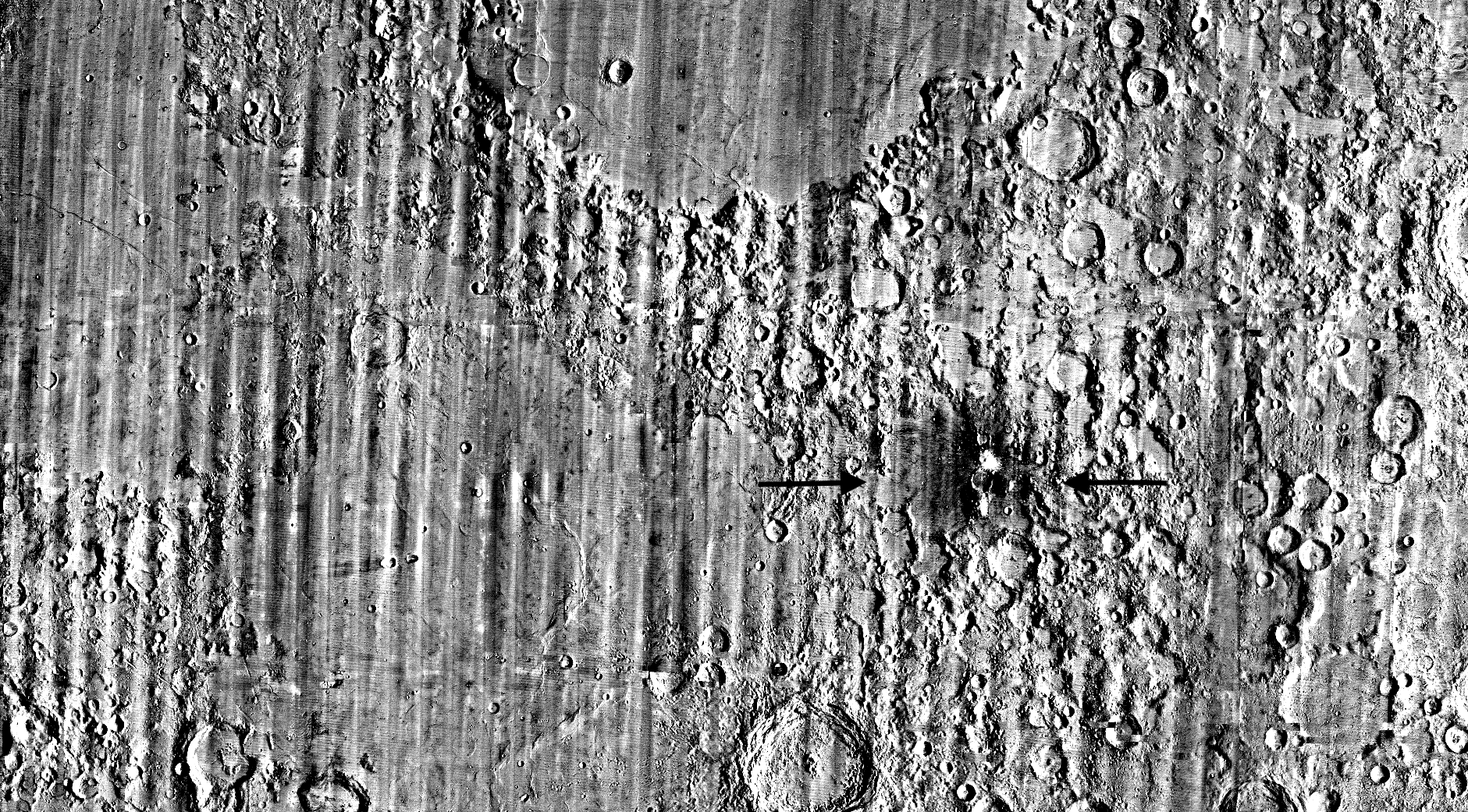
NASA’s Lunar Reconnaissance Orbiter (LRO) has successfully captured breathtaking high-resolution images of a pristine, newly formed impact crater, representing an event so massive it is statistically expected only once in a century.
The sequence of discovery began when Earth-based telescopes detected a sudden, brilliant flash of light against the darkened lunar surface.
This bright optical flare was the unmistakable signature of a significant meteoroid violently transferring its immense kinetic energy upon impact.
Alerted by this ground-based observation, the LRO mission team quickly commanded the spacecraft to focus its powerful cameras on the estimated target area.
By meticulously comparing older archival images with fresh scans taken after the flash, astronomers engaged in a cosmic game of spot-the-difference.
Their efforts revealed a massive, sharp-edged crater spanning dozens of meters across, completely obliterating what was once a smooth, featureless plain.
Scientists estimate that a space rock large enough to excavate a crater of this magnitude strikes the Moon roughly once every hundred years.
Without an atmosphere to burn up incoming bolides through friction, the meteoroid slammed into the lunar regolith at tens of thousands of miles per hour, unleashing an explosion of unimaginable proportions.
This remarkable finding not only highlights the phenomenal capabilities of the LRO but also serves as a stark reminder of the relentless, powerful forces that continue to shape the solar system right next door.
The Story in the Debris: What Ejecta Reveals About the Lunar Environment
Beyond the sheer size of the newly formed crater, what truly captivated planetary scientists was the breathtaking complexity of its surrounding ejecta blanket.
At the exact moment of hypervelocity impact, the solid lunar crust was instantly pulverized, with the explosive energy launching tons of shattered rock and dust outward in every direction.
In the strict vacuum of the lunar environment, without any air resistance to slow them down, these excavated materials traveled astonishing distances, creating brilliant, starburst-like radial rays.
The high-resolution imagery provided by LRO reveals this ejecta pattern extending for dozens of kilometers from the impact epicenter, painting a chaotic yet beautiful web across the barren landscape.
What makes these rays particularly fascinating is their bright, highly reflective coloration compared to the surrounding terrain.
While the older lunar surface has been darkened by billions of years of space weathering caused by relentless solar wind and micrometeorites, the newly excavated material from deep underground remains pristine and highly reflective.
By analyzing the contrast and distribution of this fresh material, researchers can effectively peer beneath the lunar surface, determining the subsurface composition without ever needing to drill.
In essence, this catastrophic collision acted as a natural excavation project, bringing hidden geological secrets up to the light of day.
Furthermore, the asymmetrical distribution of the ejecta provides critical forensic evidence, allowing astrophysicists to calculate the incoming trajectory, speed, and angle of the striking meteoroid.
It is truly mesmerizing to realize that a single snapshot can capture the frozen aftermath of supersonic shockwaves, thermal metamorphosis, and the ballistic flight of lunar rock, offering a treasure trove of data for modern planetary science.
The Ever-Changing Moon: How Modern Exploration Shifts Our Perspective
The discovery of this once-in-a-century impact site fundamentally shatters the long-held misconception that the Moon is a geologically dead and static world.
For decades following the Apollo missions, the prevailing paradigm painted our satellite as an ancient museum, preserving a silent history largely untouched for billions of years.
However, through the continuous, vigilant monitoring by the LRO, we are now witnessing a profound paradigm shift: the Moon is a highly active, constantly evolving environment that is being reshaped in real time.
This newfound understanding carries immense practical implications, extending far beyond the realm of pure scientific curiosity, especially as humanity prepares to return to the lunar surface under the Artemis program.
If an impact of this magnitude were to occur near a future lunar outpost, the resulting high-velocity ejecta would act like cosmic shrapnel, posing a catastrophic threat to astronauts, habitats, and vital solar arrays.
Therefore, maintaining a precise, up-to-date catalog of lunar impact rates and understanding the distribution of flying debris are absolute prerequisites for comprehensive risk assessment and mission safety planning.
Spacecraft like the LRO serve not only as historians of the ancient cosmos but also as critical space weather sentinels protecting the lives of tomorrow’s lunar explorers.
As the Moon continues to absorb the silent bombardment of the cosmos, altering its face one impact at a time, we are immensely privileged to live in an era where advanced technology allows us to watch this dynamic celestial dance unfold.
Summary
Witnessing the fresh scars of a once-in-a-century collision reminds us that our Moon is a dynamic, ever-changing world, and it is exciting to see how these discoveries will guide our future explorers safely across its surface.