The Renewed Mission of the Swift Observatory
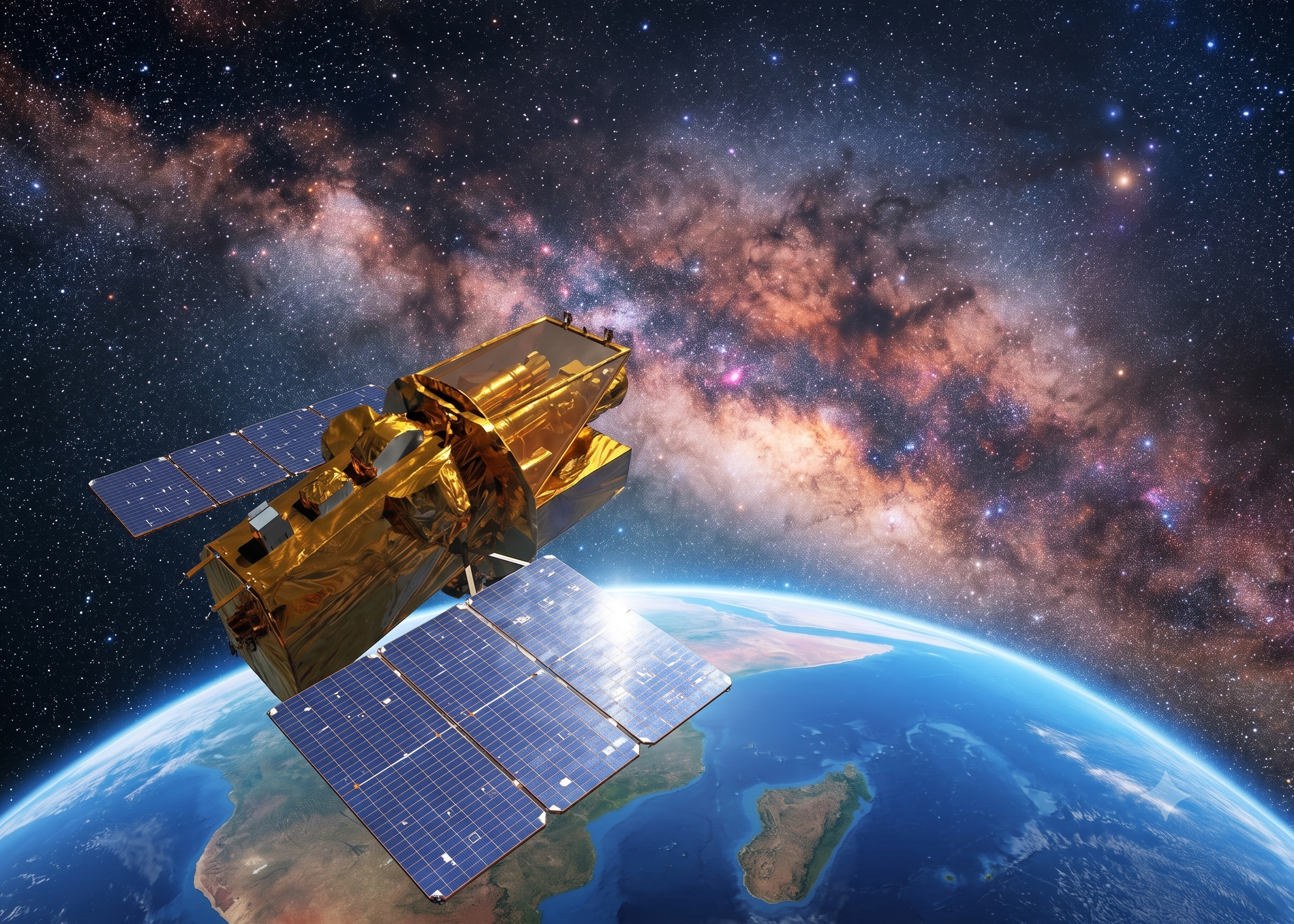
Since its launch in 2004, the Neil Gehrels Swift Observatory has continuously monitored high-energy phenomena in space, such as gamma-ray bursts.
Whenever a sudden explosion occurs somewhere in the cosmos, this satellite acts as a celestial dispatcher, immediately pinpointing the location and transmitting crucial information to other observation missions around the world.
However, after many years of operation in the harsh environment of space, its orbital altitude has gradually decreased, making it urgent to implement countermeasures to continue its scientific mission.
This new initiative represents a highly ambitious attempt to breathe new life into this magnificent astronomical instrument.
Innovative Orbit-Boosting Technology via the LINK Spacecraft
To significantly extend the scientific operational lifespan of the Swift Observatory, a robotic servicing spacecraft named LINK, developed by the private company Katalyst, will be deployed.
This spacecraft will be mounted on a Northrop Grumman Pegasus XL rocket and launched into space following deployment from an airborne carrier aircraft.
Once in orbit, the LINK spacecraft will utilize advanced autonomous control technology to rendezvous with the Swift Observatory, docking safely and securely to push its orbital altitude higher.
Rather than discarding an existing, valuable space telescope, this method of utilizing robotic technology for direct in-space maintenance will serve as an important milestone in sustainable space exploration.