SpaceX’s Relentless Progress and the Anticipation of Next-Gen Networks
While we recently highlighted SpaceX’s preparations to launch next-generation telecommunications satellites, their routine infrastructure expansion continues flawlessly in parallel.
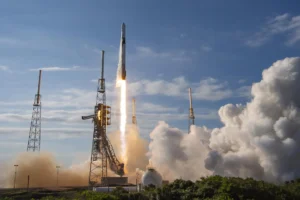
On June 14, a Falcon 9 rocket lifted off from the Cape Canaveral Space Force Station in Florida, perfectly deploying another batch of 29 Starlink broadband satellites into low Earth orbit.
A standout aspect of this “Group 10-54” mission is that the first-stage booster utilized, designated B1080, successfully completed its remarkable 27th flight.
Following the launch, this veteran booster executed a precision landing on an autonomous drone ship stationed in the Atlantic Ocean, readying itself for recovery and future missions.
Just days after discussing a booster achieving 35 flights, this 27th reuse further emphasizes how incredibly streamlined and industrialized SpaceX’s rocket recovery systems have become.
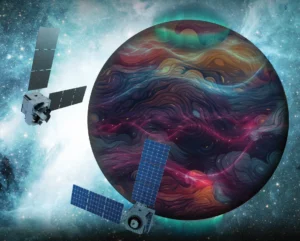
Looking ahead, they are preparing to launch AST SpaceMobile’s revolutionary payloads, which are designed to connect space-based networks directly to our everyday smartphones.
Balancing the daily expansion of existing internet constellations with the imminent deployment of direct-to-cell infrastructure solidifies SpaceX’s position as the absolute driving force in the modern space industry.
It will be incredibly exciting to watch how this overwhelming operational capacity continues to reshape global connectivity in the near future.
JAXA’s H3 Rocket Delivers Rideshare Satellites to Their New Frontiers
Following the spectacular launch of JAXA’s H3 Launch Vehicle Flight 6 a few days ago, further encouraging news has emerged from the ongoing data analysis in orbit.
This specific flight was not only a critical demonstration of the rocket’s new configuration but also served as a reliable ride to space for several microsatellites developed by universities and commercial entities.
According to JAXA’s latest updates, the separation of satellites like PETREL and STARS-X was confirmed approximately 16 minutes after liftoff, and separation signals were successfully sent to all remaining rideshare payloads, including VERTECS and BRO-22.
This unequivocally proves the high reliability of Japan’s next-generation flagship rocket as an orbital “delivery truck,” capable of precisely inserting multiple diverse payloads into their designated orbits.
These microsatellites, carrying distinct and vital scientific missions ranging from Earth observation to space environment analysis, are now transitioning into their initial operational phases.
The flawless execution of this booster-less “Type 30” configuration, successfully releasing all entrusted hopes into the vacuum of space, marks a definitive stride forward for Japan’s commercial space endeavors.
We eagerly await the invaluable new insights and data these small but mighty satellites will soon transmit back to Earth from the quiet expanse of orbit.
NASA Highlights the Finale of a Spectacular Twilight Sky Show
While we have focused heavily on cutting-edge rocket technology and orbital infrastructure, let us take a moment to appreciate the natural beauty of the cosmos visible from our own backyards.
NASA’s Astronomy Picture of the Day for June 14 featured a stunning retrospective of the breathtaking conjunction between Venus and Jupiter that has graced our early June evenings.
The sight of these two brilliantly glowing planets aligning in the western twilight sky has been a captivating celestial event, easily enjoyed with the naked eye.
Although the planets reached their closest approach on June 9, Jupiter is now gradually descending into the bright glare of the setting sun, signaling the quiet finale of this beautiful cosmic dance.
However, the astronomical enjoyment does not end here; Venus will continue to climb higher in the western sky, taking center stage as the dazzlingly bright “Evening Star” for months to come.
Even in an era dominated by advanced rockets and satellite mega-constellations, observing the timeless movements of the planets remains a profound experience that connects us to the vastness of the universe.
Taking a brief moment to look up at the twilight sky amidst our busy lives allows us to feel the enduring presence of these distant worlds.
Summary
From SpaceX’s continuous rocket reusability milestones to the successful orbital deployment of JAXA’s rideshare satellites, today’s updates showcase the robust momentum of the space industry.