Celebrating 50 Years of the Viking Missions to Mars
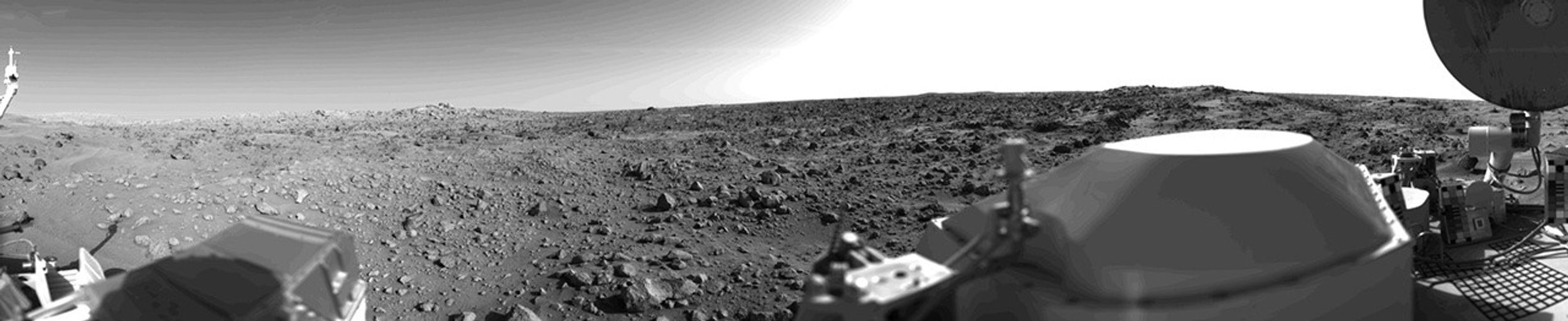
Fifty years have passed since humanity first reached out and touched the dusty crimson surface of Mars, forever changing our understanding of the cosmos. The Viking 1 and Viking 2 missions, launched in 1975, stand as monumental achievements in the annals of space exploration. Achieving a safe and soft landing on an alien world was an unprecedented feat that laid the unshakable foundation for all modern planetary exploration. When the first images beamed back to Earth, revealing a desolate yet captivating landscape strewn with rocks, it ignited the imaginations of millions around the globe. This triumph proved unequivocally that we possessed both the technological prowess and the scientific vision to conduct long-term studies on other planets. The brilliant dual-system architecture of utilizing both an orbiter and a lander became the gold standard for subsequent Martian expeditions.
The Epic Quest for Extraterrestrial Life
At the heart of the Viking missions was an incredibly ambitious objective: the search for definitive biological signatures on the Red Planet. Equipped with miniaturized and state-of-the-art laboratories, the landers meticulously analyzed Martian soil to detect any metabolic or photosynthetic activity from potential microorganisms. While the results did not provide conclusive evidence of life, they revealed something equally fascinating about the planet’s extreme environment. Scientists discovered that Martian soil is highly oxidative, triggering complex chemical reactions that completely reshaped our understanding of planetary habitability. This groundbreaking revelation acted as a powerful catalyst for the emerging field of astrobiology, forcing us to redefine the parameters of life itself. Viking’s daring pursuit of humanity’s most profound question was far from a failure; it became the ultimate compass guiding where and how we search the stars today.
A Legacy Woven into Modern Exploration
Today, as advanced rovers like Curiosity and Perseverance traverse the Martian dunes and gather rock samples, they are driving on trails originally blazed by the Viking pioneers. The sheer volume of atmospheric and geological data collected half a century ago continues to serve as an invaluable baseline for understanding climate shifts and planetary evolution. Viking’s robust engineering, designed to withstand extreme temperature fluctuations and intense cosmic radiation, remains a masterclass in spacecraft resilience. When the day finally arrives for human astronauts to leave their boot prints in the Martian dust, they will undoubtedly look back with profound gratitude at the mechanical pathfinders that arrived fifty years prior. The vanguard of space exploration is constantly evolving, yet the enduring spirit of discovery and the technological DNA of the Viking program pulse strongly within every new mission.
Conclusion
It is truly heartwarming to see how the immense courage and technological brilliance of the Viking missions still live on in today’s cutting-edge rovers, half a century after they first opened the door to Mars. Let’s continue to gaze up at the stars with a sense of wonder, eagerly watching this endless journey of discovery until humanity finally steps foot on the Red Planet.