Roman Captures First Starlight as NASA Projects a 22-Year Lifespan
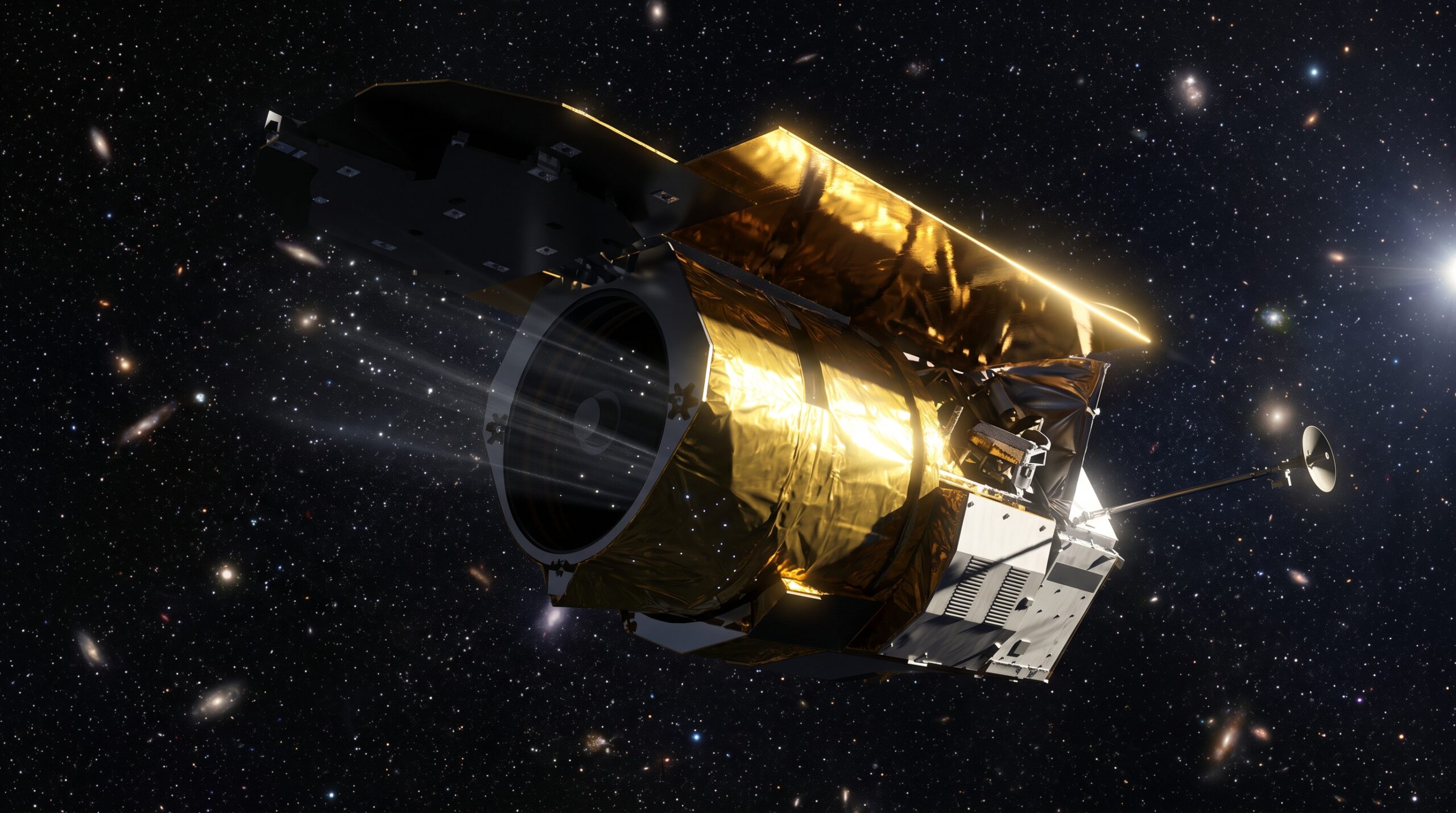
In a major technical milestone for next-generation astrophysics, NASA’s Nancy Grace Roman Space Telescope has successfully captured its first photons of starlight in deep space. Cruising along its transfer trajectory toward the Sun-Earth Lagrange Point 2 (L2), engineers unlatched the telescope’s optical aperture and powered on the 300-megapixel Wide Field Instrument (WFI), obtaining initial engineering exposures of an unfocused starfield to verify detector electronics and optical throughput.
Simultaneously, mission managers at NASA Goddard announced a stunning propulsion update: Roman possesses enough onboard propellant to potentially conduct science for at least 22 years—more than quadruple its five-year primary design requirement. Because the SpaceX Falcon Heavy rocket delivered an exceptionally precise orbital insertion and Roman’s initial trajectory correction maneuver consumed less than 10 percent of its allocated fuel, vast reserves of hydrazine propellant remain unspent. This massive margin paves the way for multi-decade cosmological monitoring, long-term exoplanetary microlensing surveys, and extended dark energy campaigns well into the late 2040s.
The False Dawn Unveiled: How Martian Storms Forge the Zodiacal Light
Featured on NASA’s Astronomy Picture of the Day, an awe-inspiring night skyscape recorded from the Hanle Dark Sky Reserve in Ladakh, India—perched at an altitude of 4,500 meters—captures the celestial phenomenon known as zodiacal light. Appearing as a diffuse, triangular pyramid of ethereal radiance extending along the ecliptic plane, this “false dawn” glows as microscopic interplanetary dust grains backscatter sunlight toward terrestrial observers.
While astronomers historically attributed zodiacal dust to disintegrating comets and colliding asteroids, revolutionary in-situ telemetry from NASA’s Juno spacecraft has rewritten planetary dust dynamics. As Juno traversed the inner solar system en route to Jupiter, its star-tracker cameras registered thousands of microscopic dust particle impacts. Trajectory modeling confirmed that the dust cloud’s orbital inclination and distribution match the orbit of Mars. Planet-encircling Martian dust storms periodically loft microscopic silicate grains high into the thin Martian atmosphere, where solar radiation pressure and orbital resonance strip the particles into interplanetary space, continuously replenishing the glowing zodiacal veil across the inner solar system.
Calibrating the Cosmic Infrared Background Across Decades of Survey Science
The physical properties of the interplanetary zodiacal cloud represent both an astronomical wonder and a critical calibration challenge for spaceborne observatories. Because zodiacal dust scatters sunlight and glows in thermal infrared emission, it creates a diffuse foreground haze that partially masks the Cosmic Optical and Infrared Backgrounds—the ancient, integrated starlight emitted by the very first galaxies and Population III stars at the dawn of the universe.
With Roman’s newly expanded 22-year fuel horizon, the observatory will measure zodiacal light variations from its pristine vantage point at L2 throughout Earth’s annual orbit. By modeling and subtracting this Martian-derived dust foreground across thousands of square degrees, Roman, Euclid, and the James Webb Space Telescope can isolate the faint, primordial infrared glow of cosmic reionization, decoding how the earliest black hole seeds and infant proto-galaxies transformed the dark universe into the cosmos we inhabit today.
References & Data Sources
- NASA APOD (A Zodiacal Night): https://science.nasa.gov/image-article/apod-2026-september-19-a-zodiacal-night/
- Mashable Science (NASA’s Roman Space Telescope Sees Starlight): https://mashable.com/science/nasa-roman-space-telescope-first-starlight
- NASA Science (Nancy Grace Roman Space Telescope Overview): https://science.nasa.gov/mission/roman/