The Next Leap in Martian Aviation: Pushing the Limits of Flight
Flying in the Martian atmosphere presents an incredibly harsh challenge that defies the conventional rules of aerodynamics found on Earth.
With an atmospheric density that is merely one percent of our home planet, generating sufficient lift is an immensely difficult task.
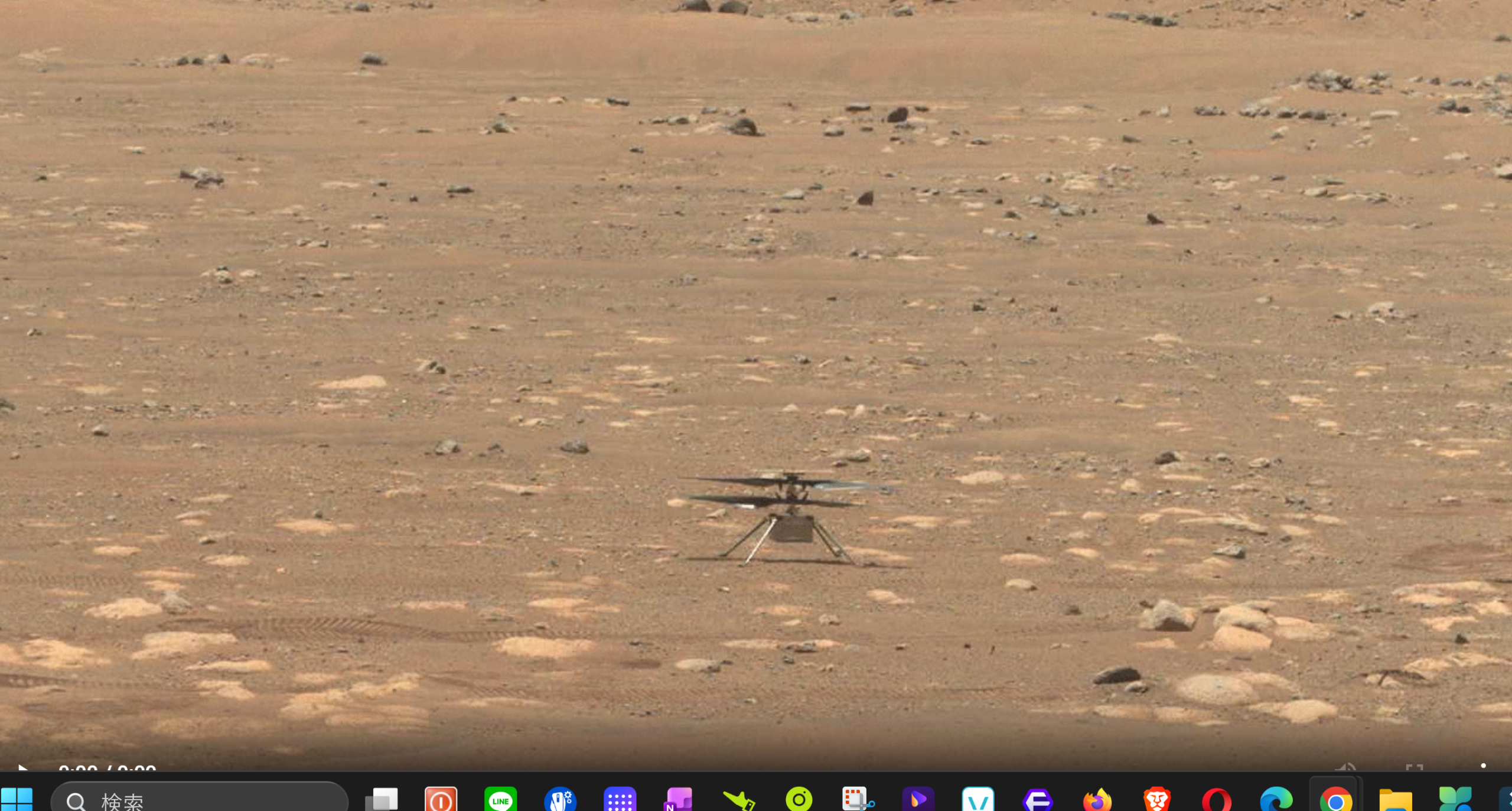
The pioneering Ingenuity helicopter was the first to open up the Martian skies, achieving a historic milestone in powered extraterrestrial flight.
However, Ingenuity was primarily designed as a technology demonstrator and simply could not carry heavy scientific payloads.
To push the boundaries of human exploration on Mars, we desperately need next-generation aircraft capable of transporting heavier equipment over much greater distances.
Consequently, engineers are rapidly developing powerful new rotor systems designed to lift advanced sensors and high-capacity batteries.
To achieve this massive increase in lift, the engineering choices are generally limited to either expanding the diameter of the rotors or pushing their rotational speed to the absolute limit.
Given the strict space constraints of interplanetary spacecraft, significantly increasing the rotational speed of the blades has become the most practical and crucial approach.
To meet the demanding performance requirements of these future vehicles, technical teams are continuously pushing the limits of physics in rigorous Earth-based testing facilities.
Breaking the Sound Barrier on the Red Planet
The Martian atmosphere is predominantly composed of carbon dioxide and is extremely cold, which means the speed of sound there is much slower than on Earth.
While the speed of sound at sea level on our planet is about 760 miles per hour, it drops to roughly 540 miles per hour on Mars.
As the rotational speed of a helicopter rotor increases, the tips of the blades approach this sonic barrier, creating a risk of severe aerodynamic instability.
To avoid the unpredictable physics associated with transonic speeds and the potential hazards of sudden Martian dust devils, the previous Ingenuity mission intentionally restricted its rotor speed to a maximum of 2,700 revolutions per minute.
However, the next generation of Martian rotorcraft absolutely must break through this operational ceiling to unlock greater performance.
Inside a massive vacuum chamber in Southern California, engineers recreated the precise atmospheric pressure and carbon dioxide environment of Mars for extreme stress testing.
By introducing artificial headwinds into the chamber, the engineering team successfully tested the rotors at staggering speeds of up to 3,750 revolutions per minute.
Remarkably, the blade tips reached speeds of Mach 1.08, proving that the aircraft could safely surpass the sound barrier without tearing itself apart.
This incredible breakthrough has revealed that the lifting capability of future Martian helicopters can be improved by an astonishing 30 percent.
Project SkyFall: Charting a New Course for 2028
The resounding success of these supersonic rotor tests serves as a critical milestone for the newly announced Mars exploration initiative known as Project SkyFall.
This highly ambitious endeavor aims to deploy three next-generation Mars helicopters to the Red Planet in December 2028.
In addition to the traditional three-bladed designs, a slightly longer two-bladed rotor specifically tailored for the SkyFall mission also passed these rigorous tests with flying colors.
Because the blades are longer, the engineering team confirmed that a slightly lower rotational speed of 3,570 revolutions per minute was perfectly sufficient to achieve the required near-supersonic performance.
These next-generation helicopters will effortlessly carry heavy scientific instruments, enabling them to investigate rugged terrains and steep cliff faces that rovers simply cannot reach.
The collection of high-resolution aerial data will provide invaluable support, significantly enhancing the safety and efficiency of future robotic and human exploration missions.
This innovative aviation technology, designed to pioneer unknown territories, will undoubtedly serve as humanity’s new eyes on Mars and etch a brilliant new chapter in the history of space exploration.
まとめ
It’s truly wonderful to see these next-generation rotors breaking the sound barrier, opening up exciting new possibilities for exploring the Red Planet.
I hope you’re as thrilled as I am for the upcoming SkyFall mission in 2028, where these incredible flying machines will help us uncover even more Martian secrets.
Reference:
https://www.jpl.nasa.gov/news/nasa-pushes-next-gen-mars-helicopter-rotor-blades-past-mach-1/?utm_source=iContact&utm_medium=email&utm_campaign=1-nasajpl&utm_content=mars20260507