Hunting the Unseen Hazards: NASA’s Next-Gen Asteroid Hunter Takes Shape
Shielding Earth: The Dawn of the NEO Surveyor Space Telescope
A silent threat continuously looms in the deep expanse of space, forcing humanity to develop advanced cosmic shields.
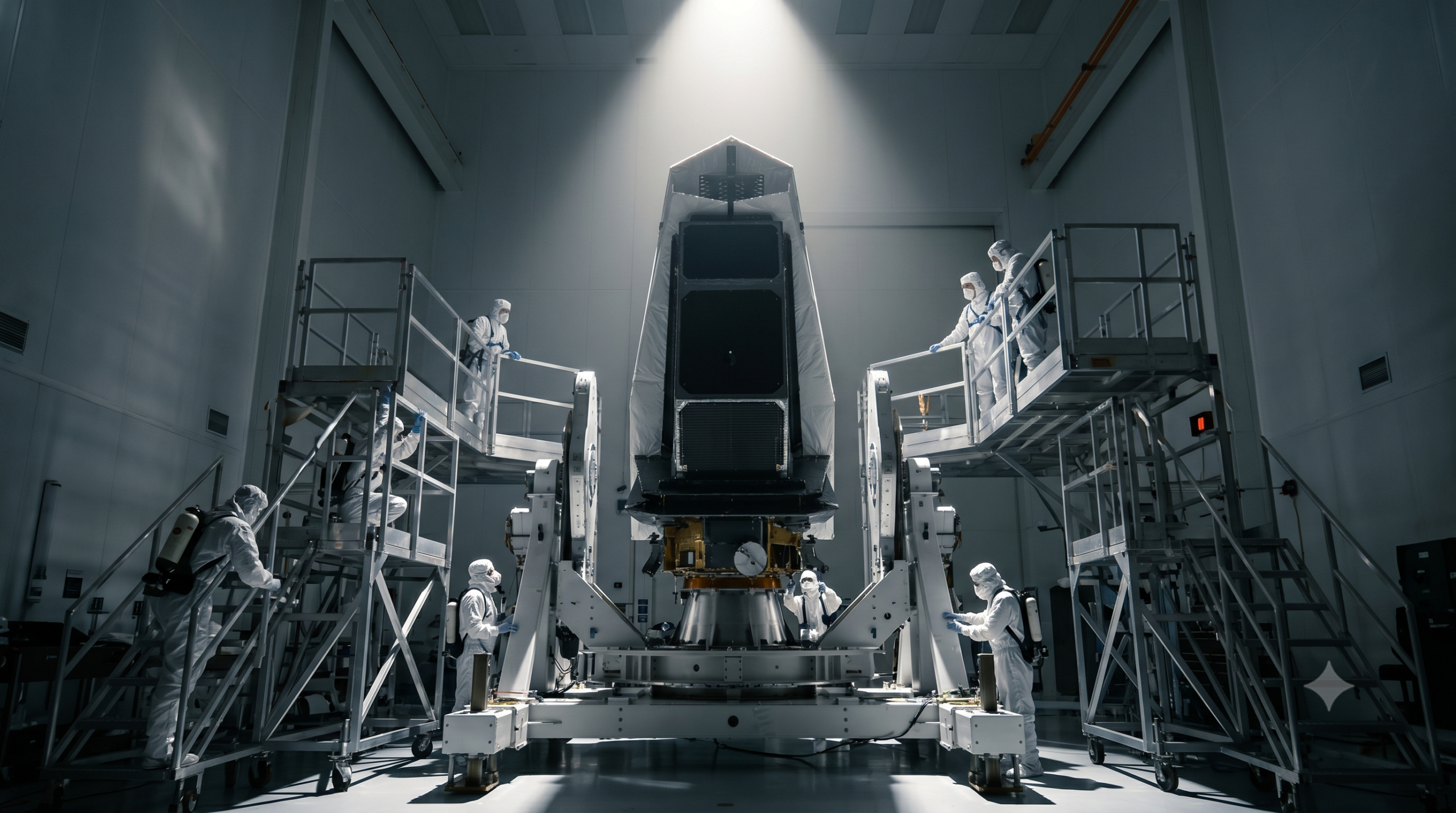
The primary defense mechanism currently being assembled is NASA’s first dedicated planetary defense infrared space telescope, known as the Near-Earth Object Surveyor.
This revolutionary mission is custom-built to discover and characterize potentially hazardous asteroids and comets that venture dangerously close to Earth’s orbit.
With its launch scheduled for no earlier than September 2027, specialized engineering teams across the United States are aggressively moving forward with hardware integration and data processing software development.
Astronomers estimate that tens of thousands of undiscovered near-Earth objects larger than 140 meters in diameter exist in our solar system, each capable of causing catastrophic regional damage upon impact.
During its initial five-year baseline survey, the NEO Surveyor aims to identify more than two-thirds of these elusive threats, making significant strides toward the ultimate goal of finding over 90 percent of them.
The spacecraft will operate from the Sun-Earth Lagrange point 1, a gravitationally stable region located about one million miles away from Earth, providing an uninterrupted vantage point to continuously monitor the cosmos.
Piercing the Darkness: Innovative Infrared Technology and Sunshields
Traditional ground-based optical telescopes face severe limitations when tracking down cosmic hazards.
Many near-Earth objects are as dark as charcoal, reflecting almost no visible light, while others are simply too small to detect from the surface of our planet.
Furthermore, a vast number of these objects lurk within the blinding glare of the Sun, creating a dangerous blind spot for terrestrial observatories.
To overcome these critical challenges, the NEO Surveyor bypasses reflected light altogether and instead detects the infrared thermal glow emitted by objects as they are warmed by the Sun.
In the freezing environment of deep space, even the darkest asteroids shine brightly in infrared wavelengths, allowing scientists to pinpoint their locations with remarkable accuracy.
To maintain the extreme sensitivity of its instruments, the spacecraft features a massive six-meter-long sunshade.
This innovative shield blocks intense direct sunlight, keeping the infrared telescope at ultra-cold temperatures and enabling it to safely scan regions of the sky closer to the Sun than ever before.
The vast wealth of data generated by this observatory will form the foundation of our planetary defense strategy, ensuring that humanity receives ample warning to mitigate future impacts.