Rewriting Mars: Curiosity Unveils Unprecedented Organic Molecules
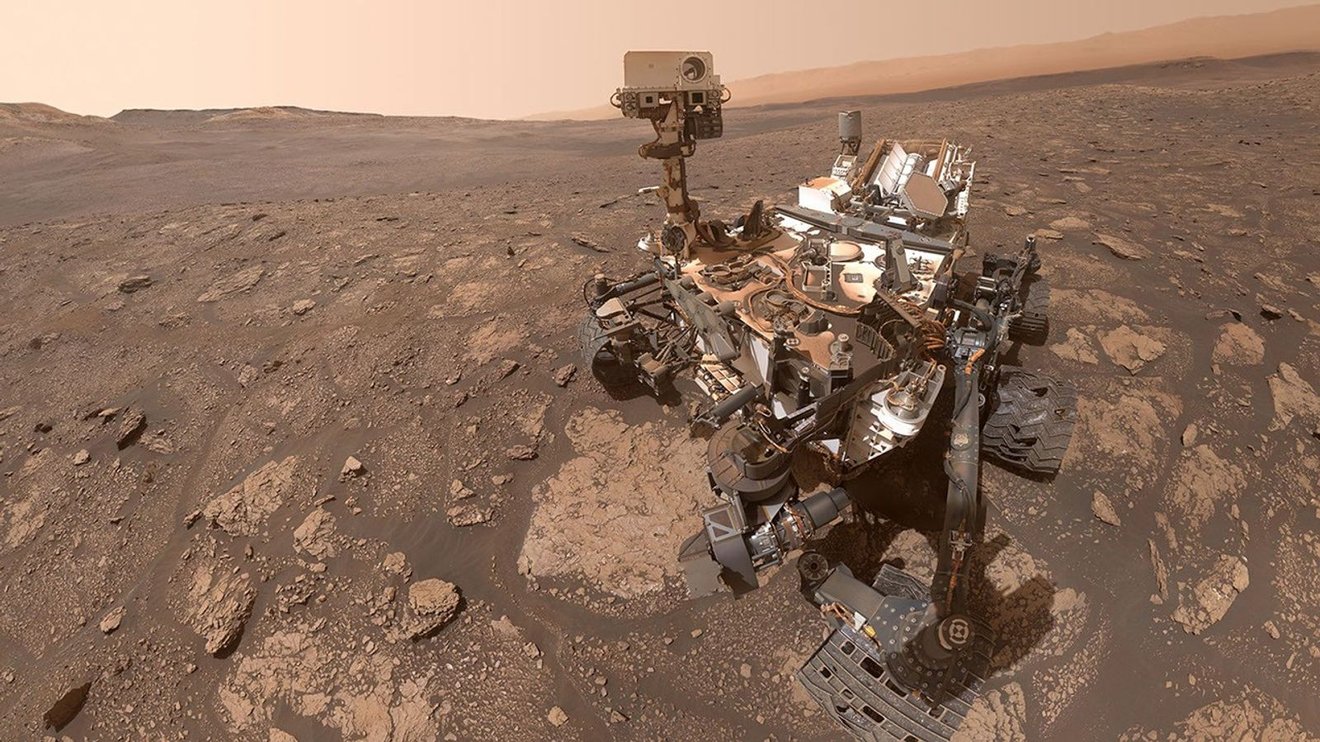
The Curiosity rover has recently unearthed a remarkable collection of organic molecules, revealing a level of chemical diversity never before seen on the Martian surface.
These microscopic treasures were found hidden within a rock sample named “Mary Anning 3”, extracted from a clay-rich region of Mount Sharp.
Billions of years ago, this area was a dynamic environment of ancient lakes and streams that surged and dried in endless cycles.
The clay minerals left behind by these ancient waters act as exceptional time capsules, capable of preserving delicate organic compounds against the harsh, radiation-battered environment of modern Mars.
Astonishingly, among the 21 carbon-containing molecules identified in this sample, seven are completely new discoveries for the Red Planet.
While we cannot yet definitively say whether these molecules originated from biological life or geological chemistry, their presence firmly establishes that ancient Mars harbored the precise chemical ingredients necessary to support life.
This breakthrough fundamentally shifts our understanding of planetary preservation and brings us closer to unraveling the biological potential of the early solar system.
Nitrogen Heterocycles and the Building Blocks of Life
Among the newly identified organic compounds, the discovery of nitrogen heterocycles stands out as a profound milestone in astrobiology.
These specific molecular structures consist of a ring of carbon atoms interwoven with nitrogen, forming the very architectural foundation of RNA and DNA.
Finding these crucial precursors to genetic information on the Martian surface is an unprecedented event that bridges the gap between simple chemistry and the complex machinery of life.
Alongside these heterocycles, the rover also detected benzothiophene, a distinctive carbon- and sulfur-bearing molecule frequently found in ancient meteorites.
Many scientists theorize that such meteorites acted as cosmic delivery vehicles, seeding prebiotic chemistry across the primordial solar system.
When viewed alongside the long-chain hydrocarbons previously discovered on Mars, a vivid picture of a chemically rich ancient world begins to emerge.
These microscopic molecular rings silently testify to a time when Mars possessed all the fundamental building blocks required to ignite the spark of life.
Unlocking Secrets with Wet Chemistry Inside SAM
This extraordinary analytical feat was made possible by the Sample Analysis at Mars instrument, an incredibly sophisticated miniature laboratory housed deep within Curiosity’s chassis.
The process begins when the rover’s robotic arm drills into the Martian bedrock, pulverizing the rock into a fine powder that is carefully fed into SAM’s high-temperature ovens.
By superheating the sample and analyzing the released gases, scientists can decode the intricate chemical makeup of the alien terrain.
For the Mary Anning 3 sample, the team employed a rare and specialized technique known as “wet chemistry”, reserving it exclusively for samples of the highest scientific value.
This method involves dropping the rock powder into a powerful solvent called TMAH, which triggers chemical reactions capable of breaking apart massive, complex molecules that would otherwise remain undetectable.
Laboratory tests on Earth using the ancient Murchison meteorite confirmed that TMAH successfully fractures larger life-associated compounds into smaller, recognizable pieces like benzothiophene.
Consequently, the molecules found within Mary Anning 3 are highly likely the fragmented remains of even grander and more intricate organic structures that once existed on the Martian surface.
Summary
It is deeply fascinating to realize that the fundamental building blocks of life have been quietly preserved in Martian clay for billions of years.
These microscopic survivors continue to unlock the grand mysteries of our solar system, promising even more thrilling discoveries in the missions to come.
Reference Link:
https://www.jpl.nasa.gov/news/nasas-curiosity-finds-organic-molecules-never-seen-before-on-mars/?utm_source=iContact&utm_medium=email&utm_campaign=1-nasajpl&utm_content=curiosity20260421