The Spectacular Destruction of Stars by Black Holes
The Nancy Grace Roman Space Telescope, slated for launch in August 2026, possesses groundbreaking capabilities that will revolutionize our understanding of the cosmos.
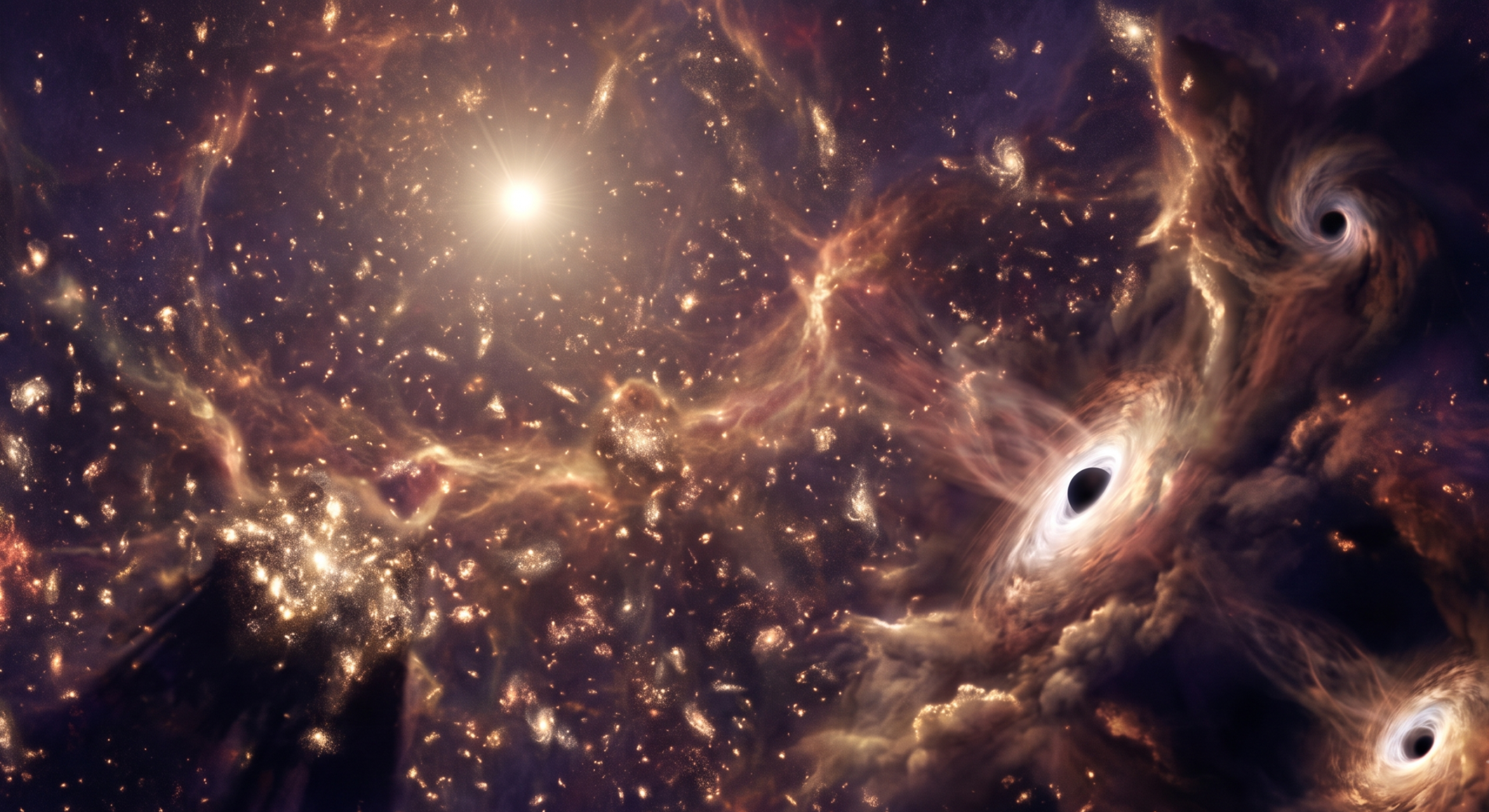
One of its most highly anticipated tasks is capturing the exact moment when distant supermassive black holes completely obliterate wandering stars.
Because black holes trap everything within their intense gravitational fields, observing them directly has always been an immense challenge for astronomers.
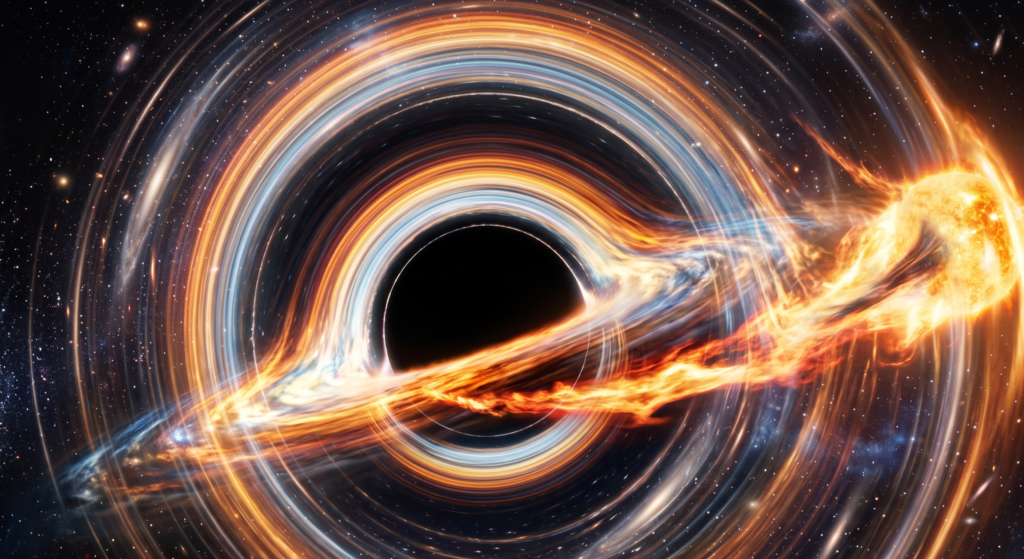
However, we can reveal their hidden presence by detecting the luminous accretion disks of matter swirling around them or the intense bursts of light produced when a star is torn apart.
The Roman Space Telescope is equipped with incredibly sensitive near-infrared detectors, making it perfectly suited to capture light from the distant universe that has been stretched by cosmic expansion.
This advanced technology will allow us to visualize dramatic celestial events that occurred up to 11 billion years ago with an unprecedented level of clarity.
The Cosmic Flashes of Tidal Disruption Events
When a black hole consumes a star, the stellar victim does not always meet the same type of end.
If the supermassive black hole is exceptionally large, weighing over a billion times the mass of our Sun, it simply swallows the star whole without producing any significant flash of light.
Conversely, if a star ventures too close to a relatively lighter supermassive black hole, one with a mass between 100,000 and 100 million Suns, the extreme gravitational tidal forces shred the star to pieces.
This violent process is known as a tidal disruption event, which causes the stellar debris to heat up and emit a brilliant flare for several weeks before slowly fading.
During these events, the dying star can shine so brightly that it temporarily outshines every other star in its entire host galaxy.
Roman’s High-Latitude Time-Domain Survey will continuously monitor a massive patch of the sky equivalent to 90 full moons, making it exceptionally efficient at catching these unpredictable flashes.
Simulations suggest that Roman could identify up to 100 of these distant tidal disruption events every single year, providing astronomers with an invaluable treasure trove of cosmic data.
Solving the Mysteries of Early Black Hole Evolution
The existence of colossal supermassive black holes in the very early universe remains one of the most profound mysteries in modern astrophysics.
Scientists are actively debating two primary theories to explain how these celestial behemoths managed to grow so massive in such a relatively short period after the dawn of the universe.
The first theory proposes the existence of “light seeds,” which are black holes formed from the collapse of massive stars that subsequently merged and rapidly consumed surrounding gas.
The second theory suggests “heavy seeds,” where immense clouds of pristine gas collapsed directly into black holes already containing hundreds of thousands of solar masses.
If the light seed theory is correct, the early universe should be populated with numerous lighter supermassive black holes, which are typically too dim to be seen under normal circumstances.
By detecting the extreme light emitted during tidal disruption events, the Roman Space Telescope will allow us to essentially count these hidden black holes and understand their distribution.
This capability is the ultimate key to answering how black holes were first born and how they evolved alongside their host galaxies throughout the epic history of our universe.
Summary
By observing the dramatic demise of stars in the early universe, the Roman Space Telescope will provide crucial clues to unlock the origins of supermassive black holes.
Every time we uncover these deep cosmic histories, it truly reminds us of the incredible wonders our vast universe holds.