The Nancy Grace Roman Space Telescope: A New Era in Cosmic Exploration
NASA has officially set a target launch window for early September 2026 for its next premier mission, the Nancy Grace Roman Space Telescope.
Named after the visionary Dr. Nancy Grace Roman, often referred to as the “Mother of Hubble,” this observatory is engineered to solve some of the most profound mysteries of the universe.
From a technical standpoint, the Roman Space Telescope is a masterpiece of modern engineering, featuring a 2.4-meter primary mirror that matches the resolution of the legendary Hubble Space Telescope.
However, its true strength lies in its unprecedented 100-times-wider field of view, allowing it to capture vast panoramic images of the sky with the same intricate detail as Hubble’s deep-field views.
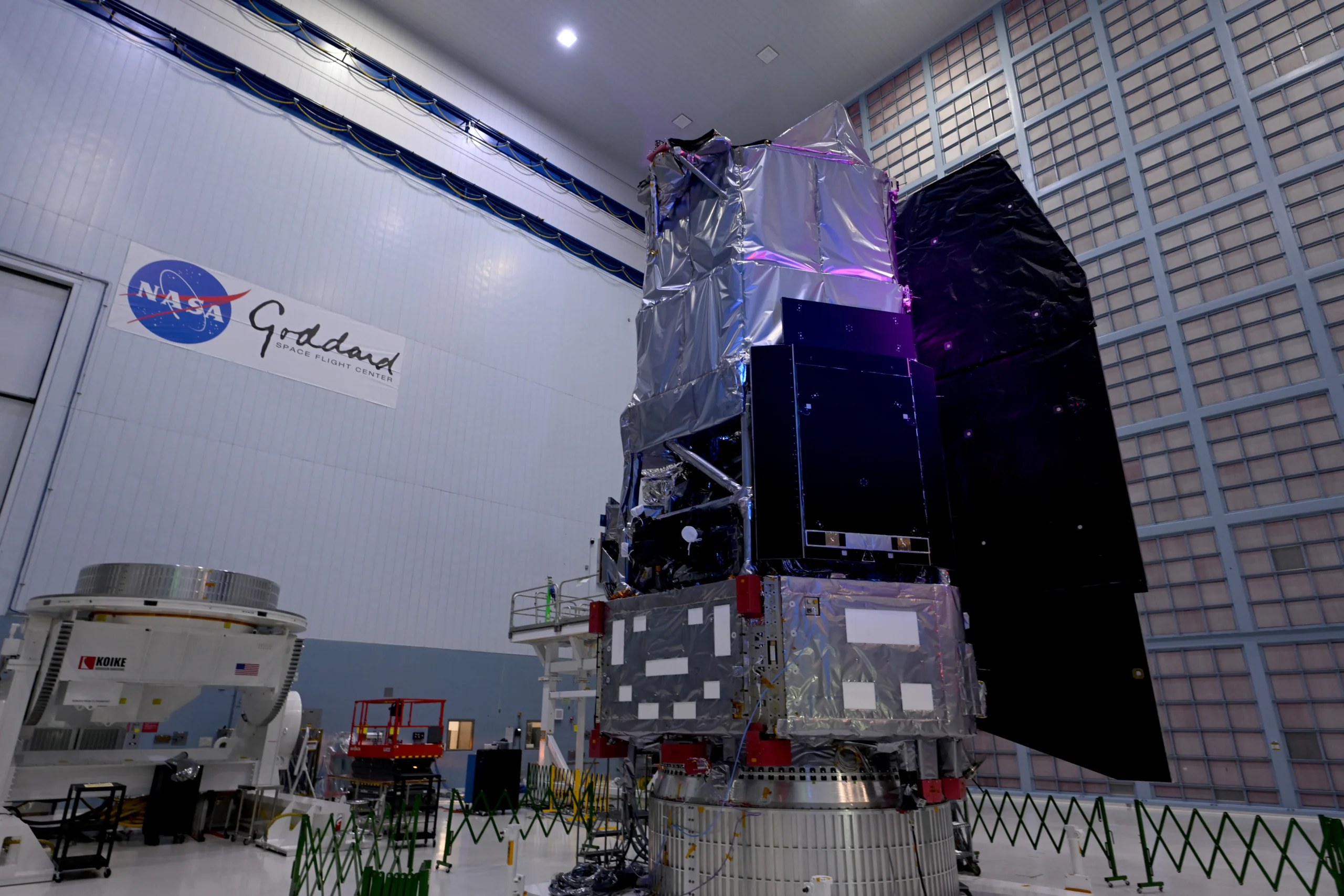
Engineers at NASA’s Goddard Space Flight Center are currently performing the final integration and testing of its primary instrument, the Wide Field Instrument (WFI), as well as a revolutionary technology demonstration known as the Coronagraph Instrument.
These tools will enable scientists to map the distribution of matter across the cosmos at a scale and speed that were previously unimaginable, turning decades of work into months of high-precision observations.
The mission is designed to act as a cosmic surveyor, peering through the dust and dark to reveal how the universe expanded and how its massive structures formed over billions of years.
As we approach the launch, the global scientific community anticipates a paradigm shift in our understanding of the cosmic timeline, from the earliest galaxies to the fate of the universe itself.
Deciphering the Dark Universe and Global Cosmic Mapping
One of the most ambitious goals of the Roman mission is to investigate the nature of dark energy, the mysterious force causing the expansion of the universe to accelerate.
In our current cosmic model, visible matter accounts for only about 5% of the total universe, while the rest remains hidden in the forms of dark energy and dark matter.
By measuring the precise shapes and positions of hundreds of millions of distant galaxies, Roman will use “weak gravitational lensing” to map the invisible distribution of dark matter with extreme accuracy.
This data will allow researchers to track how the growth of cosmic structures has changed over time, providing a clear window into the influence of dark energy throughout history.
Roman will also perform a “galaxy clustering” survey, measuring the 3D distribution of galaxies to test the fundamental laws of gravity on a universal scale.
These combined methods will determine whether dark energy is a constant property of space-time or a dynamic field that evolves, a discovery that would fundamentally rewrite the laws of physics.
Working in tandem with ground-based observatories and the James Webb Space Telescope, Roman will provide the wide-scale context needed to understand the “big picture” of our universe’s evolution and ultimate destiny.
A Revolution in Exoplanet Discovery and Advanced Coronagraphy
Beyond the deep cosmos, the Roman Space Telescope is poised to revolutionize our knowledge of worlds within our own Milky Way galaxy through a diverse exoplanet survey.
The mission will utilize a technique called “gravitational microlensing,” which detects planets when they pass in front of distant stars, causing a brief, gravity-induced amplification of the starlight.
This method is uniquely powerful because it can find planets that are far from their host stars—similar to the orbits of Jupiter and Saturn in our solar system—and can even detect “rogue planets” drifting alone in the dark.
Statistically, Roman is expected to find thousands of new planetary systems, giving us a definitive answer to how common solar systems like our own actually are across the galaxy.
Furthermore, the mission carries a “Coronagraph Instrument (CGI),” a high-contrast imaging system designed to block the overwhelming light of a star to see the faint planets orbiting it directly.
The CGI is a vital technology demonstration, proving that we can suppress starlight by a factor of over a billion, a capability required to image Earth-like planets in the future.
This leap in optical precision is not just a technical milestone but a bridge to the future, where we may eventually analyze the atmospheres of alien worlds for signs of life.
Summary
The countdown to the Nancy Grace Roman Space Telescope launch marks the beginning of a transformative chapter in our quest to understand the dark and vast cosmos.
This mission will provide the grand panoramic view needed to solve the mysteries of dark energy and find new worlds among the stars.
Reference Link:
https://www.nasa.gov/image-article/nasa-targets-early-september-for-roman-space-telescope-launch/