The Unexpectedly Rapid Calming of Young Sun-Like Stars
Understanding the evolutionary history of our own Sun is a critical step in unraveling the mysteries of planetary formation and the origins of life.
Recent observations utilizing the Chandra X-ray Observatory have revealed a fascinating truth about young stellar cousins of our Sun.
Instead of maintaining their fierce and energetic youth for prolonged periods, these stars are calming down and dimming their X-ray output at a remarkably accelerated pace.
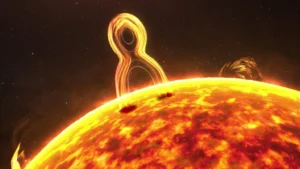
In their infancy, stars generally exhibit rapid rotation and intense magnetic activity, which fuels the continuous eruption of powerful X-rays and ultraviolet radiation into surrounding space.
For decades, theoretical models and limited data sets led astronomers to believe that this violent adolescent phase would endure for a vast expanse of time.
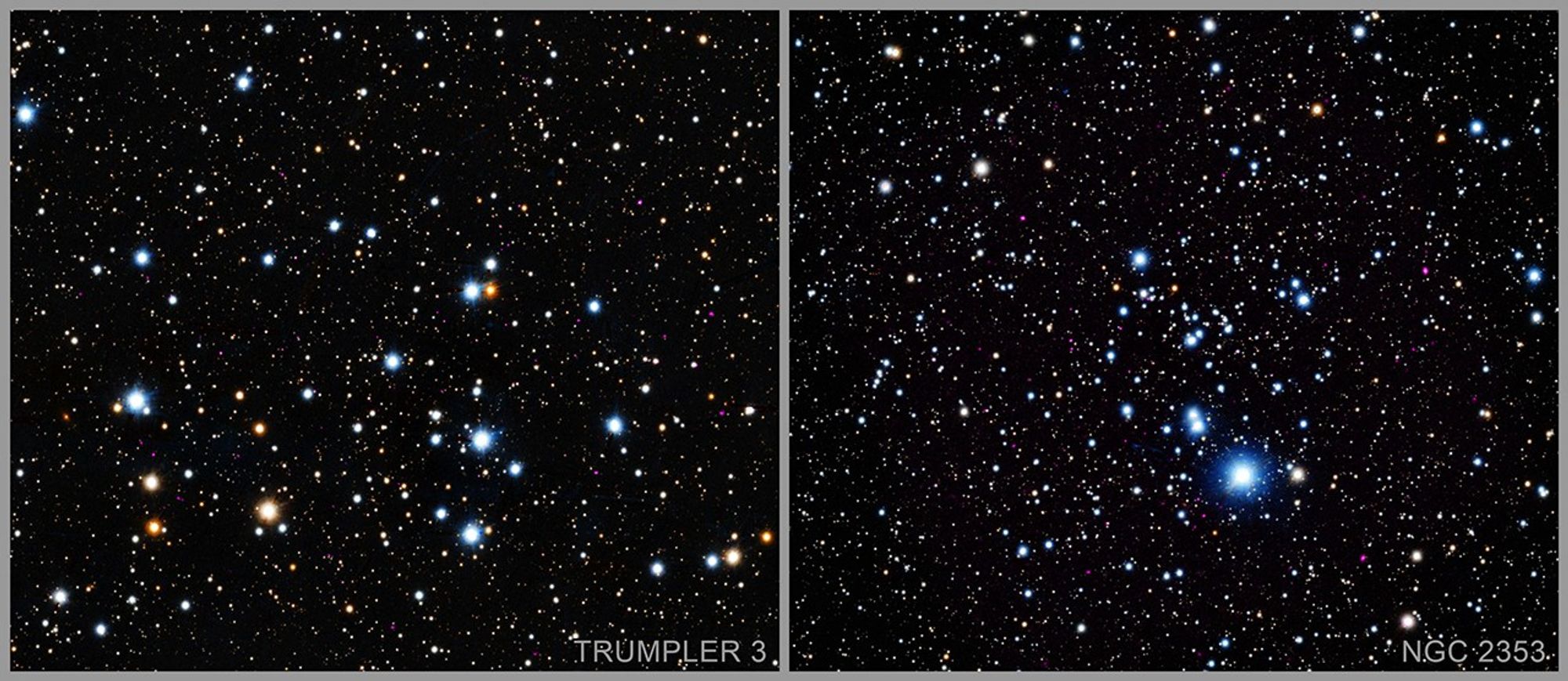
However, detailed analysis of stellar clusters aged between 45 million and 750 million years shattered these assumptions.
The data demonstrated that once these stars reach roughly 100 million years of age, their X-ray emissions plummet to merely a quarter or a third of what predictive models anticipated.
This steep drop-off occurs approximately 15 times faster than traditional equations suggested, marking a monumental paradigm shift in our understanding of stellar physics.
How Fierce Stellar Radiation Shapes Planetary Destinies

The relentless barrage of high-energy X-rays and charged particles from a young star poses a severe existential threat to any orbiting planets.
To put this into perspective, a typical solar-mass star at three million years old radiates X-rays with an intensity roughly a thousand times greater than our modern Sun.
Prolonged exposure to such extreme cosmic weather acts as a destructive force, physically stripping away planetary atmospheres and obliterating the fragile organic molecules necessary for life.
If our own Earth had been subjected to these punishing conditions for billions of years, our oceans would have boiled away into the void.
Our protective atmospheric shield would be non-existent, and the thriving biosphere we see today could never have taken root.
Therefore, the duration of a star’s chaotic youth directly dictates the habitability of its entire solar system.
The rapid dimming phenomenon observed by Chandra acts as a cosmic failsafe, significantly shortening the window of planetary destruction.
This remarkably swift transition into a quiet, stable adulthood is incredibly welcome news for the prospect of finding robust, life-supporting atmospheres around other stars in the galaxy.
The Inner Workings of a Star’s Magnetic Decay
While science fiction thrillers might depict the sudden dimming of a star as the sinister work of alien mega-structures or energy-consuming microbes, the reality is a magnificent display of natural astrophysics.
The steep decline in X-ray brightness captured by these observations is driven entirely by internal mechanisms rather than external forces.
As young stars age, they naturally shed angular momentum, causing their rotational speeds to gradually slow down over time.
This deceleration fundamentally cripples the internal dynamo process responsible for generating the star’s sprawling magnetic fields.
With the intricate dance between rotation and magnetism severely weakened, the superheating of the stellar corona becomes highly inefficient.
Consequently, the frequency and ferocity of devastating X-ray flares diminish rapidly, ushering in an era of relative tranquility.
This natural dimming process strongly echoes the historical timeline of our own Sun, suggesting that it too may have quieted down just in time to allow the first microbial life to flourish on Earth.
It is a beautiful realization that the internal mechanical failure of a star’s magnetic engine is precisely what creates a safe haven for life to emerge in an otherwise hostile universe.
Summary
It is wonderfully poetic that a star losing its youthful energy is exactly what allows orbiting planets to become safe havens for biology to blossom.
Looking at the peaceful light of our own Sun today, we can truly appreciate how its early calming was the ultimate gift that made our existence possible.
Reference Link:
https://science.nasa.gov/missions/chandra/nasa-finds-young-stars-dim-in-x-rays-surprisingly-quickly/?utm_source=newsletters&utm_medium=email&utm_campaign=nn202615