Juno’s Precision Flyby of Jupiter’s Inner Moon Thebe
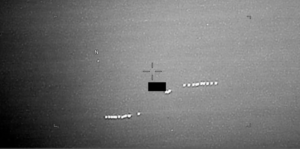
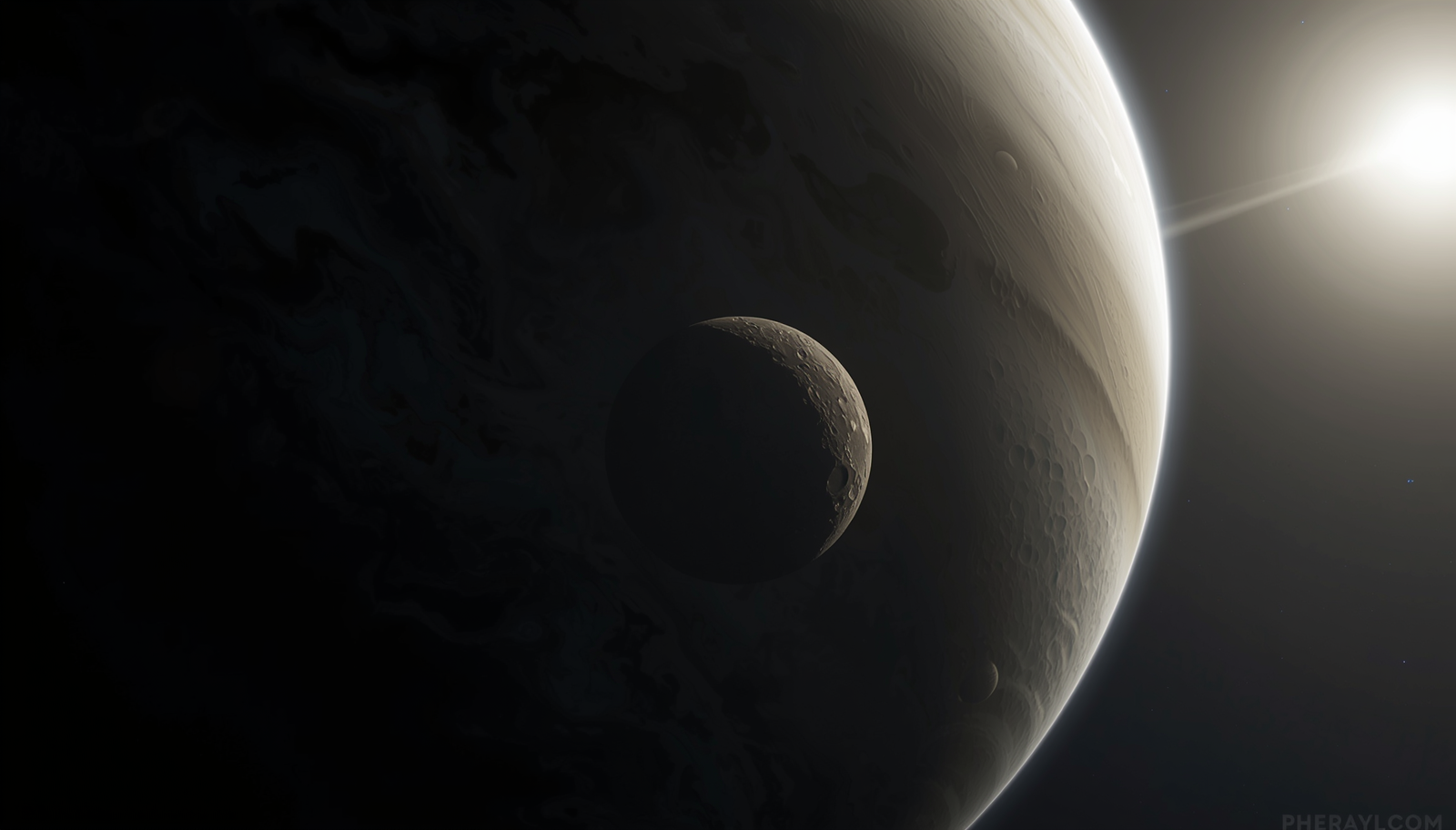
NASA’s Juno spacecraft has successfully executed a deep-gravity dive into Jupiter’s inner system, performing a high-precision observation of the minor moon Thebe. During the flyby on May 1, 2026, the probe closed the gap to within just 5,000 kilometers of the lunar surface. Interestingly, the sharp imagery was captured using the Stellar Reference Unit—a camera primarily designed for star-field navigation—showcasing the engineering versatility of our deep-space instruments.
Discovered by Voyager 1 back in 1980, Thebe remains an enigmatic body, lacking the vast icy landscapes seen on the Galilean moons. As Juno continues its significantly extended mission, our engineering teams are leveraging every orbital pass to gather data on Jupiter’s aurora, volcanic activity on Io, and these elusive minor satellites. This latest dataset provides critical clues for modeling the complex ring dynamics and the formation history of the Jovian inner system.
Saving the Swift Observatory: LINK Service Module Completes Testing
The mission to rescue the Neil Gehrels Swift Observatory has cleared a major technical hurdle at the Goddard Space Flight Center. The LINK robotic service module, developed by Katalyst Space Technologies, has officially passed its final environmental and vibration stress tests in our thermal vacuum chambers. With solar activity currently increasing atmospheric drag, Swift is losing altitude rapidly; without intervention, we risk losing this vital gamma-ray burst hunter to atmospheric reentry later this year.
Scheduled for launch on a Pegasus rocket this June, the LINK module represents a bold leap in on-orbit servicing. It will attempt to dock with Swift and use its own ion propulsion system to boost the observatory back to a safe altitude. While the precise metrics of the orbital lift remain subject to post-docking telemetry, the success of this mission would set a new industry standard—proving that we can sustain high-value scientific assets for a fraction of the cost of building new ones.
Engineering a Faster Journey to Mars: 120kW MPD Thruster Milestone
At NASA’s Jet Propulsion Laboratory, our propulsion engineers have reached a stunning milestone with the successful test-firing of a high-power Magnetoplasmadynamic (MPD) thruster. Utilizing lithium vapor and intense magnetic fields, this next-generation engine reached a record-breaking 120 kilowatts of power—the highest ever for a U.S. electric propulsion system. Inside the vacuum chamber, the thruster emits a brilliant, lava-hot red plasma plume, generating thrust far beyond the capabilities of conventional ion drives.
This technology is the cornerstone of our future crewed missions to the Red Planet. By scaling this system up to the megawatt class and pairing it with a nuclear fission reactor, we could drastically reduce transit times for our astronauts. While the long-term durability of the system under tens of thousands of hours of continuous operation is still being evaluated, our teams are relentless in pushing the boundaries of physics to ensure humanity’s safe arrival on the Martian surface.
RAMSES Mission: JAXA and ESA Unite for Planetary Defense
In a significant move for international security, JAXA and the European Space Agency (ESA) have signed a new Memorandum of Understanding in Berlin focused on the RAMSES mission. This partnership centers on the 2029 arrival of the massive asteroid Apophis, which will make an exceptionally close approach to Earth. JAXA will play a pivotal role, providing the H3 launch vehicle and supplying critical components like lightweight solar paddles and infrared imaging systems to track the asteroid’s behavior.
The RAMSES probe will monitor how Earth’s tidal forces affect the asteroid’s shape and rotation during its flyby—an event of immense importance for planetary defense. While the exact orbital maneuvering schedule for the arrival phase is still being refined by our flight dynamicists, the synergy between JAXA’s deep-space heritage and ESA’s mission management is a massive win. Together, we are building the technical shield required to protect our planet from future celestial threats.