Cosmic Fireworks: Unexpected X-ray Flares in the Aftermath of Supernovae
When a massive star reaches the end of its life, it goes out in a spectacular explosion known as a supernova, releasing tremendous energy into the cosmos.
Traditionally, astronomers have believed that the remnants of these explosive events slowly and steadily fade away over time, becoming quiet, expansive clouds of hot gas.
However, the universe always has a way of surprising us.
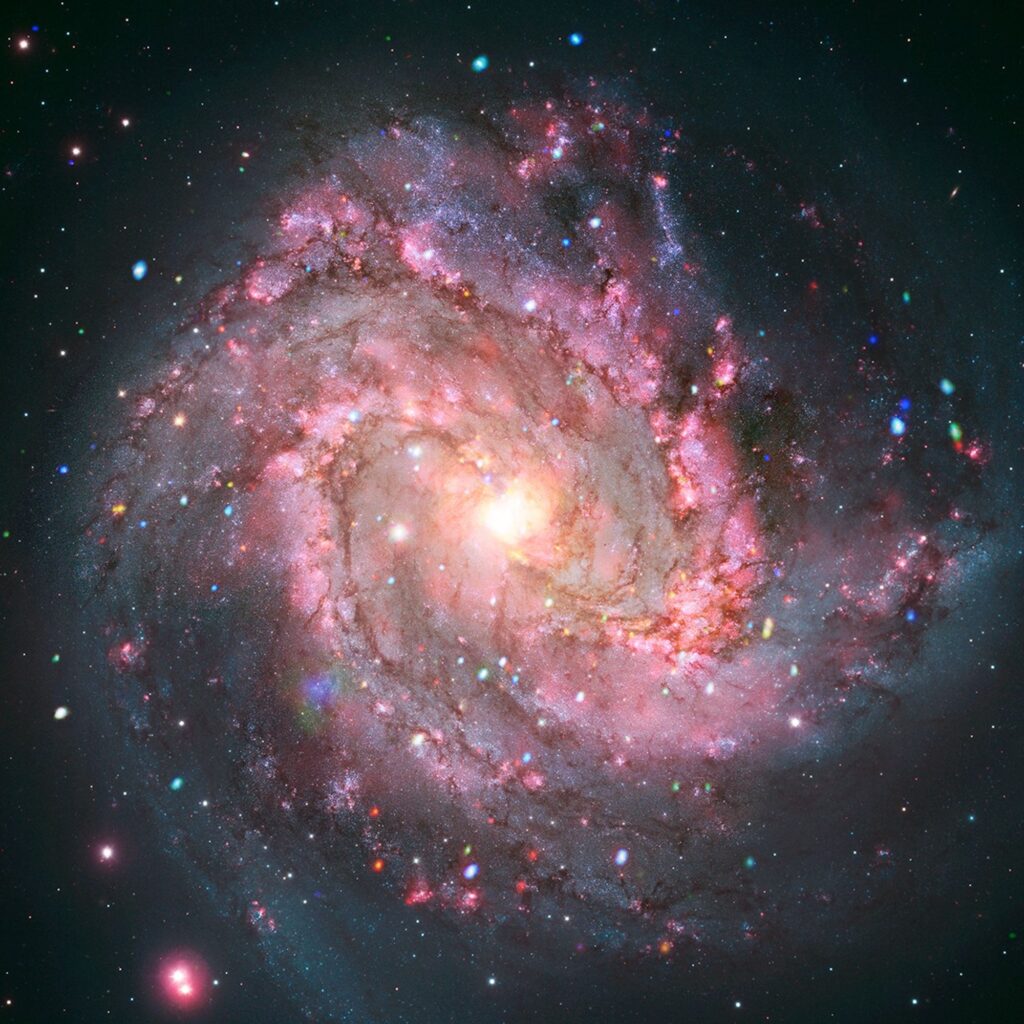
When observing the nearby spiral galaxy Messier 83 (M83), located roughly 15 million light-years from Earth, scientists uncovered a phenomenon that completely rewrites our understanding of stellar aftermaths.
They found dying stars setting off unexpected cosmic fireworks.
By delving into 14 years of extensive data collected by NASA’s Chandra X-ray Observatory between 2000 and 2014, researchers made a startling discovery.
A large population of cosmic objects, previously categorized as standard supernova remnants, were exhibiting dramatic and rapid changes in their X-ray brightness.
Normally, remnants older than a century are expected to gradually dim without any sudden fluctuations.
Yet, in M83, about half of the 22 studied X-ray sources associated with these stellar graveyards were drastically brightening and dimming within a relatively short timeframe.
Finding such a high number of highly variable remnants in a single galaxy was entirely unprecedented and sent ripples through the astronomical community.
This revelation indicates that the aftermath of a supernova is a far more complex and dynamic environment than previously imagined.
Even long after the initial detonation, the remaining celestial bodies and the surrounding environment continue to interact aggressively.
Unraveling the mechanisms behind these enigmatic variations is crucial, as it holds the key to better understanding stellar evolution, the life cycle of stars, and the intricate distribution of matter across galaxies.
The Surviving Companions
What could possibly be driving these dead stars to flash so erratically against our expectations?
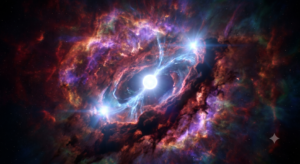
The leading theory points to a dramatic tale of survival in one of the most extreme environments imaginable: the enduring bond of a binary star system.
In our universe, a significant portion of massive stars are not solitary wanderers; they are born and live in pairs, orbiting a common center of mass.
In this theoretical scenario, the more massive star of the pair evolves faster, eventually collapsing and detonating as a supernova.
This cataclysmic event leaves behind an ultra-dense stellar corpse, either a neutron star or a black hole.
Remarkably, despite being right next to this immense explosion, the companion star sometimes survives the blast intact.
The surviving massive star and the newly formed black hole or neutron star remain gravitationally locked, settling into a new orbit.
As they dance around each other, the immense gravitational pull of the stellar corpse begins to siphon gas and material from the outer layers of the surviving companion.
As this stolen material spirals inward, it becomes superheated to millions of degrees, unleashing powerful torrents of X-rays before finally crossing the point of no return.
These extraordinary systems are known as high-mass X-ray binaries, and they are renowned for being some of the most variable X-ray sources in the universe.
The erratic flares observed in M83’s supernova remnants are likely the direct result of these binaries forming in the immediate aftermath of the explosions.
While only a few examples linking supernova remnants to these binary systems had ever been found previously across all observed galaxies, finding over 20 strong candidates in M83 alone suggests that this survivor scenario might be a common pathway in stellar evolution.
Cosmic Recycling in Action
Beyond the dramatic interactions of binary systems, scientists are considering another fascinating possibility to explain these cosmic light shows: a process that can best be described as cosmic recycling, where the ghost of the star feeds on its own expelled matter.
During a supernova, the outer layers of the dying star are blasted outward at incredible speeds, creating the expanding shell of gas we recognize as a remnant.
However, the black hole or neutron star left at the center retains a colossal gravitational grip.
Researchers theorize that not all the expelled material manages to escape completely.
Over decades or centuries, some of the debris from the original explosion loses its outward momentum and is inexorably pulled back toward the central object.
As this returning material falls back, it forms a swirling accretion disk around the dead star.
The intense friction and gravitational forces within the disk heat the matter to extreme temperatures, causing it to emit brilliant flashes of X-ray light as it is consumed.
This means that even without a companion star to feed from, a stellar corpse can intermittently flare up simply by re-accreting the very material it violently expelled during its death throes.
It is highly probable that the variable sources in M83 are not all driven by a single mechanism.
Some may be binary systems siphoning off companions, while others might be undergoing this cosmic recycling.
In some chaotic environments, both processes could even be occurring simultaneously.
Regardless of the exact cause, these findings prove that supernova remnants are not just quiet, fading scars in space, but active, evolving laboratories where matter is violently accelerated and reconstructed.
A Universal Feature of Starburst Galaxies
The implications of this discovery extend far beyond the spiral arms of Messier 83.
Recent follow-up studies suggest that these violently fluctuating supernova remnants might be a universal feature, particularly in environments where new stars are being born at a rapid pace.
M83 is characterized as a galaxy with a very high rate of star formation.
An abundance of stellar births naturally leads to a high number of massive stars, which burn through their fuel quickly and end their lives in supernovae.
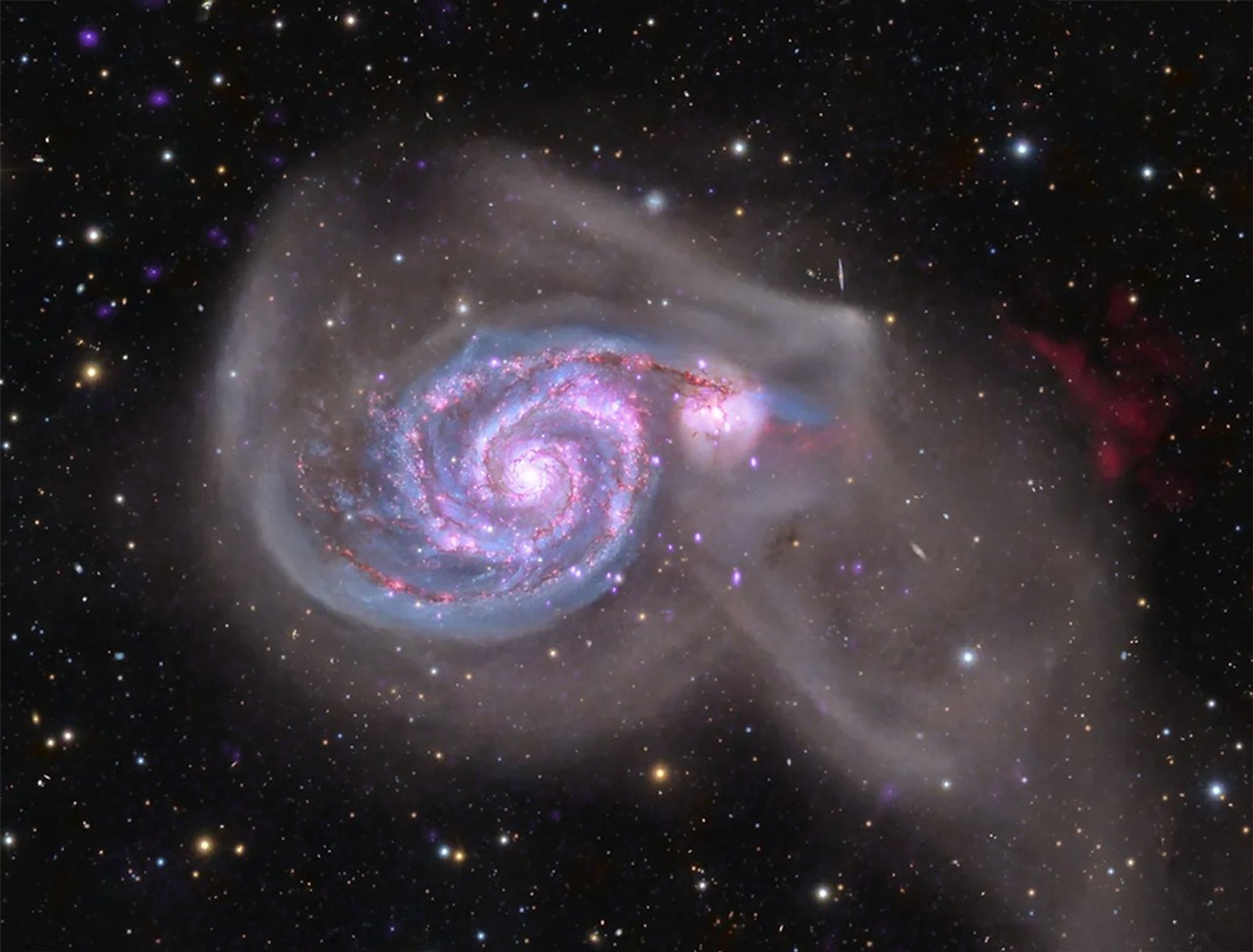
To test if this environment plays a role, researchers turned their attention to another nearby, active star-forming galaxy: Messier 51, the famous Whirlpool Galaxy.
Just like in M83, they discovered a surprisingly large population of variable X-ray sources hidden within its supernova remnants.
This confirms that what we are seeing is not an isolated anomaly.
In galaxies undergoing vigorous star formation, the conditions are seemingly perfect for creating massive binary systems, thereby increasing the likelihood of forming exotic stellar remnants after an explosion.
Furthermore, the dense interstellar medium typical of such galaxies might also facilitate the fallback of debris, fueling the cosmic recycling process.
As we continue to observe the cosmos, we must now view supernova remnants through a new lens, not as fading ghosts, but as dynamic, unpredictable systems.
The relentless gaze of advanced X-ray observatories will undoubtedly continue to illuminate the complex and violent life cycles of stars across the universe.
Conclusion
The unexpected fireworks discovered in M83 show us that a supernova is not just an ending, but the dawn of a turbulent new phase.
Whether pulling material from a surviving partner or recycling its own debris, the cosmos never ceases to amaze with its dynamic energy.