Cotton Candy Worlds: TESS Uncovers the Puffiest Planets in the Cosmos
The boundless variety of the universe continues to defy our deepest understandings of planetary physics.
NASA’s Transiting Exoplanet Survey Satellite, known as TESS, has recently unveiled a system containing the puffiest planets ever observed.
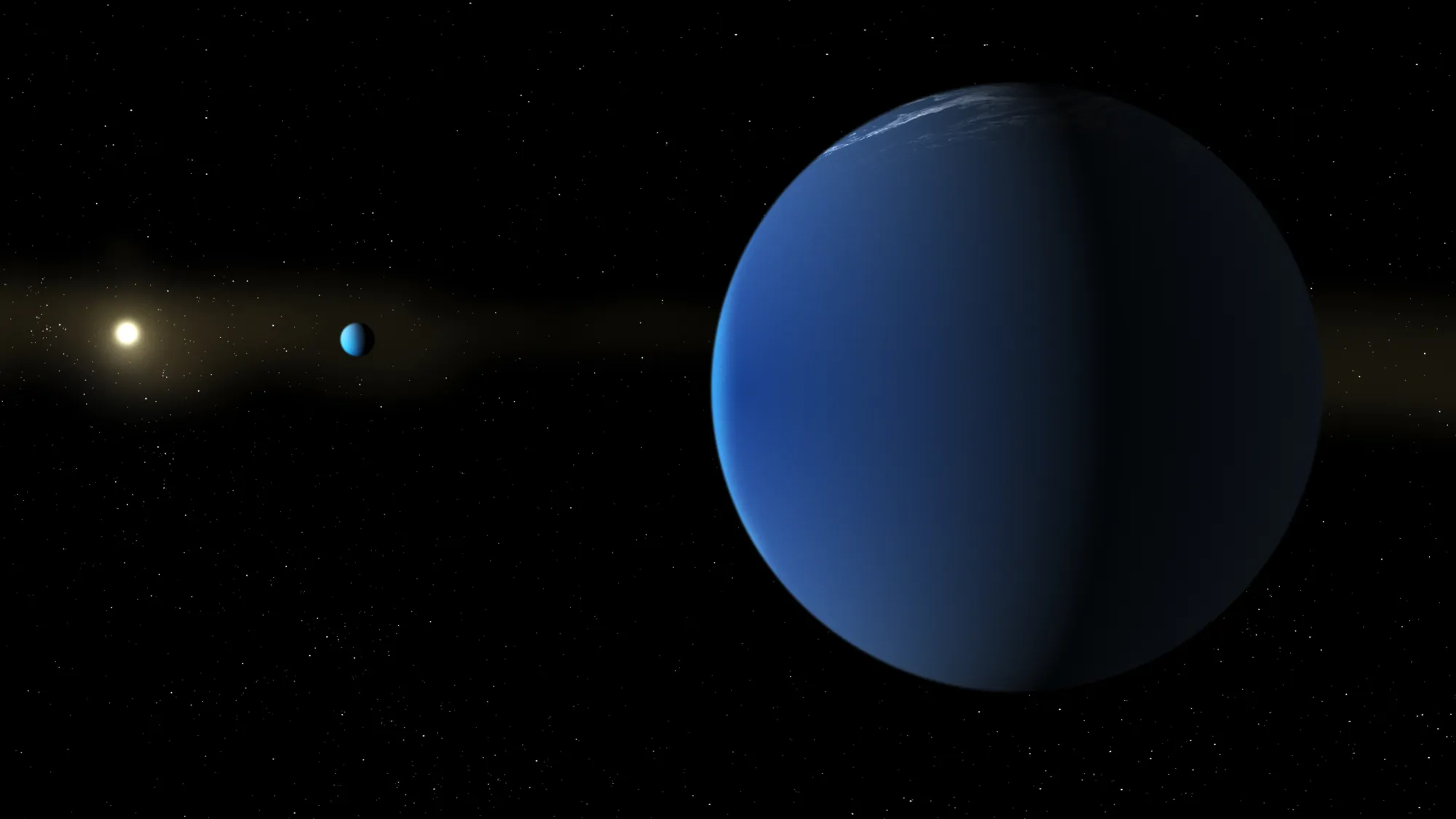
Located approximately 1,113 light-years from Earth, these two colossal worlds orbit a Sun-like star designated as TOI-791.
Incredibly, while these celestial bodies rival the sheer size of Jupiter, they possess only a minuscule fraction of its mass.
The inner planet, TOI-791 b, holds a mere 3.0 percent of Jupiter’s mass, while its slightly larger sibling, TOI-791 c, contains only 5.9 percent.
This drastic disparity means their overall density is astonishingly low, comparable to the airy consistency of cosmic cotton candy.
The existence of such massive yet extraordinarily lightweight super-puff planets presents a profound puzzle for modern astronomy.
These latest observations challenge our existing models, forcing us to rethink how such bizarre giant planets form and maintain their structure in the harsh environment of space.
Gravitational Tug-of-War and the Mystery of Long-Orbit Evolution
Another fascinating aspect of these fluffy giants is their unusually extended orbital periods.
TOI-791 b takes 139 days to complete its journey around the host star, while TOI-791 c takes a lengthy 232 days.
Detecting planets with such long orbits via the transit method is incredibly challenging, requiring immense patience and continuous astronomical observation.
Operating from its high Earth orbit, TESS collected a staggering 1,122 days of data on this system over seven years, making this rare discovery possible.
Further analysis of this wealth of data revealed that the two planets are locked in a complex orbital dance, continuously tugging at one another with their gravity.
As they orbit, this gravitational interaction alters the precise timing of their transits across the face of their host star.
By measuring these subtle variations in transit timing, scientists were able to accurately calculate their masses and confirm their super-puff status.
Finding a single ultra-low-density planet is rare, but discovering two within the exact same star system offers an unprecedented laboratory for understanding planetary formation and the evolution of atmospheres.