PACE Satellite’s Unexpected Prowess in Monitoring Earth’s Wildfires from Space
Launched into orbit in early 2024, the PACE satellite was primarily designed to unlock the mysteries of our planet’s oceans and atmospheric ecosystems.
However, as its mission unfolded, this highly advanced orbital observatory revealed an extraordinary and somewhat unexpected capability to monitor terrestrial vegetation and track devastating wildfires.
Equipped with a state-of-the-art Ocean Color Instrument, the satellite acts as a powerful hyperspectral eye, capturing hundreds of distinct wavelengths ranging from visible light to near-infrared and ultraviolet spectrums.
By meticulously analyzing these diverse wavelengths, scientists can accurately assess the overall health of plant life, detecting subtle signs of stress, severe dryness, and pigment imbalances that indicate a high risk of imminent fires.
Furthermore, because the satellite provides daily global coverage, it allows researchers to swiftly evaluate massive burn scars left in the wake of wildfires, which is crucial for predicting subsequent hazards like flash floods and catastrophic landslides.
As the threat of intense fire seasons grows worldwide, this incredible cosmic vantage point offers vital data to help land managers mitigate risks and protect vulnerable ecosystems on the ground.
Decoding Smoke Patterns and Shaping Future Climate Models Through Aerosol Tracking
Beyond its hyperspectral capabilities, the PACE satellite is armed with two highly specialized polarimeters that take atmospheric analysis to an entirely new level.
By measuring the exact way sunlight reflects and scatters off microscopic particles suspended in the air, these instruments can determine not only the sheer quantity of atmospheric aerosols but also their distinct chemical properties, colors, sizes, and intricate shapes.
This level of precision is absolutely critical when it comes to isolating wildfire smoke from other airborne particulates like industrial pollutants or natural dust.
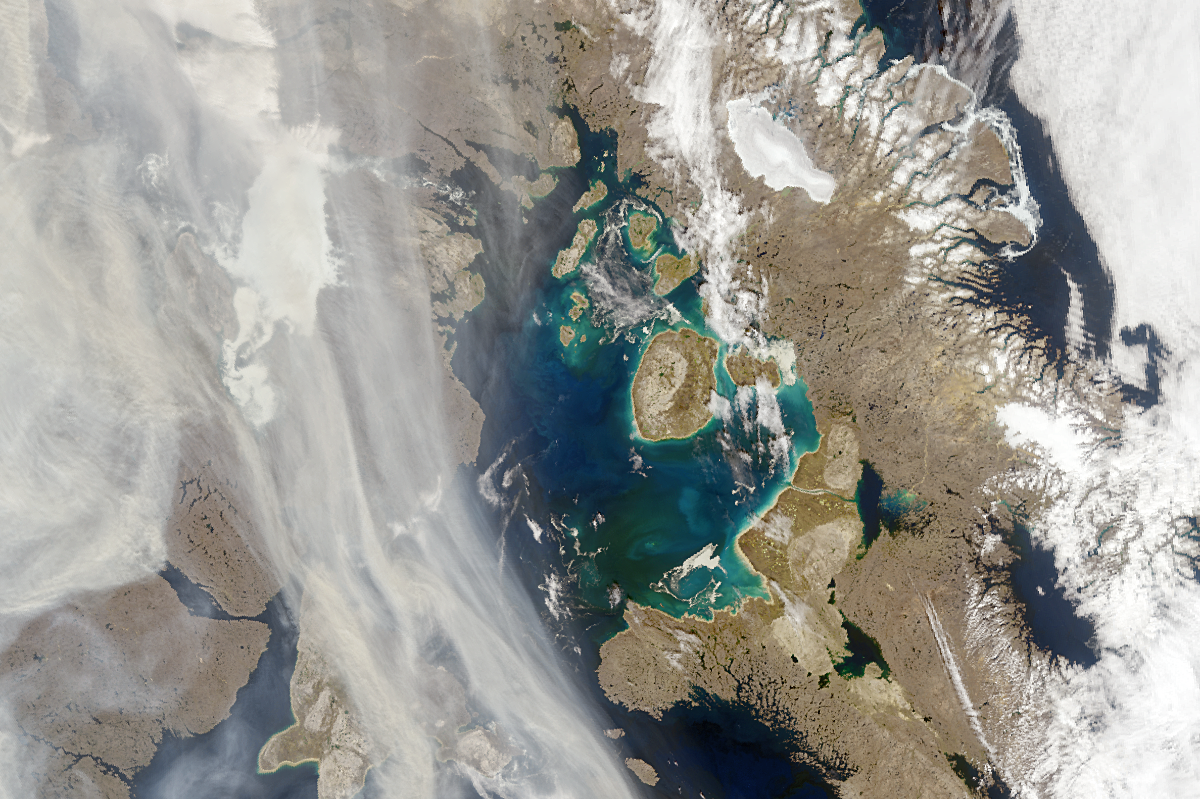
Smoke particles, which typically absorb light and appear in shades of gray, brown, or black, are significantly smaller than many other aerosols, and these sophisticated sensors can track their journey, measuring exactly how high they drift into the atmosphere and how far they travel across the globe.
The wealth of data gathered by these orbital instruments is revolutionizing our ability to create highly accurate wildfire models and simulate future environmental scenarios.
By understanding how smoke generated in one region can drastically impact weather systems and air quality on the other side of the planet, we are better equipped to face the compounding challenges of our changing climate.
The detailed atmospheric intelligence provided by this latest space technology serves as a powerful tool for forging forward-looking solutions to global environmental crises.