The Silent Struggle of Bones in Microgravity
One of the greatest hurdles for human space exploration is the severe loss of bone mass caused by microgravity.
When staying in space for extended periods, the lack of mechanical loading on the body disrupts the natural skeletal remodeling process, leading to accelerated bone resorption.
This rapid degeneration closely mimics severe osteoporosis on Earth, posing a critical health risk to astronauts during long-duration missions.
While intensive physical training using advanced exercise equipment has been utilized as a countermeasure, it has proven insufficient to completely halt bone degradation.
Recent advancements in space biology indicate that this bone loss is not merely a mechanical response to weightlessness.
Instead, it is deeply intertwined with complex physiological shifts as the mammalian body attempts to adapt to the extreme environment of space.
Thermal Regulation as a Hidden Driver of Bone Turnover
Emerging scientific evidence shines a light on how spaceflight affects thermoregulation in mammals.
The unique environment of space alters the autonomic nervous system and metabolic pathways, triggering subtle fluctuations in core body temperature and elevated thermogenesis.
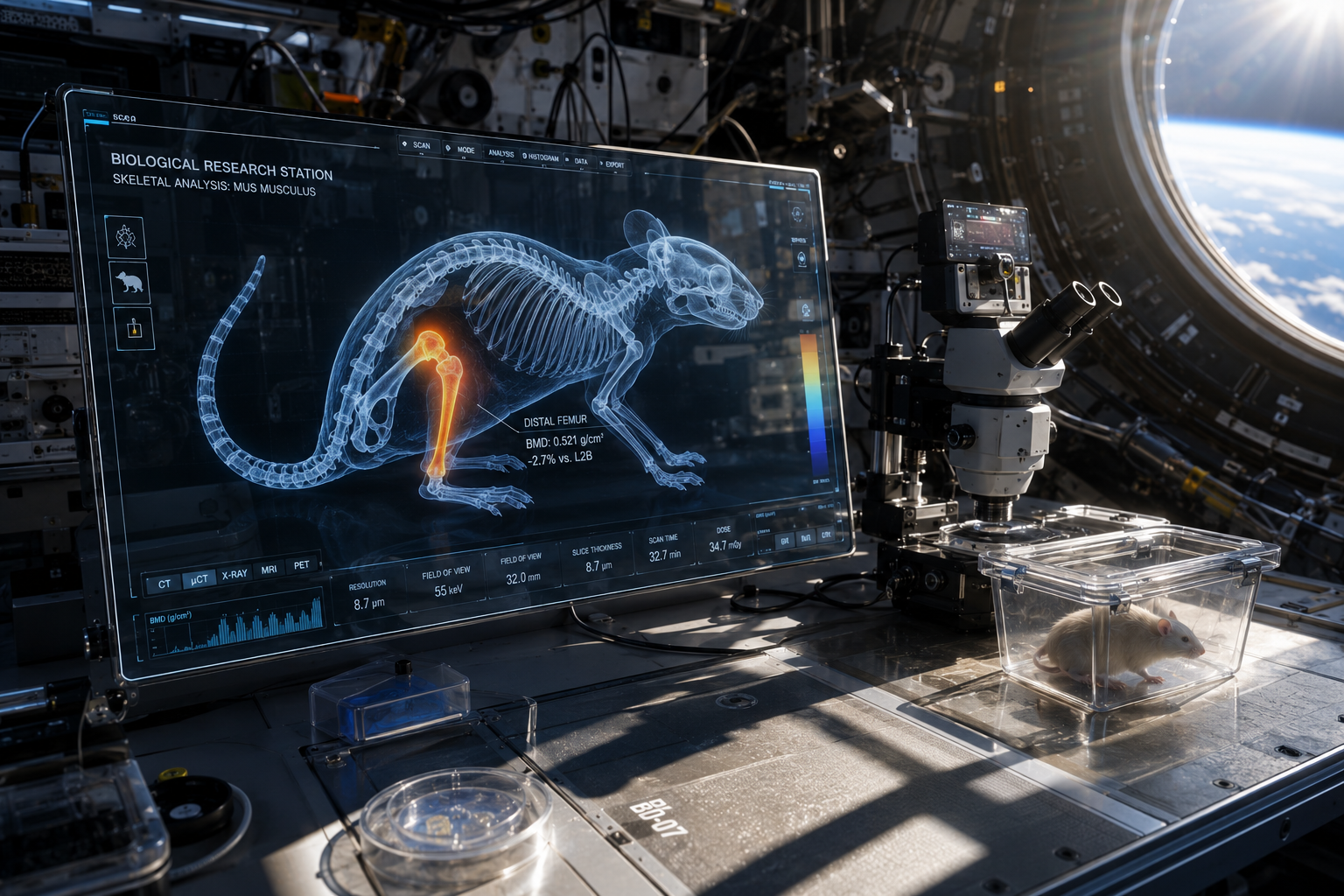
Researchers are particularly focused on the metabolic balance of cancellous bone within the distal femur metaphysis during growth phases.
Data analysis reveals that minor deviations in temperature regulation can destabilize the delicate balance of bone turnover.
These slight thermal variations alter the activity of bone-resorbing cells, undermining the structural integrity of the trabecular network.
The revelation that thermoregulatory stress directly impacts bone metabolism introduces an entirely new paradigm to space medicine.
Unlocking Biological Secrets Aboard the International Space Station
The International Space Station serves as an unparalleled orbital laboratory to decode these biological mysteries.
Conducting long-duration rodent research in microgravity allows scientists to anticipate and observe physiological changes that would occur in human astronauts.
Meticulous studies involving growing female mice have established a clear correlation between spaceflight-induced metabolic heat changes and the deterioration of bone microstructure.
The systemic stress of adjusting to orbit induces metabolic irregularities that subtly shift body heat, inadvertently hindering healthy bone development in the femur.
These open-science datasets are now shared globally, forming the scientific foundation for developing medical countermeasures for future crewed journeys to the Moon and Mars.
Ultimately, the data harvested from this ultimate laboratory provides vital insights into preserving skeletal health both in orbit and back on Earth.
Summary
Recent biological experiments have beautifully revealed that bone loss in space is driven not only by weightlessness but also by subtle shifts in thermoregulation, hasn’t it?
By applying these findings to new medical treatments, we can look forward to a brighter future where both astronauts and those suffering from osteoporosis on Earth are protected, can’t we?
Reference Link:
https://www.nasa.gov/mission/station/research-explorer/investigation/?#id=979