Cosmic Dawn and the Mystery of “Black Hole Stars”: Webb’s Groundbreaking Discovery
In the infancy of our universe, the cosmos was a wild, uncharted frontier home to celestial structures that defy modern physics.
One of the most profound puzzles in contemporary astronomy is the existence of supermassive black holes containing millions, or even billions, of solar masses just a few hundred million years after the Big Bang.
Standard stellar evolution models simply cannot explain how these cosmic titans grew so large so quickly.
To solve this cosmological riddle, scientists proposed a hypothetical class of ancient entities known as “Black Hole Stars” or quasi-stars.
These are not ordinary stars; they are colossi powered not by nuclear fusion, but by a ravenous black hole nesting inside a colossal envelope of primordial hydrogen and helium gas.
Now, groundbreaking data from the James Webb Space Telescope (JWST) has unveiled the strongest evidence yet that these mythical monsters might have actually existed.
Inside the Monster: A Cocoon of Primordial Gas
The birth of a black hole star requires the extreme, high-density environment found only in the early universe.
Shortly after the Big Bang, massive clouds of pristine gas collapsed under their own immense gravity without cooling down enough to fragment into normal stars.
Instead, the core of the cloud collapsed directly into a seed black hole.
In a typical modern scenario, the fierce radiation generated by matter falling into a black hole would instantly blow the surrounding gas away.
However, in a quasi-star, the outer envelope of gas is so stupendously massive that it traps this intense radiation energy.
The outward radiation pressure perfectly counters the inward pull of gravity, achieving a delicate, temporary hydrostatic equilibrium.
This process creates an unimaginably vast star—millions of times more massive than our Sun—acting as a cosmic incubator where the central black hole can feast continuously and balloon in size at an unprecedented rate.
James Webb Space Telescope Tears Away the Veil
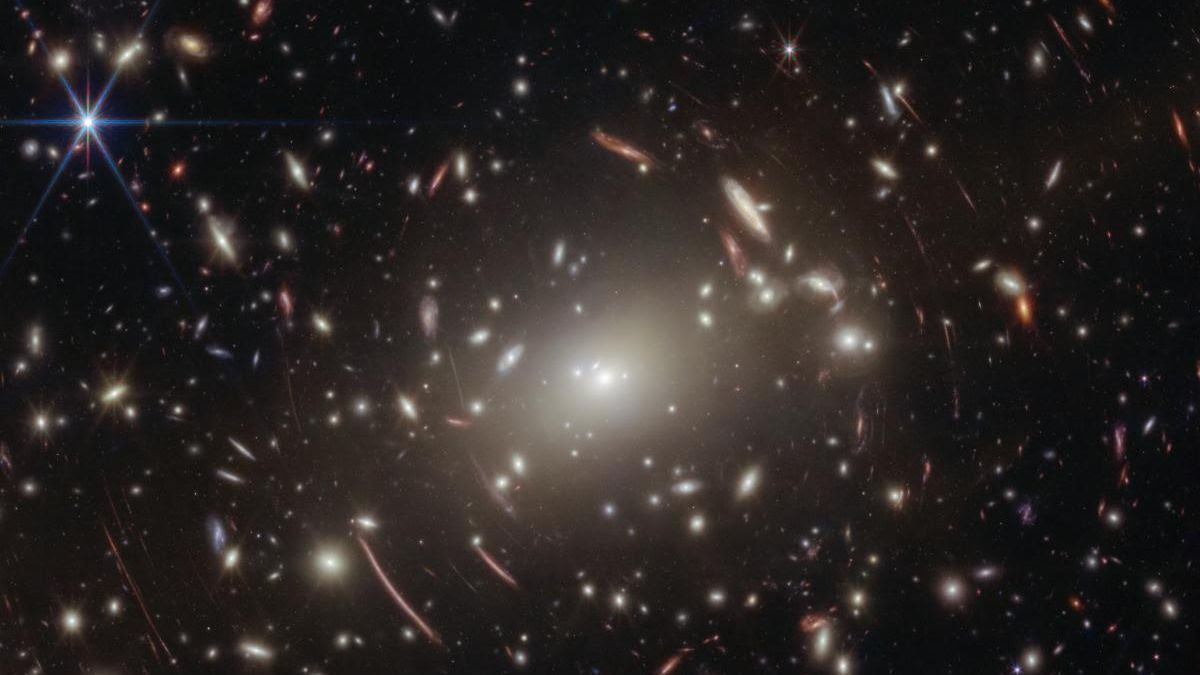
Long confined to the realm of theoretical mathematics, the existence of these primordial giants is finally being validated by the unrivaled infrared eyes of the James Webb Space Telescope.
By peering across billions of light-years, JWST captures ancient light shifted into infrared wavelengths by the expansion of the universe, allowing us to look back 13 billion years into the past.
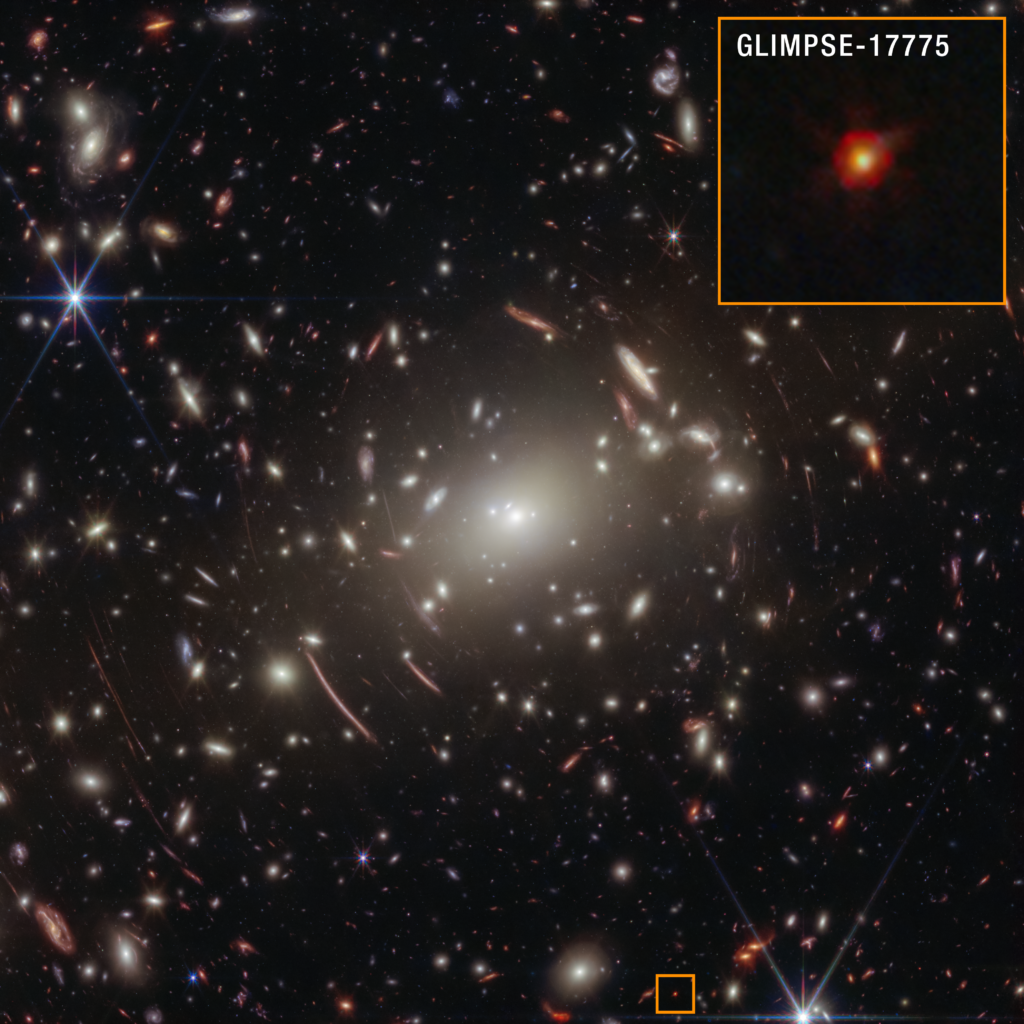
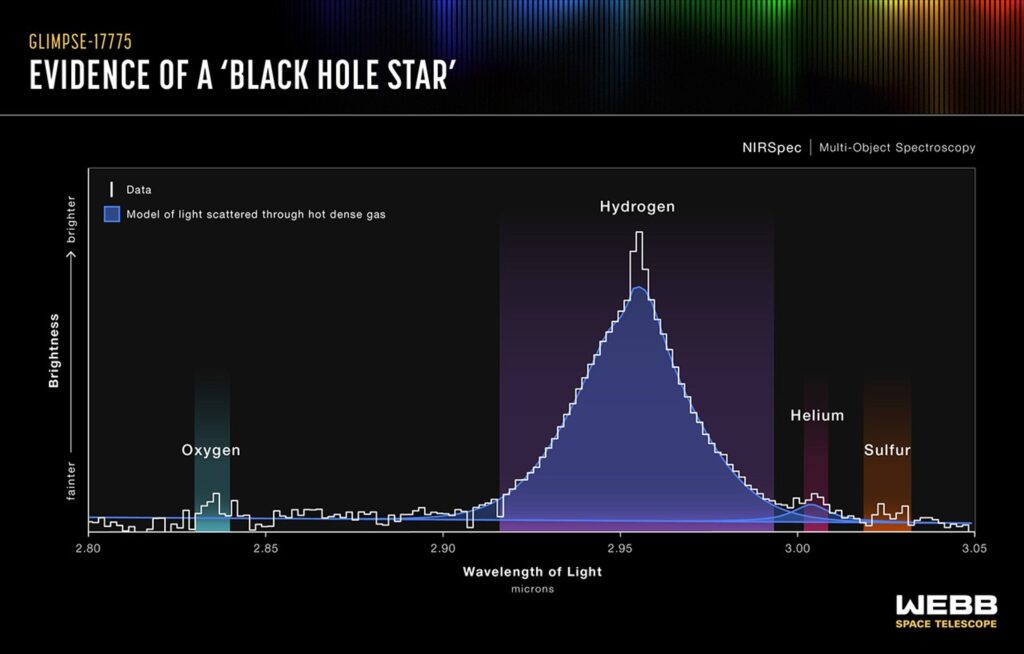
Recent spectroscopic analysis of a luminous object in the early universe revealed a highly anomalous light signature that cannot be explained by standard supermassive black holes or clusters of first-generation stars.
Instead, the spectrum perfectly matches the unique signature predicted for a black hole star: a cooler, sprawling outer gaseous shell hiding an ultra-hot, high-energy core.
This discovery provides astronomers with the vital missing link, proving that the universe’s earliest supermassive black holes were seeded by the rapid collapse of these monstrous cosmic cocoons, forever changing our understanding of how the cosmos evolved.
Summary
The mysterious black hole stars that once drifted through the ancient cosmos truly challenge everything we know about the universe, don’t they?
The incredible light captured by the James Webb Space Telescope beautifully illuminates the deep darkness of the cosmic dawn, gently guiding us closer to the ultimate secrets of our origins, doesn’t it?
Reference Link:
NASA’s Webb Finds Strongest Evidence Yet for Black Hole Stars