The Tiangong Space Station and a New Era in Low Earth Orbit
In recent years, China’s space program has evolved at an unprecedented pace, and the completion of its independent space station, Tiangong, stands as the ultimate symbol of this progress.
This achievement means that humanity now has a new alternative for low Earth orbit operations, a role long dominated by the International Space Station.
Tiangong is centered around the Tianhe core module, featuring a distinctive T-shape formed by attaching the Wentian and Mengtian laboratory modules.
Equipped with a proprietary life support system and highly advanced robotic arms, it allows astronauts to conduct long-term missions and a variety of microgravity scientific experiments.
What is particularly noteworthy is China’s willingness to open this space station as a hub for international cooperation.
Joint international research projects selected in collaboration with the United Nations Office for Outer Space Affairs are already underway, transforming the station into a burgeoning platform for researchers worldwide.
Built entirely upon independent technological frameworks, Tiangong is set to introduce immense technological diversity to future space development while heavily contributing to the advancement of orbital science.
This constitutes a critical step toward seizing the initiative in low Earth orbit activities, serving as a powerful foundation that firmly establishes China’s status as a major space power.
The operational launch of Tiangong also holds extreme importance as a technology demonstration platform for future manned lunar missions and deep space exploration.
Essential data required for human survival far from Earth is being meticulously collected, including studies on human adaptability in long-term closed environments and advanced resource recycling technologies.
There is absolutely no doubt that China has begun forcefully carving its own distinct path into the history of manned spaceflight, an arena previously spearheaded by the United States and Russia.
Bold Challenges on the Lunar Far Side and the Discoveries of the Chang’e Program
When it comes to China’s space exploration, the Chang’e lunar exploration program currently commands the most passionate attention from the global scientific community.
Among its many triumphs, the most historic milestone is the successful soft landing of the Chang’e-4 spacecraft on the far side of the moon.
Because the lunar far side never faces Earth, securing stable communications is incredibly difficult, making the safe delivery of a probe a tremendous engineering hurdle.
China brilliantly overcame this challenge by placing a relay communication satellite named Queqiao at a lunar Lagrange point, unlocking the door to an uncharted domain of humanity.
The far side boasts entirely different geological characteristics compared to the near side, and it is widely believed to hold precious clues for unraveling the mysteries of the early solar system and lunar formation.
Furthermore, the Chang’e-5 mission successfully executed a lunar sample return, a monumental feat not accomplished since the American Apollo and Soviet Luna programs.
The returned rock and soil samples have provided astonishing evidence indicating that lunar volcanic activity occurred much more recently than previously thought, continuously overturning conventional lunar science paradigms.
In currently ongoing phases, discussions regarding the exploration of the lunar south pole and the future construction of an International Lunar Research Station are becoming a highly realistic agenda.
This acts as much more than a mere technological milestone; it serves as a powerful driving force fundamentally updating humanity’s understanding of the cosmos.
By casting light into regions of our closest celestial neighbor that remained shrouded in mystery, this initiative is delivering profound contributions to the global scientific community.
Reaching Mars and the Expanding Deep Space Ambitions of the Tianwen Project
Using its resounding success in lunar exploration as a sturdy foothold, China’s inquisitive spirit is now aimed much further into the abyss of the solar system: Mars.
The pioneering vanguard of this effort was the historic success of the Tianwen-1 Mars exploration mission.
The most astonishing aspect of this mission is that, despite being China’s first independent attempt at Mars, it seamlessly succeeded in three highly complex tasks simultaneously: entering orbit, soft-landing on the surface, and deploying a rover.
In an arena of Martian exploration where even the United States and Russia have experienced numerous past failures, this one-shot triumph powerfully proved that China’s space technology has already reached world-class standards.
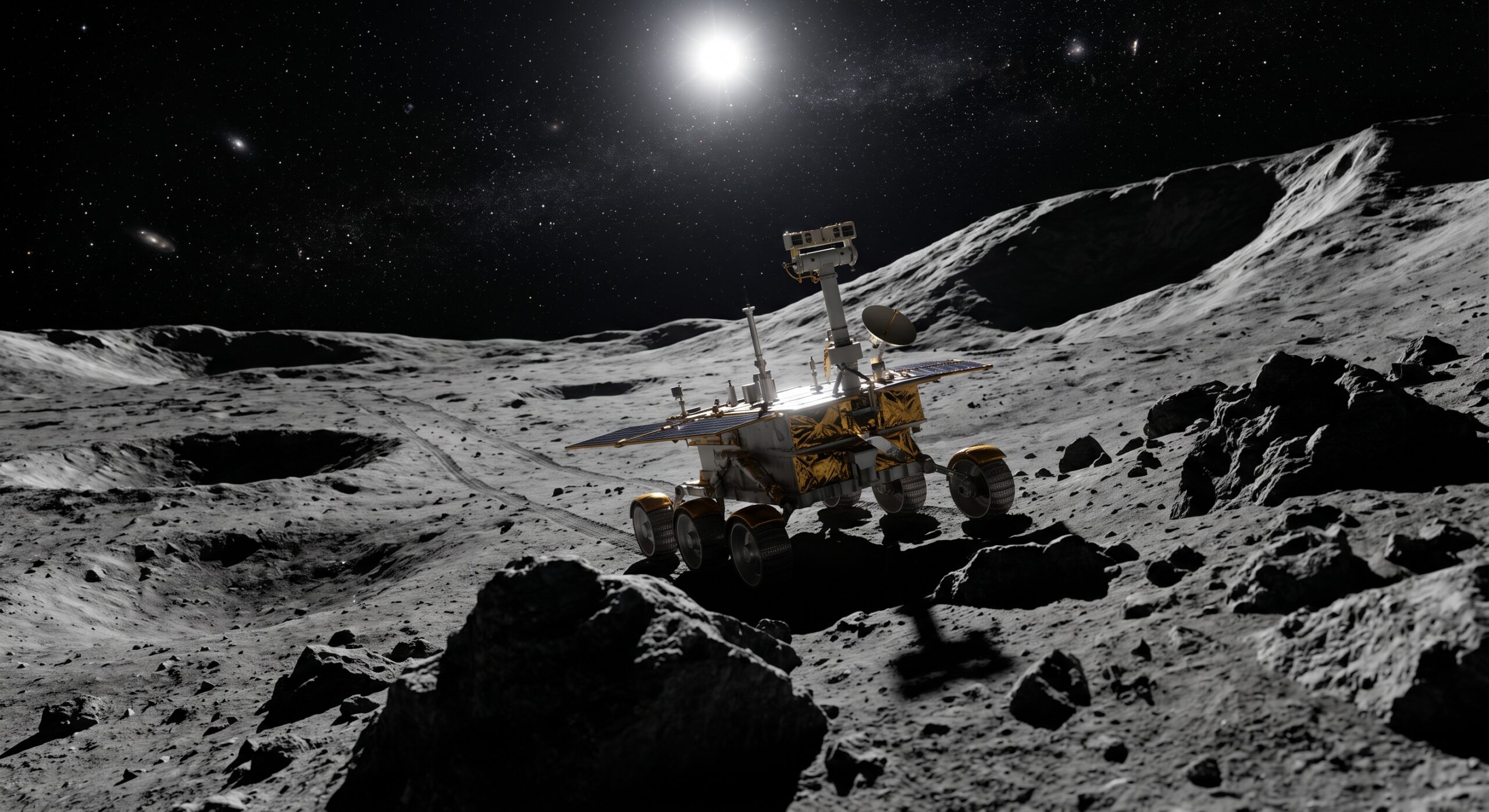
Having descended upon the Martian landscape, the Zhurong rover continues to transmit massive volumes of data back to Earth regarding Martian geological structures, surface composition, and climatic environments.
Extremely vital scientific observations in the search for traces of life are being conducted, including the investigation of terrain suggesting the past existence of oceans and the search for subsurface ice.
The Tianwen program does not stop at Mars; future plans include sample returns from near-Earth asteroids and expeditions to the Jupiter system, evolving into epic deep space explorations aiming to unravel the origins and evolution of the solar system.
Within the untrodden frontier of deep space, a realm previously reached by only a select few nations, China is establishing a formidable presence and preparing to play a vital role in expanding the horizons of human knowledge.
The day may soon arrive when these advanced probes reveal the ultimate answers to fundamental questions about the potential for extraterrestrial life and the very formation of our solar system.