From concrete engineering developments surrounding the autonomous Russian Orbital Station designed to replace ISS reliance to the strategic deployment of the heavy-lift Angara rocket series and prospective lunar partnerships with China, we examine the verified operational facts and long-term space exploration roadmap being pursued by Roscosmos.
Engineering the Autonomous Russian Orbital Station to Transition Beyond the ISS
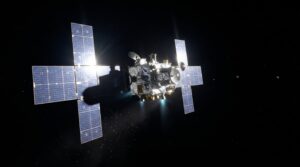
The Russian State Space Corporation Roscosmos is actively accelerating engineering and development work on the autonomous Russian Orbital Station, which is specifically designed to succeed the nation’s longstanding operational commitments aboard the aging International Space Station.
Furthermore, this planned outpost is projected to operate in a high-inclination polar orbit that provides comprehensive observational coverage over the strategic Northern Sea Route and mainland Russian territory while adopting an automated operational architecture to significantly minimize cosmonaut radiation exposure during prolonged missions.
Additionally, manufacturing milestones for the primary scientific and power module are targeting completion for orbital deployment before the decade’s end, serving as the foundational core for sequential module dockings that aim to establish a fully autonomous national orbital infrastructure by the early 2030s.
Operational Deployment of the Angara Launch Vehicle Series from Vostochny Cosmodrome
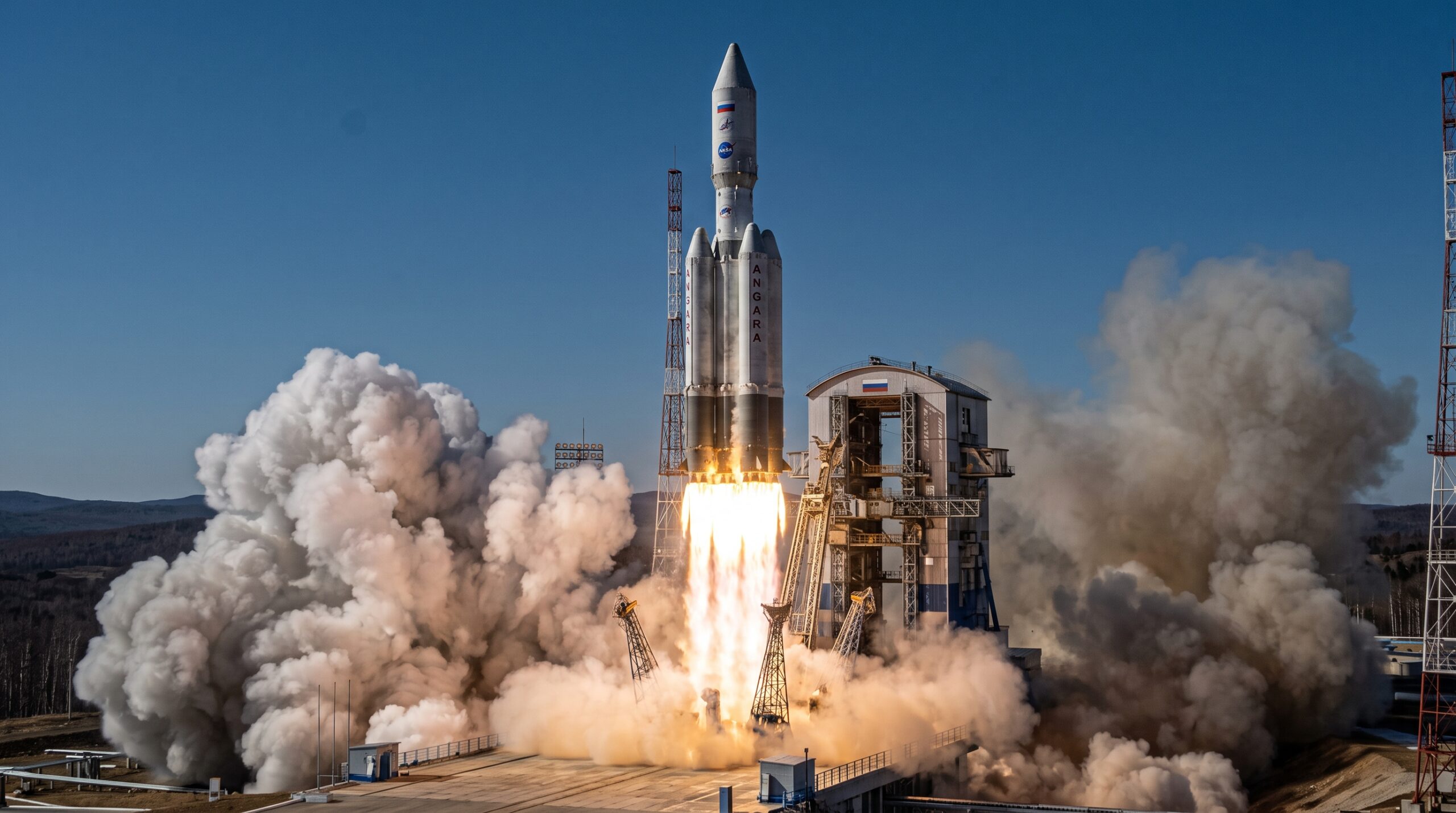
Serving as the essential technological replacement for the legacy Proton rocket family, the modern Angara launch vehicle series continues to advance through test flights and operational missions supporting vital sovereign orbital transport requirements.
Moreover, operational flights are being steadily transitioned to the modern launch infrastructure located at Vostochny Cosmodrome in Russia’s Far East, ensuring completely independent domestic launch capabilities while supporting specialized configurations including the heavy-lift Angara A5 and crew-rated Angara A5M variants.
Consequently, because these heavy launch vehicles are officially designated to transport the core pressurized modules of the upcoming Russian Orbital Station into their targeted orbits, the overall timeline of Russia’s low Earth orbit presence remains directly tied to the reliable serial production and launch cadence of the Angara infrastructure.
Post-Luna-25 Lunar Trajectory and Joint Bilateral Cooperation on the Lunar Research Station
In the realm of deep space and planetary exploration, Roscosmos remains committed to regaining lunar access following the loss of the Luna-25 lander by focusing current technical preparation on the upcoming Luna-26 polar orbiter mission scheduled for the late 2020s.
Meanwhile, Russian space officials are actively aligning strategic priorities with the China National Space Administration under the multilateral International Lunar Research Station framework, exploring prospective contributions involving specialized space nuclear power technologies to support sustained surface operations.
Ultimately, through these interrelated domestic programs and targeted international agreements, Roscosmos continues striving to maintain sovereign human spaceflight competencies and deep space access while actively adapting to evolving geopolitical dynamics and demanding industrial requirements.
Reference URLs:
https://en.wikipedia.org/wiki/Russian_Orbital_Station
https://www.deagel.com/aerospace%20forces/ros/a004116
https://tadviser.com/index.php/Company:Russian_National_Orbital_Service_Station_(ROSS)