How Growing Stem Cells in Space Could Revolutionize Cancer Treatment
The microgravity environment of the International Space Station (ISS) is proving to be much more than a platform for studying the cosmos; it is becoming a revolutionary frontier for human medicine.
Currently, experiments involving the cultivation of stem cells in space are capturing the attention of the scientific community, particularly for their massive potential to advance treatments for cancer and other debilitating diseases.
When researchers try to grow cells in a traditional laboratory on Earth, gravity forces the cells to flatten out across the bottom of a petri dish.
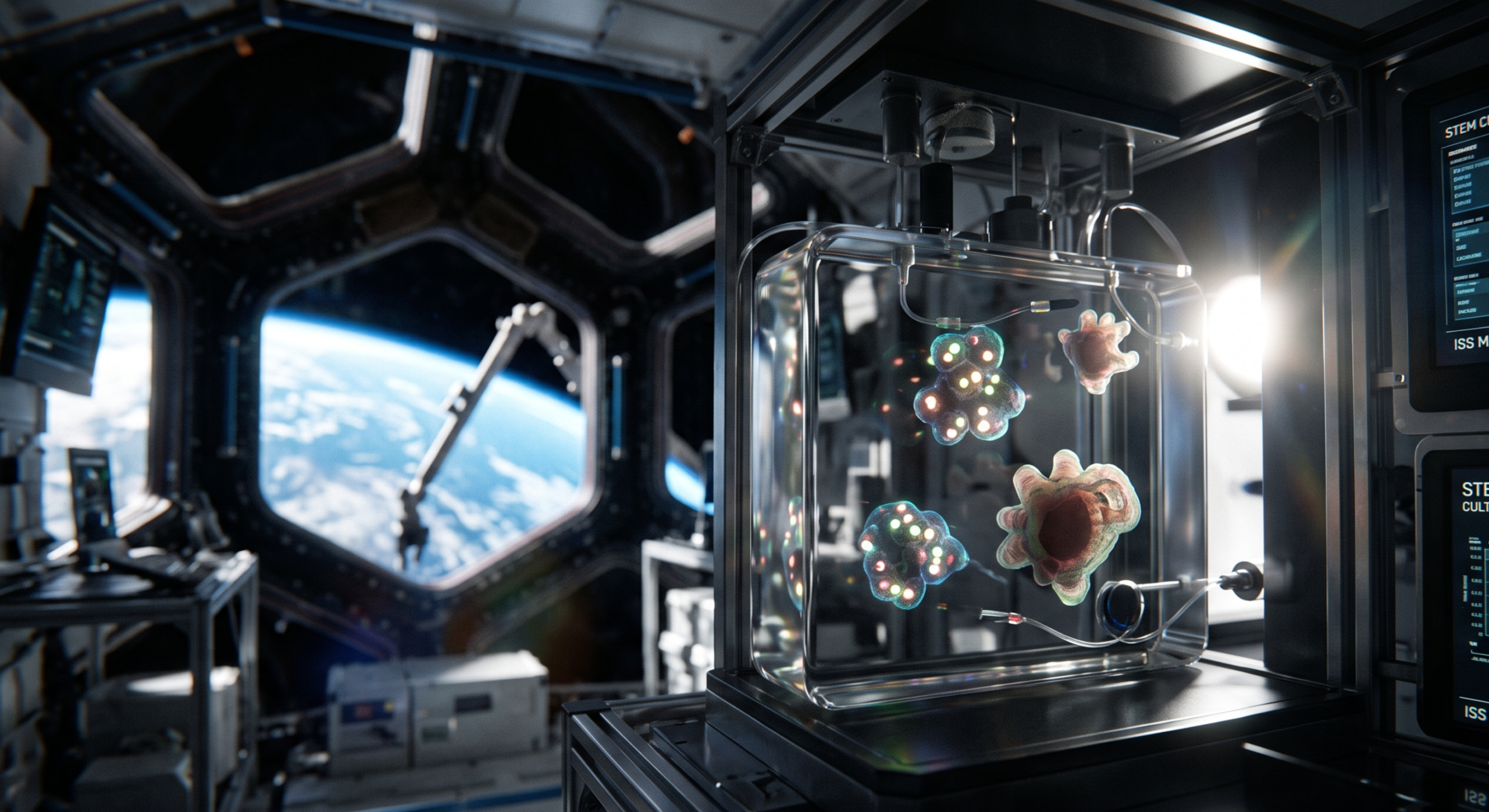
However, in the unique microgravity conditions aboard the ISS, cells are free from gravitational constraints and can grow into complex, three-dimensional structures.
These 3D cellular formations, known as organoids, can mimic the actual architecture of human organs and tumors with astonishing accuracy.
By cultivating cancer organoids in space, scientists can observe how tumors grow and react to experimental drugs in a way that is virtually impossible to replicate on Earth.
Furthermore, the space environment naturally accelerates the aging process of certain cells, providing a unique fast-track model to understand the mechanisms of age-related diseases.
The fact that the extreme environment of space is functioning as an advanced medical laboratory proves that the applications of space exploration are truly boundless.
The microscopic seeds of life nurtured in the silent orbit above us may very well bring the light of hope to countless patients back down on Earth.
Reference link:
https://www.nasa.gov/missions/station/iss-research/growing-stem-cells-in-space-to-improve-cancer-and-disease-treatments/