JAXA Achieves Flawless Launch of H3 Rocket Flight 6
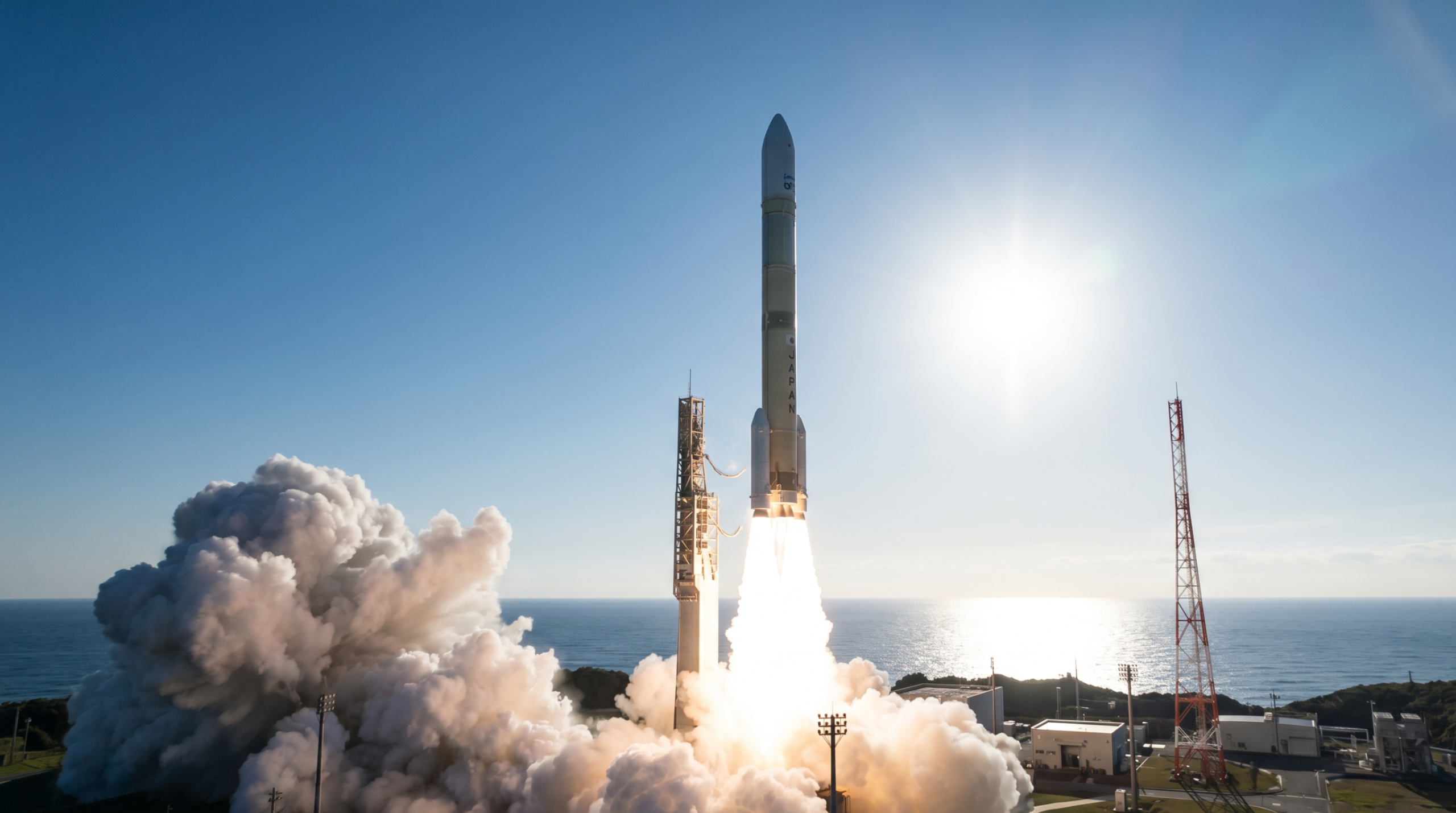
Yesterday, the entire nation watched closely as JAXA successfully launched its next-generation H3 rocket (Flight 6) from the Tanegashima Space Center at 9:53 AM on June 12.
Overcoming previous weather-related delays, the rocket performed perfectly, smoothly deploying all six rideshare microsatellites into their intended orbits.
The most defining characteristic of this specific launch is that it flew entirely without the solid rocket boosters traditionally required for Japan’s heavy-lift vehicles, relying solely on the thrust of three liquid-fueled LE-9 first-stage engines.
This marks a historic first in Japanese rocket development, aimed primarily at drastically reducing manufacturing costs and increasing the flexibility of launch operations by simplifying the vehicle’s overall architecture.
By successfully validating this streamlined “Type 30” configuration, JAXA has secured a tremendously powerful asset in the highly competitive global market for commercial small-to-medium satellite launches.
Moving forward, leveraging this low-cost, high-frequency launch capability will undoubtedly drive Japan’s space business, ultimately aiming for an ambitious target of six to eight launches per year.
SpaceX Executes Historic IPO, Valuation Surpasses $2 Trillion
Behind the joyous celebrations of Japan’s H3 rocket success, a colossal event that will permanently alter the history of American financial markets and the global space industry unfolded.
As we anticipated yesterday, SpaceX’s initial public offering (IPO) took place on the Nasdaq market on June 12, achieving an overwhelming success that far exceeded prior expectations.
Share prices surged immediately after trading began, pushing SpaceX’s corporate valuation to an astronomical $2.1 trillion by the close of its first day.
This historic public listing reportedly minted CEO Elon Musk as the world’s first “trillionaire,” boasting a personal net worth exceeding $1 trillion.
The reason investors are exhibiting such incredible enthusiasm is that they view SpaceX not merely as a rocket manufacturer, but as a massive infrastructure titan integrating the global Starlink communications network with cutting-edge data architecture.
This monumental influx of capital will serve as the decisive driving force to actualize their grand vision, fueling the development of the next-generation Starship mega-rocket and ultimately delivering humanity to Mars.
NASA’s X-59 Reaches Mach 1.4 Mission Conditions
While the development of deep space infrastructure accelerates, thrilling news regarding a major leap in terrestrial aviation history has also emerged.
The X-59 quiet supersonic experimental aircraft, jointly developed by NASA and Lockheed Martin, successfully reached its target speed of Mach 1.4 at an altitude of 55,000 feet during a flight test on June 12.
Taking a significant step forward from the sound barrier tests we discussed a few days ago, this recent flight perfectly replicated the exact “mission conditions” under which future commercial supersonic airliners will fly over populated communities.
To resolve the disruptive noise pollution caused by the intense shockwaves of traditional supersonic flight, the X-59 is meticulously designed to ensure only a quiet, gentle sonic “thump” reaches the ground.
The empirical data gathered from these rigorous tests will provide absolutely critical evidence for establishing new international standards, ultimately paving the way to lift the ban on overland commercial supersonic flight.
Beyond the realm of orbital rocket travel, this achievement proves that the era of quiet, comfortable, and remarkably fast long-distance travel across Earth is steadily approaching reality.
Summary
Today marks a phenomenal culmination of recent updates, featuring the triumphant success of Japan’s H3 rocket, SpaceX’s trillion-dollar IPO, and NASA’s supersonic breakthroughs.
Witnessing Japan validate its sovereign technology while the US accelerates space infrastructure with massive capital investments truly proves that our cosmic future is unfolding right now.