Big Data Astrophysics: Roman’s 1.4 Terabyte Daily Cloud Pipeline
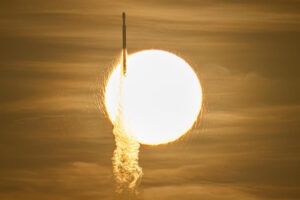
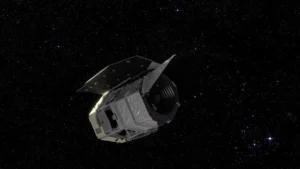
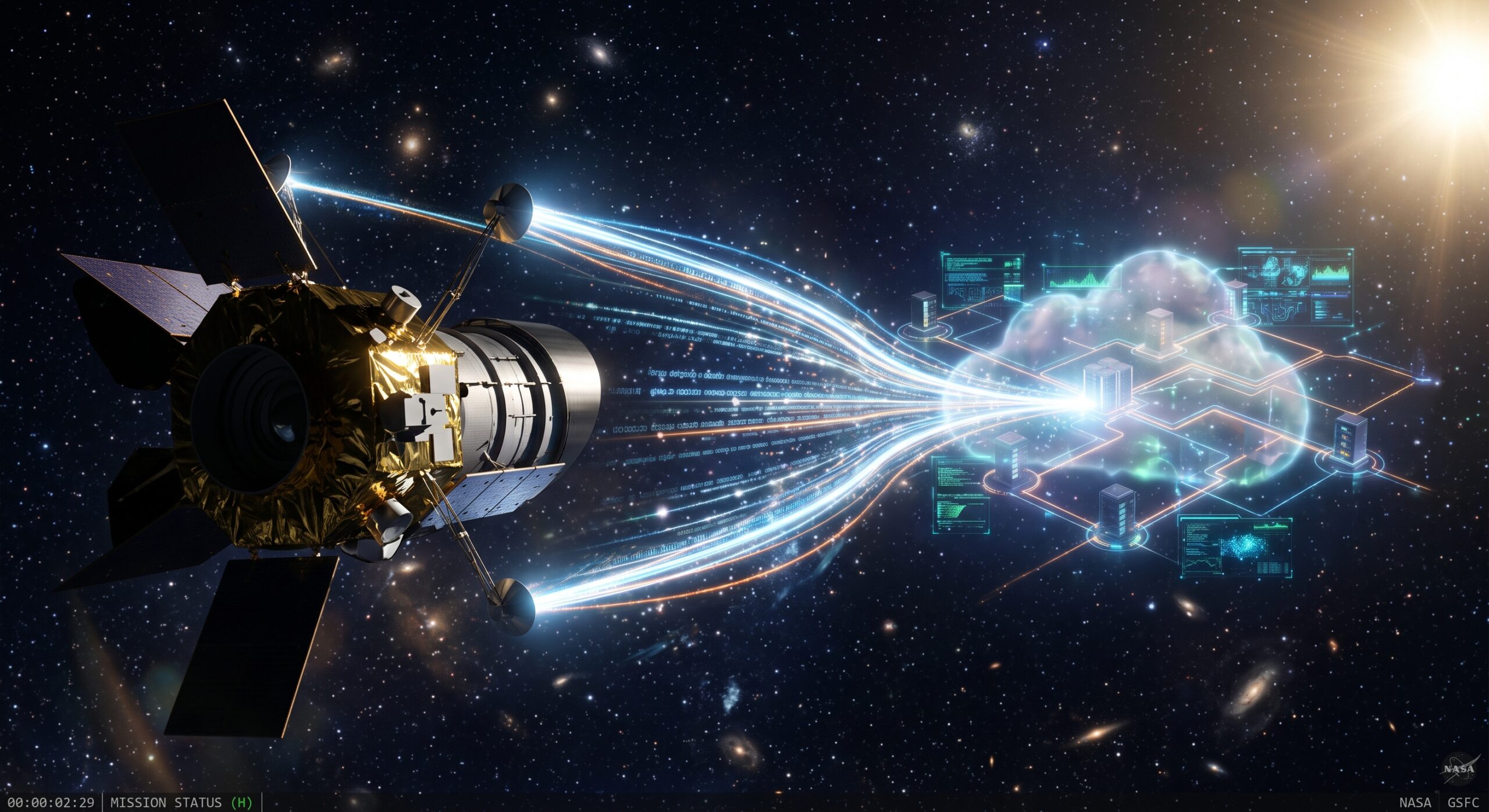
Following the flawless liftoff of the Nancy Grace Roman Space Telescope from Kennedy Space Center, NASA and the Space Telescope Science Institute (STScI) have activated the operational data infrastructure that will process Roman’s unprecedented cosmological surveys. Operating with a 300-megapixel Wide Field Instrument, Roman will generate and downlink approximately 1.4 terabytes of raw telemetry and science imagery to Earth every single day—the highest continuous data volume of any astrophysics mission in NASA history.
To manage this immense torrent of information, Roman is pioneering an open-access cloud computing architecture. Rather than requiring research institutions to download massive petabyte-scale datasets locally, all calibrated image mosaics, time-series photometry, and slitless spectroscopic catalogs will be hosted directly within cloud environments. This enables astronomers worldwide to deploy high-throughput machine learning algorithms and cosmological simulations directly adjacent to the primary data stream, democratizing big-data astrophysical discovery.
Webb and MIT Identify ‘Black Hole Star’ Candidate in the Early Universe
Complementing the expansion of wide-field astronomy, researchers at MIT’s Kavli Institute for Astrophysics and Space Research utilizing the James Webb Space Telescope (JWST) have identified a remarkable astrophysical object: MoM-BH*-1. The spectroscopic data indicates that this compact, ultra-luminous source in the early universe may represent the first verified example of a “black hole star”—often theorized as a quasi-star.
Unlike conventional population III stars powered purely by nuclear fusion in their cores, a quasi-star is powered internally by a rapidly accreting black hole seed encased within an immense, gravitationally bound stellar envelope. Radiating at over 100 billion times the luminosity of the Sun, these short-lived stellar giants provide the long-sought missing link explaining how supermassive black holes achieved billion-solar-mass scales less than a billion years after the Big Bang without violating standard accretion limits.
Precision Trajectory: Ground Stations Track Roman’s First Correction Maneuver
As Roman cruises along its trans-L2 transfer arc, global tracking stations across NASA’s Deep Space Network (DSN) and the European Space Agency’s Estrack network have maintained continuous Ka-band communication locks. Flight controllers at NASA Goddard Space Flight Center successfully executed Trajectory Correction Maneuver 1 (TCM-1), a precision thruster burn designed to refine the spacecraft’s orbital velocity.
This initial burn compensates for launch vehicle dispersion and precisely aligns the spacecraft’s arrival vector with its target halo orbit around the Sun-Earth Lagrange Point 2 (L2). The smooth execution of TCM-1 ensures optimal propellant margins, preserving onboard hydrazine for Roman’s primary five-year baseline mission and potential extended multi-year science campaigns.