Inside the 100-Day In-Flight Commissioning of the Roman Space Telescope
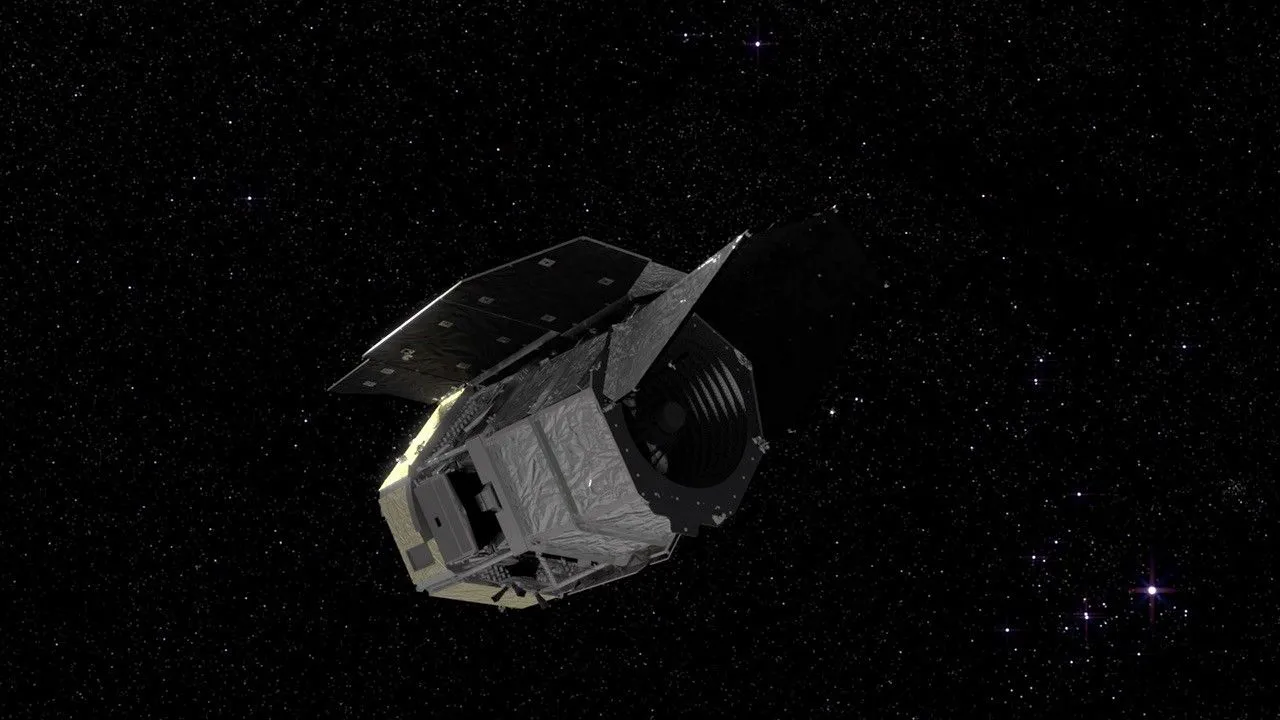
Following its successful insertion into the Sun-Earth Lagrange Point 2 (L2) transfer trajectory, the Nancy Grace Roman Space Telescope has initiated its critical 100-day commissioning sequence. Controlled by flight operations teams at NASA’s Goddard Space Flight Center and the Space Telescope Science Institute (STScI), this phase transitions the spacecraft from launch configuration to full science readiness.
Key milestones during this deep-space cruise include the phased deployment of the outer aperture sunshade, controlled passive cooling of the 2.4-meter primary mirror to cryogenic operational temperatures near -100 degrees Celsius, and high-vacuum outgassing of the optical bench. Engineers will systematically activate and calibrate the 300-megapixel Wide Field Instrument and the Coronagraph Instrument, testing active wavefront control actuators and fine-guidance star trackers to ensure sub-milliarcsecond pointing precision before commencing baseline cosmological surveys.
NASA Restores the Swift Observatory to Hunt Gamma-Ray Bursts
In high-energy astrophysics, NASA flight controllers have successfully brought two primary instruments aboard the Neil Gehrels Swift Observatory back online. Following an anomaly that temporarily disabled reaction wheels on the multi-wavelength spacecraft, engineers deployed specialized attitude-control algorithms, restoring observational capabilities for the X-ray Telescope (XRT) and the Ultraviolet/Optical Telescope (UVOT).
Since its launch, Swift has served as astrophysics’ premier rapid-response scout, autonomously slewing within seconds to capture the prompt optical and X-ray afterglows of distant Gamma-Ray Bursts (GRBs) and tidal disruption events. Re-establishing Swift’s rapid-slewing capability is vital for multi-messenger astronomy, providing essential real-time localization for gravitational-wave triggers detected by ground-based laser interferometers.
Artemis Accords Expand as Global Coalition Targets Sustainable Lunar Presence
At NASA Headquarters in Washington, international space policy marked a major expansion as Türkiye officially signed the Artemis Accords, becoming the latest nation to join the multilateral framework for civil space exploration. Guided by the 1967 Outer Space Treaty, the Accords establish international protocols for safe, transparent, and interoperable operations across the Moon, Mars, and beyond.
The signing reinforces commitments toward open scientific data sharing, orbital debris mitigation, the interoperability of lunar surface infrastructure, and the non-conflict extraction of in-situ resources. As NASA prepares for the crewed lunar flybys and surface landings of the Artemis campaign, expanding the international coalition establishes the foundation for a permanent, peaceful scientific outpost at the lunar South Pole.