SpaceX Starship Completes Ground Test for Orbital Refueling
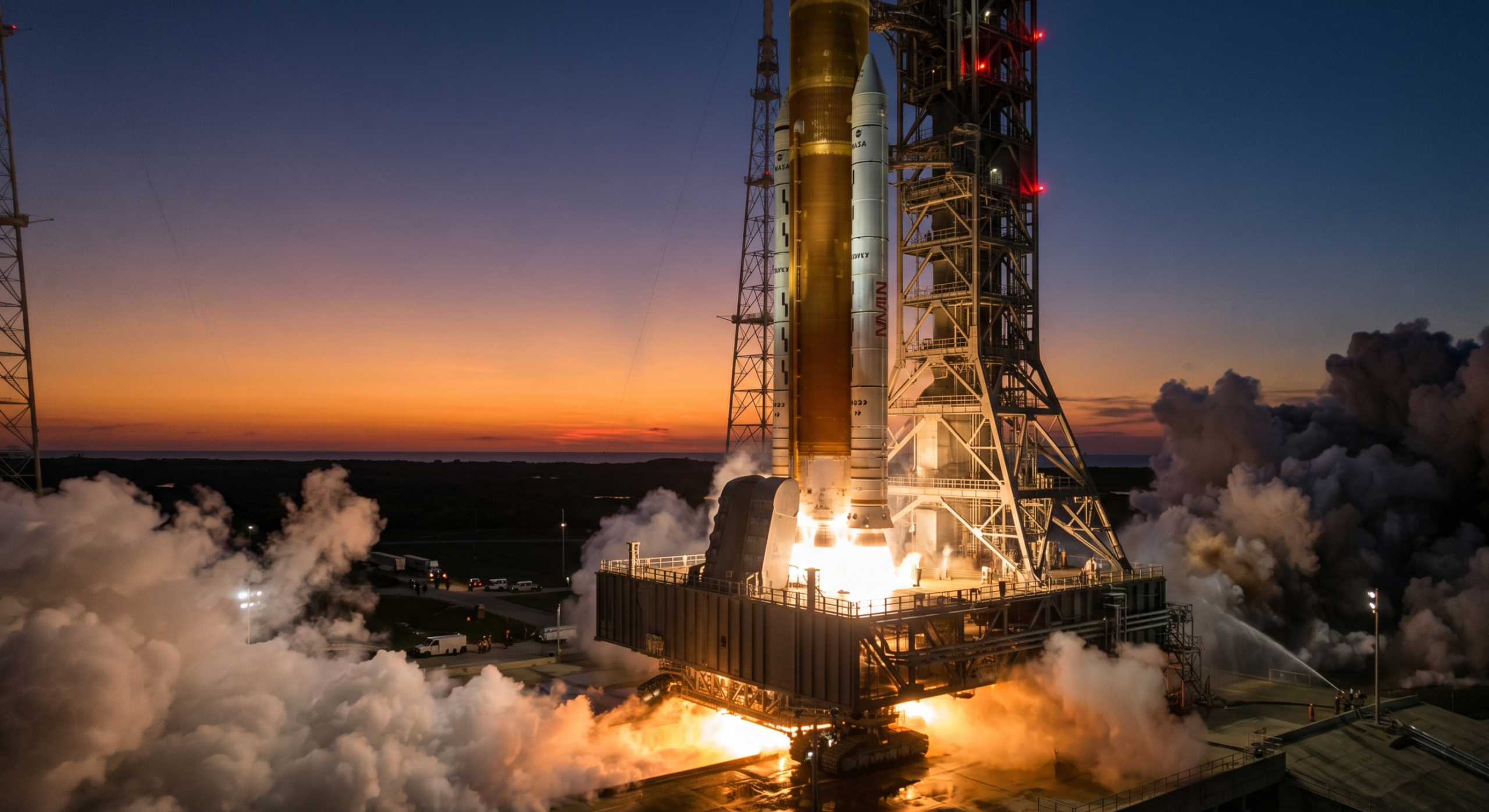
Between yesterday and today, another resounding roar echoed from SpaceX’s Starbase facility in Boca Chica, Texas, pushing the history of space development one step further.
The latest prototype of their next-generation, fully reusable Starship mega-rocket successfully completed a critical static fire test, igniting multiple Raptor engines simultaneously.
This test represents a massive stride toward the unprecedented technological demonstration of in-orbit propellant transfer, which is absolutely essential for the success of the Artemis lunar landing missions.
Because the Starship is so colossal, it consumes the vast majority of its onboard propellant simply escaping Earth’s gravity to reach low Earth orbit.
Consequently, it must perform a highly complex operation in the vacuum of space, docking with a pre-positioned Starship tanker to transfer cryogenic liquid oxygen and liquid methane.
Following the success of this static fire, CEO Elon Musk suggested that hardware preparations for the next orbital flight test have entered their final stages.
Once the in-space transfer of propellants is validated, a true cosmic highway will open, enabling the transport of massive payloads and humanity from Earth to the Moon and eventually Mars.
This spectacular rocket testing happening on the other side of the globe is the fundamental infrastructure work required for us to become a multi-planetary species.
NASA’s LRO Maps Promising New Lunar Ice Deposits
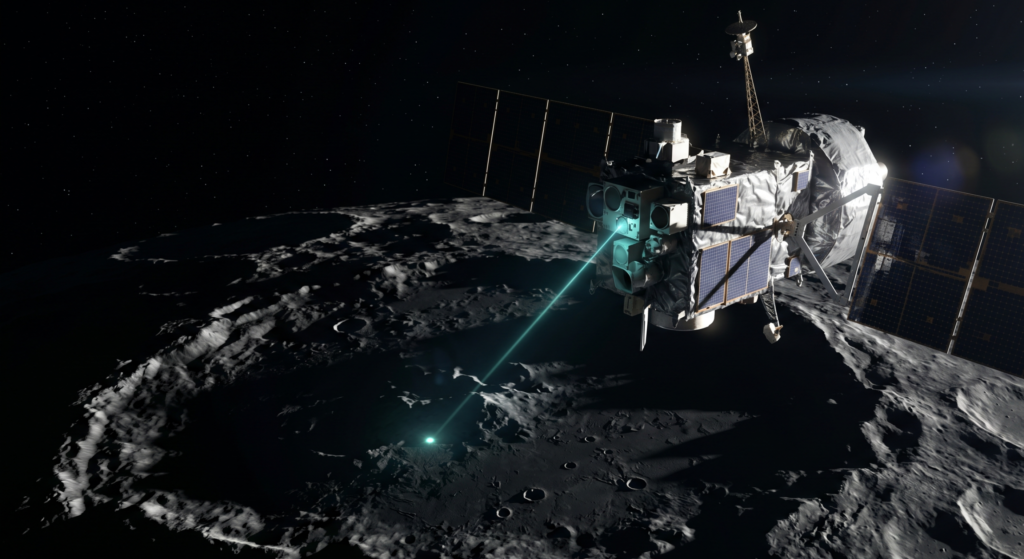
While Starship builds the transportation methods to the Moon, NASA’s uncrewed probes continue to tirelessly survey humanity’s destination from lunar orbit.
NASA’s Lunar Reconnaissance Orbiter (LRO), which continues to orbit the Moon, has beamed back new high-resolution topographical and thermal data regarding the lunar South Pole, the target for the Artemis III crew.
The lunar South Pole is home to numerous permanently shadowed craters that have not seen sunlight for billions of years, and scientists believe massive quantities of pristine water ice are preserved in their freezing depths.
Based on the analysis of observational data from the LRO’s advanced laser altimeter and temperature sensors, researchers have identified highly promising new areas where accessible ice may lie shallower beneath the surface than previously predicted.
In a future lunar base, water will serve not only as a vital supply of drinking water and oxygen for astronauts but also as the most critical resource for manufacturing rocket fuel (hydrogen and oxygen) locally through electrolysis.
If the technology for In-Situ Resource Utilization (ISRU) can be perfected to rely on local materials instead of transporting everything from Earth, the cost of long-term lunar habitation will plummet.
This detailed treasure map, quietly drawn by the LRO from above, serves as an essential guidepost for the next astronauts stepping onto the lunar surface, helping them decide exactly where to land and what to explore.
JAXA and ISRO Accelerate Joint Lunar Polar Exploration Tests
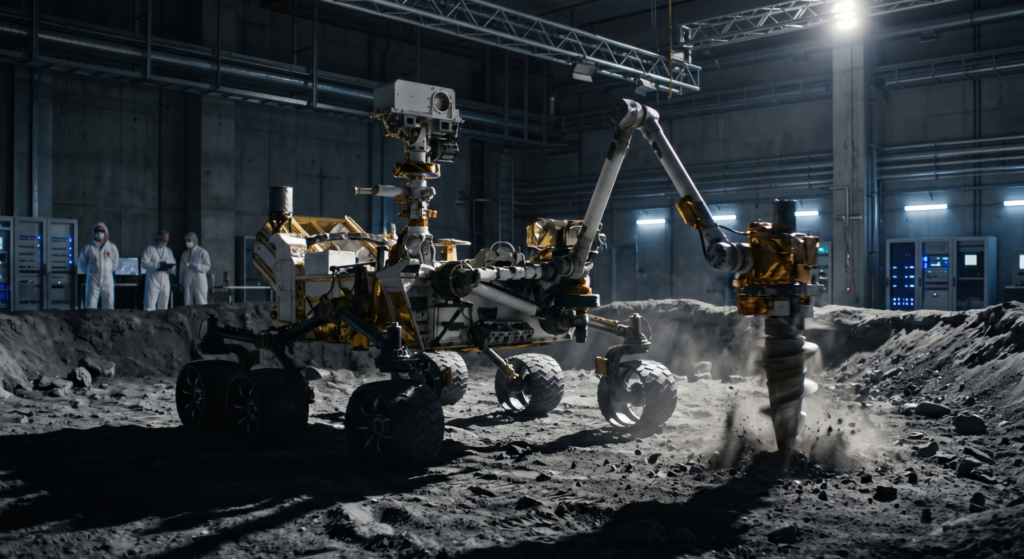
Echoing NASA’s data collection efforts, the space agencies of Japan and India are accelerating their ambitious joint project to directly explore the Moon’s water resources.
In the Lunar Polar Exploration (LUPEX) mission, jointly managed by JAXA and the Indian Space Research Organisation (ISRO), the integration testing of the various scientific instruments slated for the rover has transitioned into a new phase.
In this mission, a lander developed by ISRO will carry a JAXA-developed rover to the lunar South Pole, where it will actually drill into the subsurface soil near the permanently shadowed regions identified by the LRO.
Currently, in specialized environmental chambers simulating the fine lunar sand (regolith) and cryogenic vacuum conditions, researchers at Japanese laboratories are conducting rigorous daily tests to ensure the water detectors and spectrometers function exactly as designed.
The technology allowing a remotely operated rover to autonomously navigate dangerous rocks and reliably collect and analyze samples in dark craters will exponentially increase Japan’s space exploration capabilities.
By combining the proven launch capacity of the recently successful H3 rocket with these precise uncrewed exploration technologies, Japan will play a unique and indispensable role in the international race to explore the Moon.
This process, where nations bring their best technological expertise to slowly unravel the mysteries of unexplored lunar regions, is a magnificent example of international cooperation expanding the boundaries of human knowledge.
Summary
From SpaceX’s powerful engine tests to NASA’s new lunar maps, today’s updates highlight the concrete, global progress being made toward returning humanity to the Moon.
With JAXA and India also testing their joint lunar rover, it is truly thrilling to watch international engineering collaborate to unlock the secrets of lunar ice.