Unlocking Mars’ Climate History with the Curiosity Rover
The scarred landscapes of Mars, marked by ancient riverbeds and dry lake basins, tell a vivid story of a once-watery world.
Yet, a major piece of the puzzle has remained missing: the exact timing and duration of the environmental shift from wet to bone-dry.
Data gathered by the Curiosity rover within the vast expanse of Gale Crater has provided a monumental breakthrough in solving this planetary mystery.
The walls and central mounds of the crater act as a chronological textbook of Martian history, where deeper layers represent the oldest chapters of the planet’s past.
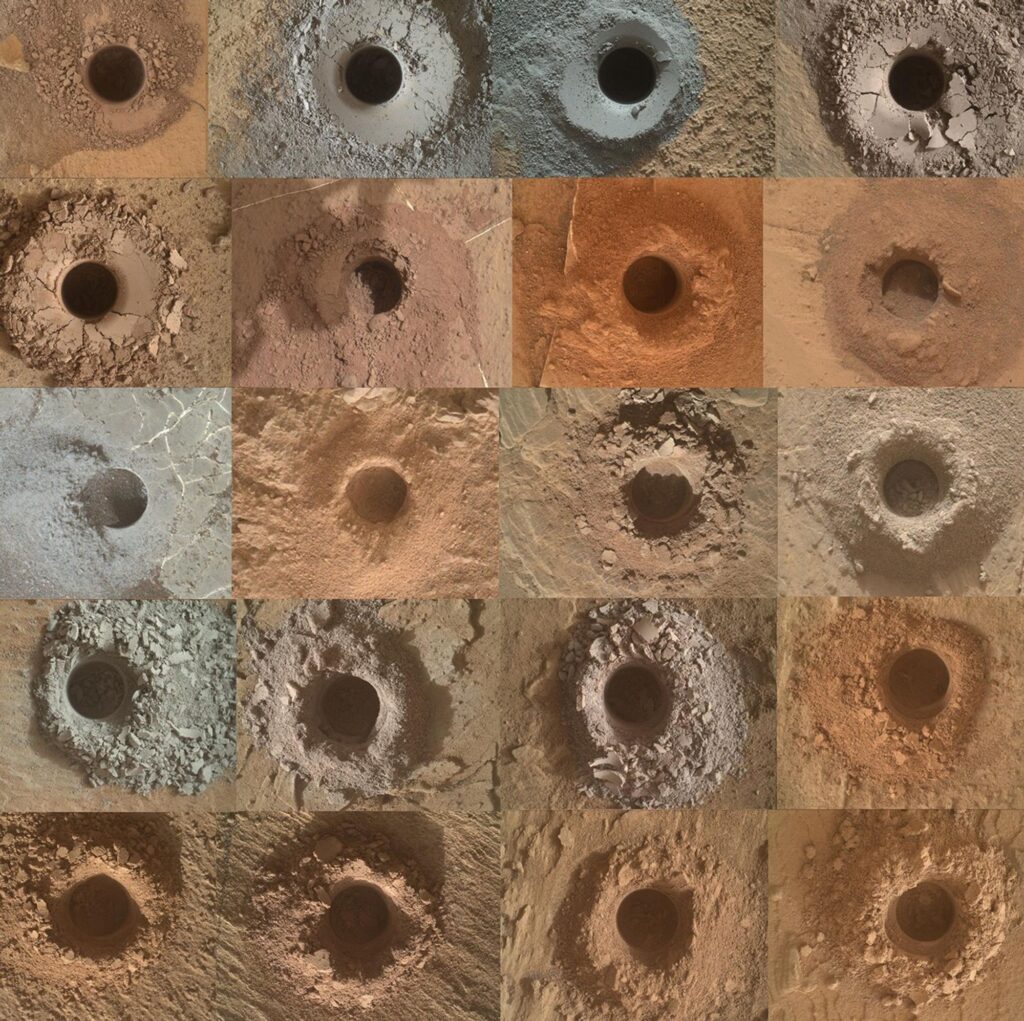
By examining 20 drilled rock samples collected at various elevations, scientists focused their attention on individual crystals of an iron oxide mineral called hematite.
The precise shape, size, and structure of these hematite crystallites change depending on temperature and water chemistry during their formation, serving as a reliable mineralogical marker of ancient climate change.
Crystallite Dimensions Revealing Ancient Subsurface Warmth
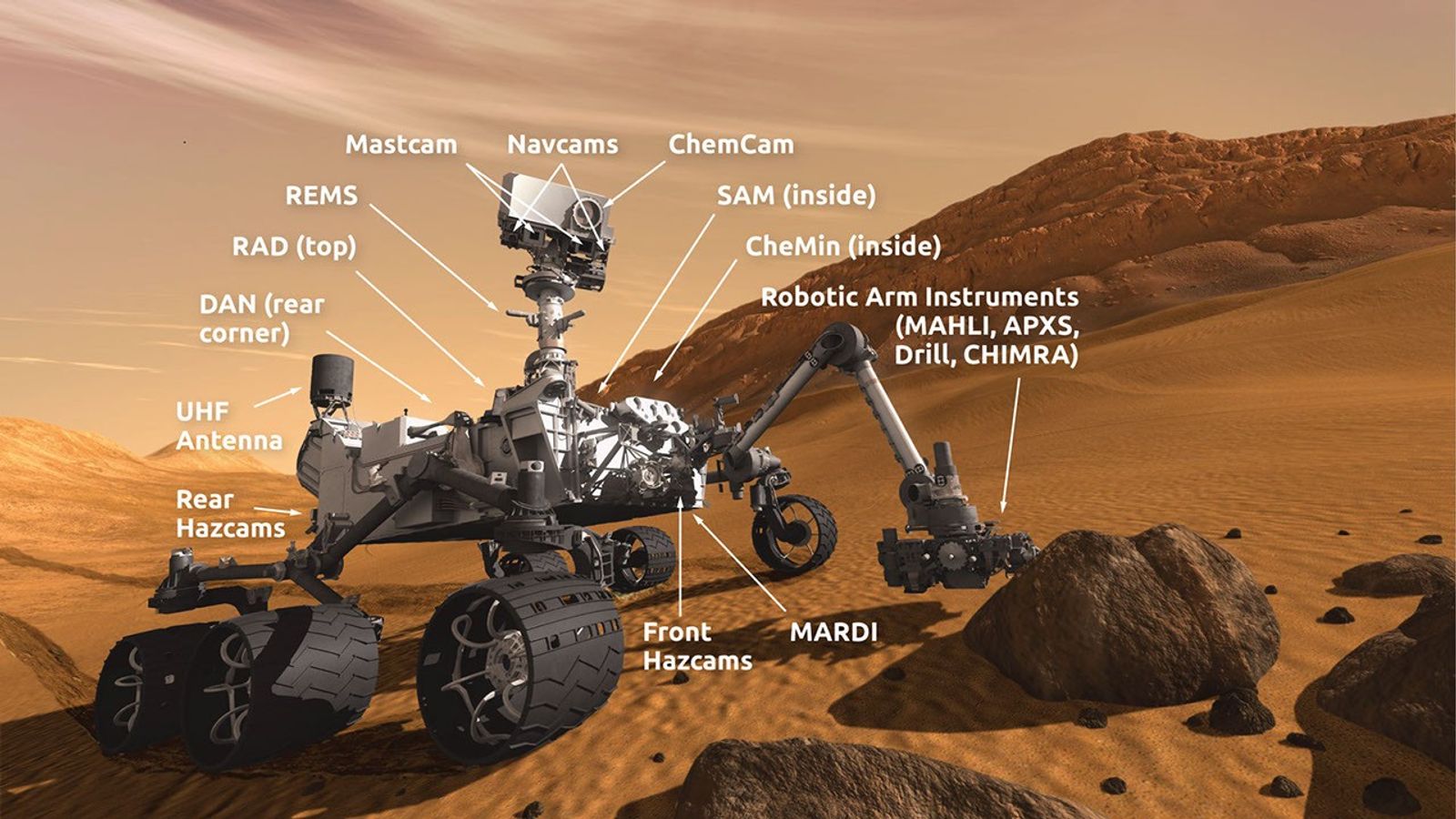
Using Curiosity’s onboard Chemistry and Mineralogy (CheMin) instrument, researchers performed high-fidelity X-ray diffraction on the powdered rock samples to measure the microscopic properties of the hematite.
The analysis revealed a striking contrast: hematite crystallites from higher, younger elevations were microscopic, measuring less than 10 nanometers.
In comparison, samples retrieved from the deeper, older layers contained significantly larger crystals that grew up to 65 nanometers in size.
Furthermore, a related iron mineral called goethite, which typically co-exists with hematite, was completely absent in the lower layers while remaining present at higher elevations.
This specific mineral profile indicates that even as Mars’ global climate transitioned into a freezing era, long-lived aquifers of warm groundwater persisted underground for up to 4.7 million years.
Under warmer conditions with neutral or slightly alkaline water, goethite naturally transforms into hematite, while a process known as Ostwald ripening allows smaller crystals to dissolve and fuel the growth of larger ones.
A Long-Lived Subsurface Haven for Ancient Martian Life
The most profound implication of this mineralogical discovery touches on astrobiology and the extended timeline of potential habitability on Mars.
While the cold and arid surface layer prevented crystal growth due to fleeting or freezing water, the deep subterranean environments of Gale Crater remained shielded and stable.
These resilient underground aquifers could have provided a safe haven for microscopic life for millions of years after the surface became inhospitable.
This critical insight could never have been gained through orbital satellite imagery alone, demonstrating the extraordinary value of direct, robotic sample analysis on the Martian surface.
As we look closer at the history of the Red Planet, it becomes increasingly clear that the window for life to emerge and thrive was much wider than we once believed, hidden safely beneath the dust.
Summary
Even as global climate change turned the Martian surface into a frozen desert, deep subterranean rock layers shielded warm groundwater systems for millions of years.
Knowing that these ancient crystals preserve the memory of a long-lived, comfortable underground world makes us wonder what other secrets remain buried beneath the red soil.
References:
https://science.nasa.gov/science-research/astromaterials/nasa-uses-mineralogical-marker-to-understand-ancient-martian-climate/