The Cosmic Riddle of Life-Essential Elements
How our planet transformed into a vibrant world capable of harboring life remains one of the ultimate cosmic questions.
Every living cell on Earth relies on a specific set of core chemical ingredients: carbon, hydrogen, nitrogen, oxygen, phosphorus, and sulfur.
More than 4.5 billion years ago, our young Sun was surrounded by a swirling disk of gas and dust where these raw materials collided to form early building blocks known as planetesimals.
For a long time, the prevailing scientific consensus suggested that Earth acquired its primary budget of volatile elements like nitrogen and phosphorus late in its development through a bombardment of icy chondrite meteorites traveling from the outer solar system.
However, a groundbreaking geochemical study has turned this classic narrative on its head, revealing a much more localized process.
By mapping the chemical compositions of ancient space rocks, researchers have uncovered a dynamic story of elemental migration in the early solar system.
Two Generations of Planetesimals and the Chemical Shift
The solar system’s earliest history was shaped by two distinct generations of solid bodies that formed millions of years apart.
The oldest generation gave rise to dense, metallic iron meteorites, while the second generation, forming two to three million years later, became the source of stony chondrites.
By examining the unique ratio of phosphorus to nitrogen within these two distinct meteorite families, scientists discovered a dramatic regional inversion.
In the first generation of planetesimals, an outward flow of cosmic material had caused the phosphorus-to-nitrogen ratio to be significantly higher in the outer solar system than in the inner region.
Yet, by the time the second generation of planetesimals coalesced, the trend had completely flipped, leaving the inner solar system highly enriched with these essential ingredients.
This surprising reversal provides the crucial missing link in understanding how the planetary raw materials were redistributed.
Jupiter as the Cosmic Gatekeeper of Habitable Worlds
The cosmic architect behind this massive chemical redistribution was none other than the rapid growth of Jupiter.
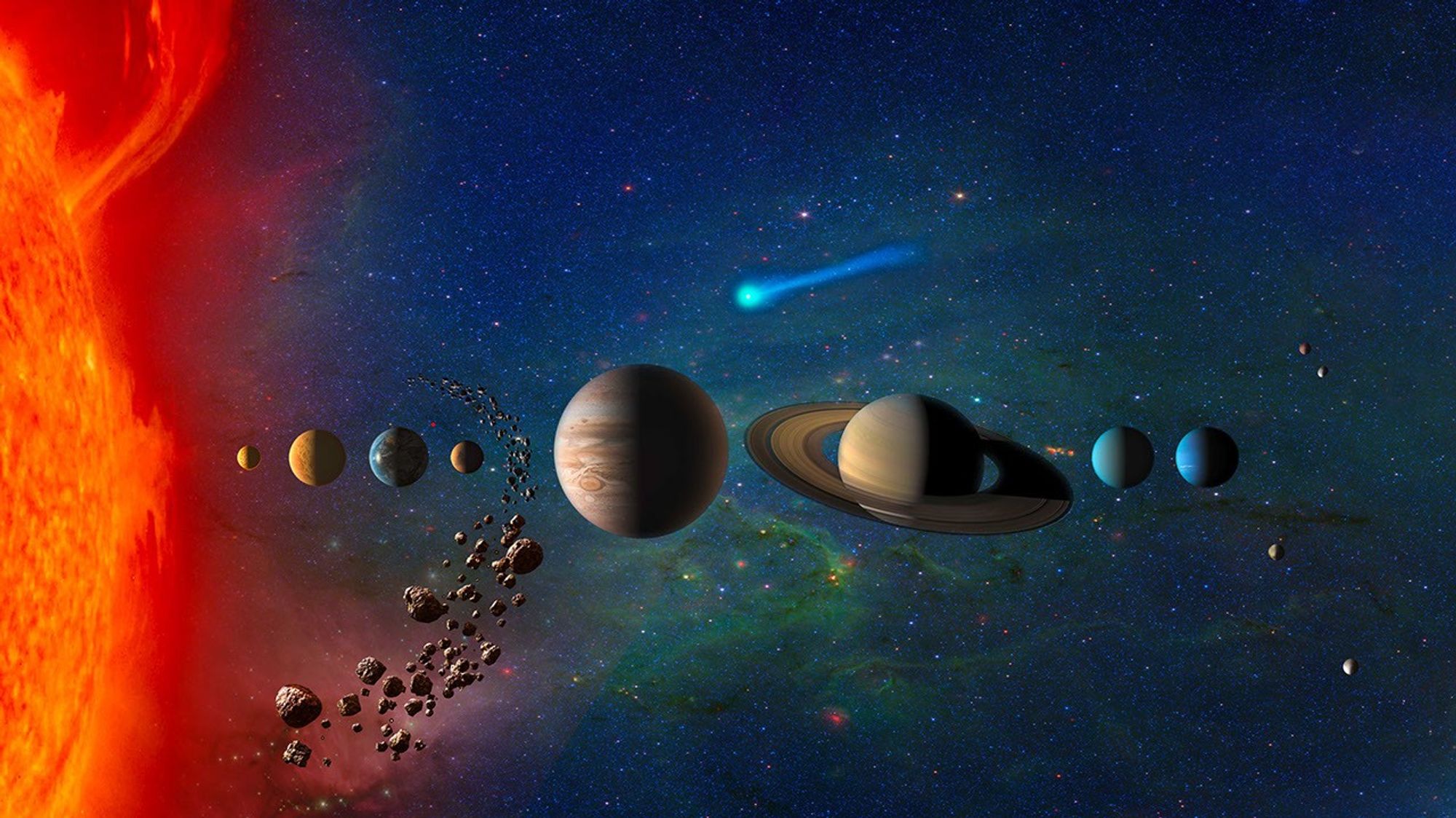
As Jupiter ballooned into a gas giant with immense gravitational influence, it acted as a colossal barrier, dividing the young solar system and restricting the movement of material between the inner and outer zones.
This gravitational blockade trapped a high concentration of phosphorus and nitrogen inside the inner solar system just as the second generation of planetesimals was beginning to take shape.
Advanced geochemical accretion models demonstrate that the specific chemical signature found on Earth today perfectly matches these enriched inner solar system planetesimals.
This implies that our planet did not require a late delivery of life’s ingredients from the cold outer fringes; instead, it grew primarily from materials close to home, preserved by Jupiter’s presence.
This revelation highlights a profound connection between the architecture of giant planets and the ultimate habitability of inner rocky worlds across the universe.
Summary
The rapid growth of a young Jupiter acted as a barrier that trapped life-essential elements like phosphorus and nitrogen within the inner solar system, directly fueling the early Earth.
It is truly profound to realize that our very existence is the result of such a dynamic cosmic coincidence involving the birth of the solar system’s largest planet.
References:
https://science.nasa.gov/science-research/planetary-science/astrobiology/nasa-finds-new-way-earth-may-have-received-elements-needed-for-life/