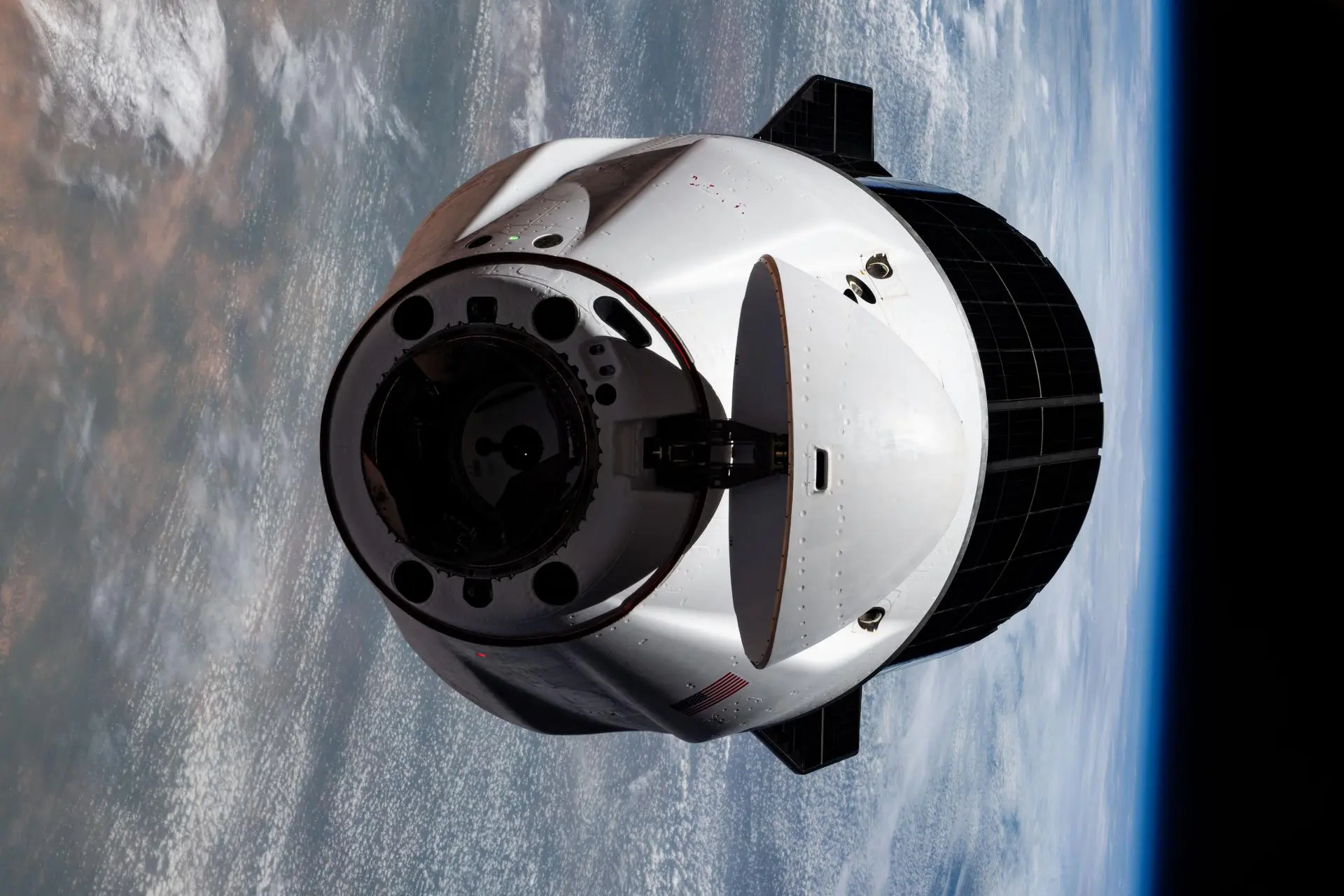
SpaceX CRS-34: Delivering the Future of Science to Orbit
A new cargo mission destined for the International Space Station is entering its final stages of preparation.
This upcoming flight marks the 34th commercial resupply services mission conducted by SpaceX.
Launch operations are scheduled to take place from Space Launch Complex 40 at Cape Canaveral Space Force Station in Florida.
The current target for liftoff is set for no earlier than May 12, 2026.
This vital mission will be executed using the highly reliable Falcon 9 rocket and an uncrewed Dragon spacecraft.
The Dragon capsule is uniquely capable of returning significant amounts of scientific cargo safely to Earth after undocking from the ISS.
Navigating the extreme environment of space to retrieve invaluable data is an essential capability in modern space exploration.
For more than a quarter of a century, the orbital laboratory has hosted a continuous human presence, enabling groundbreaking research impossible on the ground.
Relying on commercial partners for routine logistics allows space agencies to concentrate their resources on deep space exploration.
This spacecraft is packed with advanced scientific instruments, in addition to standard provisions for the crew.
As we look toward crewed lunar missions under the Artemis program and eventual trips to Mars, sustainable research in low Earth orbit provides the necessary foundation.
The strong partnership between commercial enterprises and government agencies is accelerating humanity’s reach into the cosmos like never before.
Groundbreaking Experiments Destined for the ISS
A notable aspect of the CRS-34 mission is the delivery of cutting-edge scientific payloads spanning various disciplines.
One major highlight is an experiment designed to evaluate the precise performance of microgravity simulators used on Earth.
By verifying how closely these terrestrial simulators replicate actual orbital conditions, scientists can drastically improve the accuracy of preliminary ground-based tests.
This crucial calibration ensures the reliability of future experiments before they ever leave our planet.
Another critical area of focus involves a medical study analyzing the human body’s physiological changes in space.
Researchers are sending up new diagnostic equipment to evaluate how astronauts’ red blood cells and spleens adapt to the orbital environment.
Understanding the profound impacts of long-duration spaceflight on human health is a fundamental prerequisite for successful deep space missions.
Unlocking the mechanisms of cellular changes triggered by microgravity and cosmic radiation is the first step in protecting our courageous explorers.
Furthermore, the mission carries state-of-the-art instruments engineered to monitor dynamic space weather near our planet.
These devices will continuously track and analyze the behavior of charged particles surrounding Earth.
Intense solar storms and charged particle events pose serious threats to both orbiting satellites and massive power grids on the surface.
Accurate space-based observations are expected to significantly enhance the reliability of early warning systems that protect our critical infrastructure.
Microgravity’s Contribution to Medicine and Fundamental Science
Conducting experiments in the unique environment of space holds immense potential for delivering direct benefits to our daily lives.
A prime example is an innovative study testing a bone scaffold constructed primarily from wood-based materials.
While bone density naturally decreases in weightlessness, researchers are leveraging this very environment to test three-dimensional structures that promote bone regeneration.
The utilization of natural materials could lead to the development of highly biocompatible medical treatments.
If scientists can determine how these wood-derived scaffolds assist in cell proliferation, it may unlock revolutionary therapies for osteoporosis and other degenerative bone diseases.
Free from the constraints of Earth’s gravity, biological materials can grow evenly in three dimensions, enabling the creation of complex tissues that cannot be synthesized on the ground.
Space medicine research has consistently acted as a catalyst for advancing terrestrial medical technologies.
The fact that research conducted in the vacuum of space directly translates to hospital treatments on Earth highlights the profound value of space exploration.
In the realm of fundamental science, a fascinating experiment is scheduled to investigate the underlying processes of planetary formation.
This study addresses the core question of how cosmic dust and gas aggregate to form massive stars and planetary bodies.
By directly observing how materials collide and fuse in microgravity, scientists hope to shed new light on the grand mystery of our solar system’s origins.
Conclusion
The SpaceX CRS-34 mission isn’t just about delivering cargo; it’s carrying the keys to unlocking future medical breakthroughs and the deepest mysteries of our universe.
It’s truly inspiring to watch how these incredible orbital discoveries will eventually find their way back to Earth to make our everyday lives so much better!
Reference:
NASA Invites Media to SpaceX’s 34th Resupply Launch to Space Station