Dramatic Liftoff of Starship Version 3 (Flight 12)
The moment we have all been waiting for has finally arrived; SpaceX’s Starship Flight 12 has officially lifted off from the Starbase facility in Texas, marking a massive milestone for NASA’s Artemis lunar architecture.
Watching the ignition sequence through the control room monitors, the sheer acoustic power of Booster 19’s Raptor engines roaring to life on the newly constructed Pad 2 was absolutely palpable.
As this is the maiden voyage of the next-generation “Block 3” vehicles, our flight dynamicists are currently glued to the real-time telemetry, monitoring how these highly tuned engines push the colossal stack toward its intended orbital trajectory.
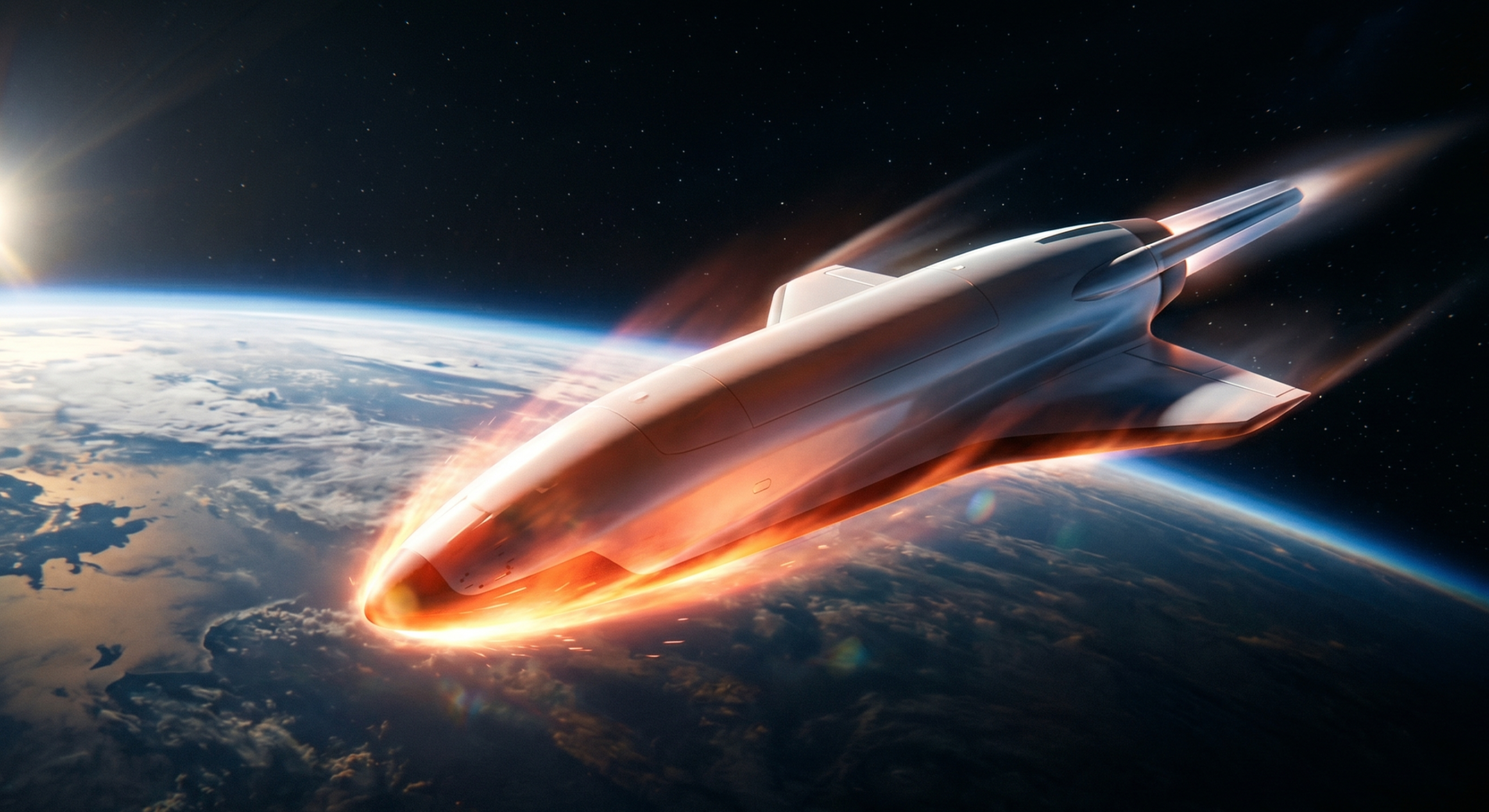
The Ship 39 upper stage is carrying an unprecedented number of experimental test objectives, ranging from an in-space engine relight to a daring test of its thermal protection system using intentionally omitted heat shield tiles.
Our engineering teams will not breathe a sigh of relief until the vehicle successfully navigates the brutal plasma wall of atmospheric reentry and splashes down in the Indian Ocean.
Proving that this immense, stainless-steel architecture can achieve full, rapid reusability will completely rewrite the laws of payload economics for our future deep space missions.
JAXA’s HTV-X1 Prepares for Destructive Reentry After Successful Mission
Our colleagues at JAXA have announced that their advanced HTV-X1 cargo spacecraft, which has been operating independently in orbit, is scheduled to make its fiery reentry into Earth’s atmosphere on May 26.
After successfully completing its primary resupply mission to the ISS, the spacecraft spent the last four months functioning as a standalone orbital laboratory, testing next-generation solar arrays and lightweight antenna systems.
This impressive level of versatility—transforming a simple cargo freighter into a fully capable free-flying testbed—is exactly the kind of modular engineering we are studying for the future of commercial LEO platforms.
The final orbital maneuvers to safely plunge the vehicle into the upper atmosphere, ensuring it completely burns up without generating any hazardous space debris, require incredibly precise flight dynamics.
We hold immense respect for JAXA’s flight operations team for executing this complex, multi-phased mission profile flawlessly from launch to its impending conclusion.
NASA Showcases the Future of Lunar Robotics at Houston Championship
During the recent FIRST Robotics World Championship in Houston, NASA took the opportunity to unveil our detailed conceptual roadmap for the Artemis Moon Base to thousands of aspiring young engineers.
Before any crew sets foot on the lunar south pole, we are aiming for an incredibly aggressive cadence of up to 30 Commercial Lunar Payload Services (CLPS) robotic landings by 2027.
We highlighted an autonomous construction architecture where swarms of small robots work collaboratively to assemble solar arrays and habitat foundations—a challenge tailor-made for the next generation of roboticists.
Seeing the sheer enthusiasm of these students as they examined the modular hardware prototypes gave our veteran engineering teams a massive boost of motivation.
While we are currently designing the foundational hardware for lunar exploration, it is these young innovators, currently driving robots around a competition arena, who will ultimately build the cities of tomorrow on the Moon.
Engineering Focus on the H3 Rocket’s Innovative “Type 30” Configuration
Looking ahead to the upcoming June 10 launch of JAXA’s H3 Rocket Flight 6, our propulsion engineers at NASA are highly focused on the vehicle’s unique “Type 30” configuration.
For the first time, Japan’s heavy-lift vehicle will launch without any solid rocket boosters, relying entirely on the immense thrust generated by the three LE-9 liquid-propellant engines on the core stage.
Without the massive initial kick of solid boosters, the flight profile demands absolute perfection in the combustion efficiency of the main engines and incredibly precise gimbaling for attitude control during ascent.
If JAXA can reliably launch this specific configuration, it will significantly optimize their thrust-to-cost ratio, drastically increasing the H3’s competitiveness in the global commercial launch market.
This bold engineering approach of pushing liquid propulsion limits to streamline the vehicle’s architecture makes perfect sense, and we are eagerly awaiting the telemetry from this critical flight test.
Conclusion
Today’s briefing was packed with incredible milestones, from the earth-shaking launch of Starship and the impending finale of JAXA’s HTV-X1, to NASA’s robotic lunar ambitions and the H3 rocket’s new configuration.
The suspense of watching Starship finally clear the launch tower today was incredible, proving once again that pushing the boundaries of physics is the ultimate thrill.
Seeing JAXA push their own engineering limits with the HTV-X and the H3 rocket reminds us that this global pursuit of space exploration is moving faster and further than ever before.