Pristine Relics: Hubble and Webb Reveal Kuiper Belt Objects ‘Remember’ Solar System Birth
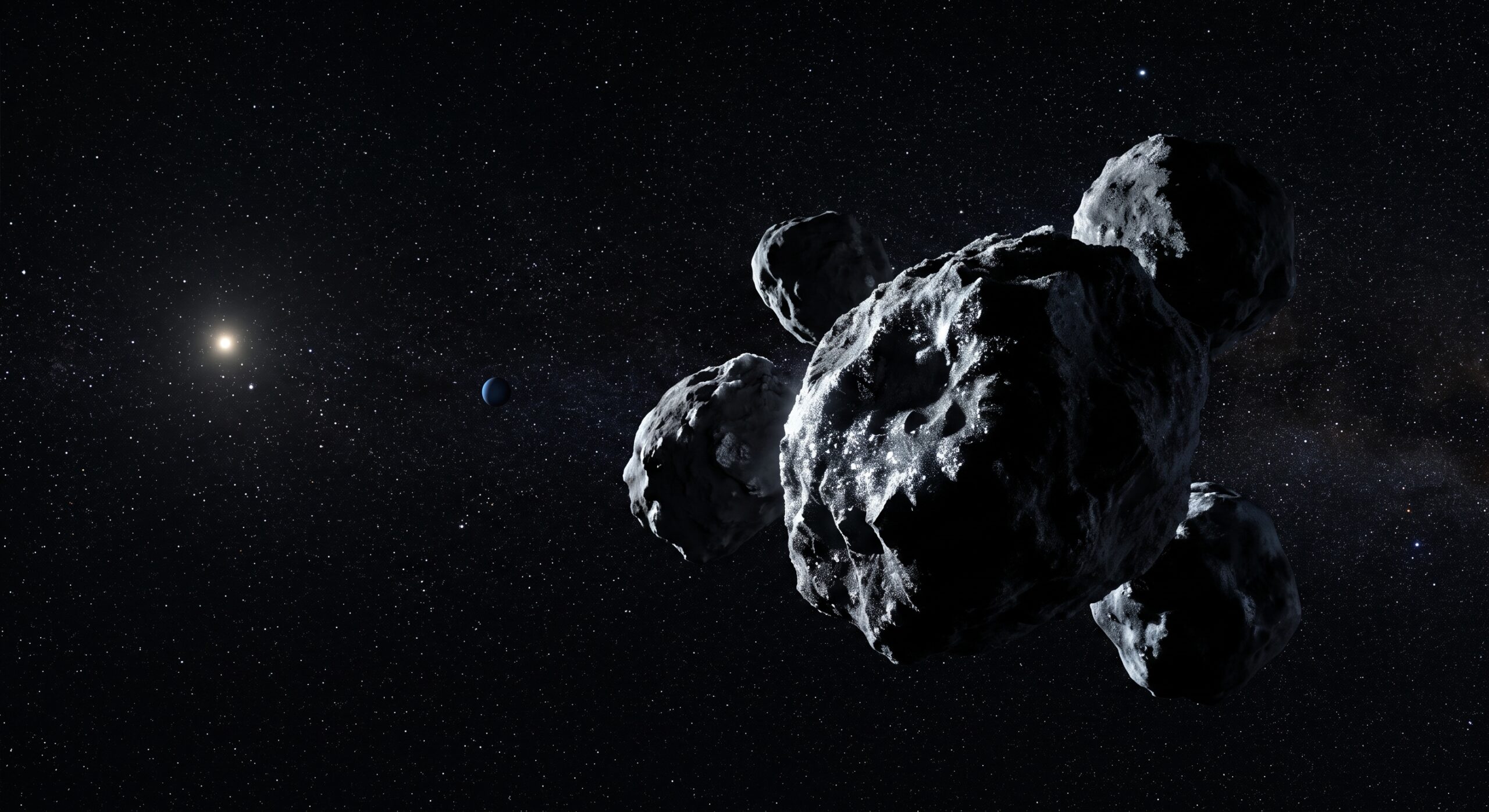
In a landmark joint survey conducted by NASA’s Hubble Space Telescope and the James Webb Space Telescope (JWST), astronomers have completed an exhaustive high-resolution photometric and spectroscopic census of dozens of small, icy bodies inhabiting the distant Kuiper Belt beyond Neptune. The findings demonstrate that these miniature worlds have remained virtually frozen in time since the primordial epoch of our solar system 4.6 billion years ago, effectively “remembering” the conditions of the solar nebula from which the planets condensed.
By combining Hubble’s precision optical astrometry with Webb’s Near-Infrared Spectrograph (NIRSpec) sensitivity, researchers probed the surface volatile retention of Kuiper Belt Objects (KBOs) down to diameters of just a few tens of kilometers. Unlike larger dwarf planets like Pluto or Eris, which experience cryo-volcanic resurfacing and atmospheric freeze-thaw cycles, these smaller planetesimals lack the internal radiogenic heat required to alter their composition. Their surfaces display pristine, unadulterated signatures of carbon monoxide, methane, and nitrogen ices preserved in deep cryogenic stasis at temperatures hovering near 40 Kelvin, providing an untarnished baseline for protoplanetary disk chemistry.
Interstellar Interloper 3I/ATLAS Found Bursting with Prebiotic Methanol
In an extraordinary finding for interstellar astrophysics and astrobiology, deep spectroscopic observations of the newly detected hyperbolic interstellar comet 3I/ATLAS reveal that the interloper is expelling massive plumes of volatile methanol ($CH_3OH$) as it navigates through our inner solar system. Originating outside our planetary system and flung into deep space by gravitational interactions within its home star system, 3I/ATLAS represents only the third confirmed macroscopic interstellar object ever observed by humanity.
Submillimeter array telemetry and high-resolution infrared spectroscopy indicate that methanol vapor comprises an unusually high fraction of the comet’s volatile outgassing inventory compared to typical Oort Cloud comets. Because methanol serves as the foundational chemical feedstock for synthesizing complex amino acids, sugars, and prebiotic polyols in protoplanetary environments, the discovery confirms that extrasolar star-forming regions routinely assemble and preserve the essential molecular precursors of life across the Milky Way.
Cosmic Pareidolia and Dense Dust Physics in LDN 1295, the Giraffe Nebula
Featured on NASA’s Astronomy Picture of the Day, deep-field astrophotography highlights the dark molecular cloud LDN 1295, popularly known as the Giraffe Nebula. Situated in the constellation Cassiopeia, this striking silhouette is cataloged in the landmark 1962 Catalogue of Dark Nebulae compiled by American astronomer Beverly Lynds, a pioneer in observational astrophysics.
While the sprawling dust cloud evokes the whimsical silhouette of a long-necked giraffe due to human pareidolia—the psychological tendency to recognize familiar patterns in random visual stimuli—its underlying physics is critical to the stellar lifecycle. LDN 1295 is an ultra-dense interstellar cloud composed of sub-micron carbonaceous and silicate grains that completely block optical starlight from background field stars. These frigid, high-density clouds represent the gravitational wombs of our galaxy, where core temperatures drop below 10 Kelvin, dampening thermal pressure and allowing gravity to initiate the collapse that triggers newborn protostellar systems.
References & Data Sources
- NASA Science Release: https://science.nasa.gov/missions/hubble/nasas-hubble-webb-find-far-out-solar-system-objects-remember-past/
- ScienceDaily / Astrochemistry Report: https://www.sciencedaily.com/releases/2026/09/260909005217.htm
- NASA APOD (LDN 1295 – The Giraffe Nebula): https://science.nasa.gov/image-article/apod-2026-september-10-ldn-1295-the-giraffe-nebula/