Cosmic Time Capsules: Hubble and Webb Unveil the Deep Memories of the Outer Solar System
A breathtaking discovery has emerged from the dark, frigid edges of our solar system, revealing ancient time capsules that preserve the history of our cosmic neighborhood.
By combining the extraordinary capabilities of the Hubble Space Telescope and the James Webb Space Telescope, astronomers have successfully characterized some of the most elusive Trans-Neptunian Objects (TNOs) ever observed.
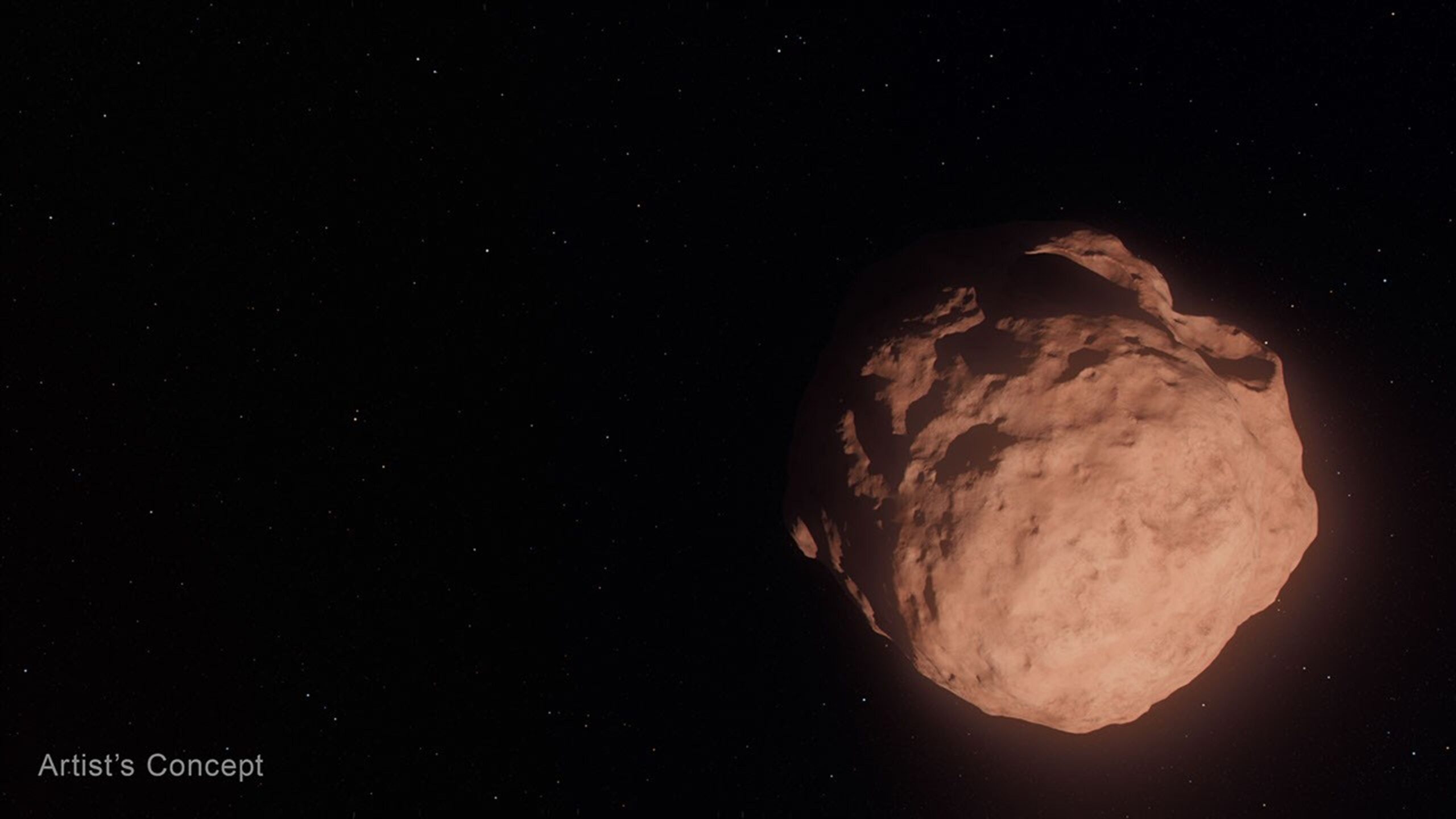
In this groundbreaking collaborative survey, researchers discovered 27 remarkably dim and tiny icy bodies orbiting far beyond Neptune.
The smallest of these newfound objects measures a mere three miles across, and detecting its incredibly faint light is equivalent to standing on Earth and spotting a swarm of fireflies resting on the surface of the Moon.
Capturing such minuscule targets—objects that easily evade the detection limits of the most powerful ground-based observatories—was only made possible through the unprecedented synergy of Hubble’s visual acuity and Webb’s infrared mastery.
The research team meticulously analyzed the color, composition, and size distribution of these distant celestial wanderers.
Scientists initially hypothesized that such small bodies would have endured countless collisions over the solar system’s 4.6-billion-year history, expecting their surfaces to be heavily altered or eroded.
However, the observational data completely defied these expectations.
Rather than displaying the scars of violent cosmic impacts, these small TNOs exhibited the exact same colors and surface characteristics as their much larger counterparts.
This surprising revelation suggests that either collisions in the outer solar system are far less frequent than previously imagined, or these objects possess an unknown mechanism that allows them to miraculously retain their primordial composition.
Even more fascinating is that this pristine preservation extends across two distinct populations: the cold TNOs that formed quietly in the outer regions, and the dynamically hot TNOs that were violently pushed outward from between Uranus and Neptune during the migration of the gas giants.
Despite experiencing significant orbital disruption and a chaotic journey through space, these bodies have not lost the chemical fingerprints of their birthplaces.
The fact that the smallest residents of our solar system are actively remembering and preserving the ancient story of their creation holds immeasurable value for unraveling the evolution of our universe.
These nameless icy sentinels are true cosmic storytellers, silently whispering the secrets of the primordial environment that ultimately shaped the solar system we call home.