Solar Cannibalism: Did the Young Sun Engulf a Primordial Super-Earth?
One of the most persistent mysteries in comparative planetology is the complete absence of a “super-Earth” in our solar system. Across our galaxy, exoplanet surveys conducted by Kepler, TESS, and ground-based radial velocity observatories confirm that super-Earths—rocky and volatile-rich worlds packing between two and ten Earth masses—are the most common planetary category in the Milky Way, encircling over half of all sun-like stars.
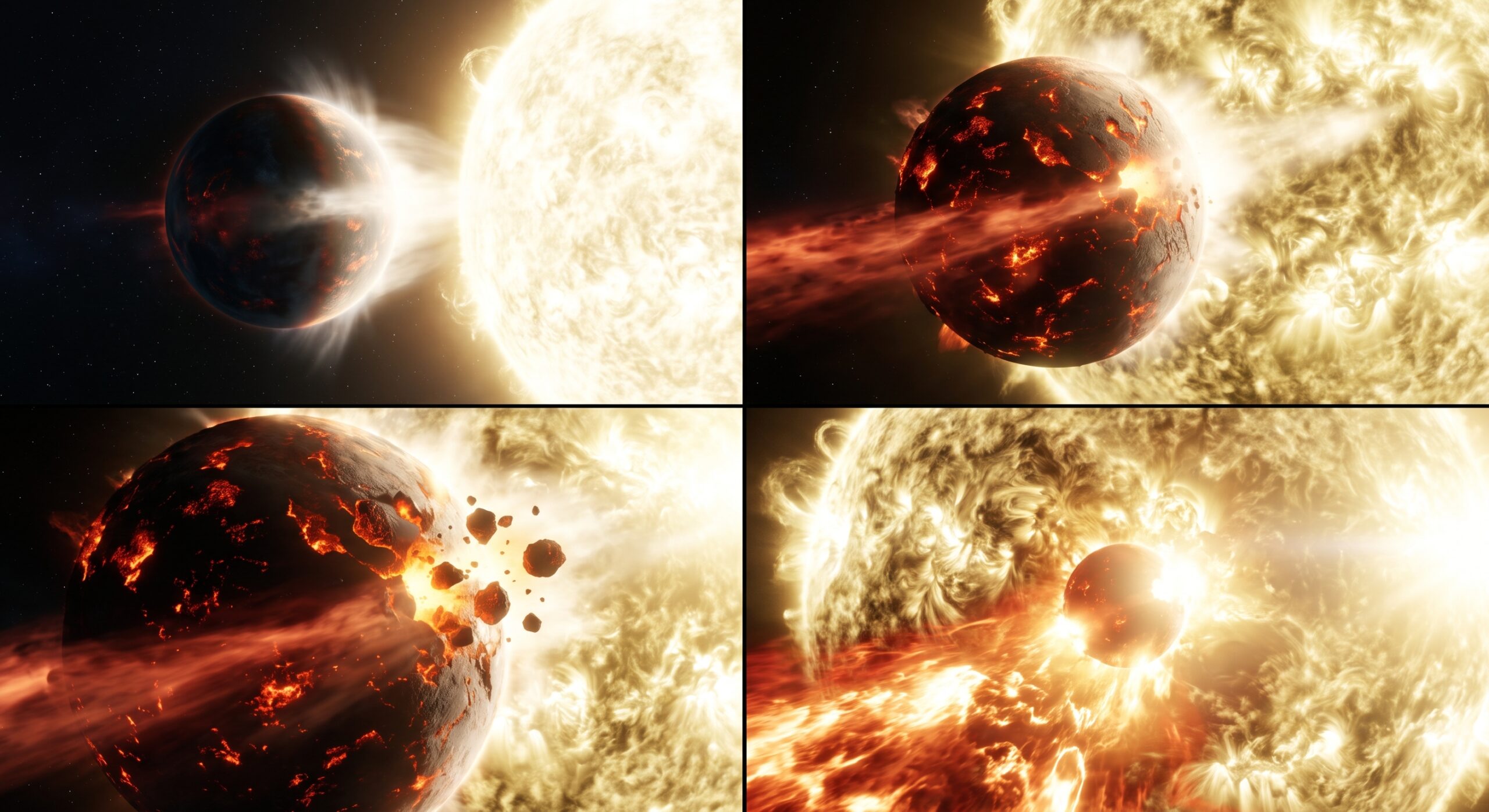
A compelling new astrophysical study published this week suggests that our solar system was not born an anomaly. Instead, advanced N-body gravitational simulations paired with nebular gas-drag models reveal that the infant Sun likely formed and subsequently engulfed a primordial super-Earth roughly 4.5 billion years ago. During the chaotic early epoch known as the Grand Tack, the migration of Jupiter and Saturn perturbed the orbital resonances of the inner protoplanetary disk, sending inner planetary embryos spiraling inward into the young star’s convective envelope.
Helioseismic Fingerprints: Tracing Planetary Debris Inside the Solar Core
The hypothesis of an ancient solar planetary meal is supported by subtle chemical and acoustic anomalies detected within the Sun itself. Helioseismology—the study of acoustic pressure waves bouncing through the solar interior—enables solar physicists to map the sound-speed profile across the radiative and convective zones with extraordinary precision.
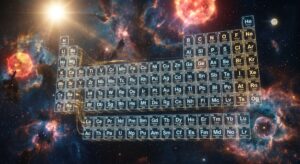
Standard stellar evolution models predict a chemically uniform composition throughout the solar interior prior to nuclear burning. However, high-resolution solar spectroscopy reveals that the Sun’s convective envelope is depleted of refractory elements—such as iron, silicon, and magnesium—relative to solar twins, while acoustic modes indicate a localized refractory enrichment trapped within the radiative core. Consuming a rocky, differentiated super-Earth of five to ten Earth masses would deposit precisely this signature of heavy elements into the solar interior, explaining both the depleted mass budget of the inner terrestrial planets and the anomalous internal metallicity gradient of our host star.
Dual Tails in the Adriatic Dawn: The Volatile Dynamics of Comet NEOWISE
Featured on NASA’s Astronomy Picture of the Day, dynamic time-lapse imaging captures Comet NEOWISE (C/2020 F3) rising over the calm waters of the Adriatic Sea, showcasing the dual-tail morphology that characterizes pristine cometary outgassing. Spanning roughly five kilometers in diameter, the icy nucleus survived its perilous perihelion pass inside Mercury’s orbit, unfurling two distinct tails stretching across tens of millions of kilometers of interplanetary space.
The golden-white dust tail consists of microscopic silicate and carbonaceous grains pushed gently away from the Sun by solar radiation pressure, curving gracefully along the comet’s orbital trajectory. In contrast, the faint, straight blue tail is composed of ionized carbon monoxide ($CO^+$) and water ions stripped from the nucleus by extreme solar ultraviolet photons. This plasma tail interacts directly with the interplanetary magnetic field, held taut and parallel to the supersonic streams of the solar wind, providing ground-based observers with a real-time visualization of the Sun’s invisible heliospheric currents.
References & Data Sources
- Space.com / Solar Physics Research: https://www.space.com/astronomy/sun/the-sun-may-once-have-swallowed-a-super-earth-planet-and-could-still-be-hiding-the-evidence
- Tech Explorist Planetary Science: https://www.techexplorist.com/study-suggests-sun-swallowed-super-earth/104212/
- NASA APOD (Comet NEOWISE Rising over the Adriatic Sea): https://science.nasa.gov/apod/archive/